September 19, 2026
HVAC Repair
What actually fails in a home HVAC system, which faults are genuine emergencies and which can wait, honest cost ranges with the reasoning behind them, and the questions worth asking any contractor before you let them start work.
Something is wrong with the system, and you are trying to work out three things at once: how serious it is, what it is going to cost, and who to call. This guide answers all three, in that order.
It is written for homeowners in Monmouth, Middlesex and Ocean counties, and it is deliberately specific. You will find what actually breaks and why, which failures need attention today rather than next week, real cost ranges with the reasoning behind them, and a set of questions worth asking any contractor before you let them start work.
What Is HVAC Repair?
HVAC stands for heating, ventilation and air conditioning — the whole system that moves conditioned air through your home. HVAC repair means diagnosing and fixing a fault in any part of that system rather than replacing the equipment outright.
In a typical central New Jersey home, that system has more parts than most people picture:
- The heating equipment — usually a gas furnace, sometimes a boiler, increasingly a heat pump.
- The cooling equipment — an outdoor condenser and an indoor evaporator coil, or a ductless mini-split.
- The air handler and blower, which move air through the house.
- The ductwork that distributes it, and the returns that bring it back.
- Controls — thermostat, control board, safety switches, sensors.
- Electrical components — capacitors, contactors, relays, wiring.
A repair can be any of these. Replacing a $40 capacitor is HVAC repair. So is tracking down a refrigerant leak, rewiring a scorched contactor, or clearing a condensate line that has flooded a safety switch. The word covers a $150 visit and a $1,500 one, which is exactly why "how much does HVAC repair cost" is such a hard question to answer without knowing what broke.
The work divides into three categories worth separating in your head: diagnostic (finding the fault), corrective (fixing it), and preventive (stopping the next one). Most homeowners only buy the first two. The third is where the savings are.
What Actually Breaks
After enough service calls, patterns emerge. These are the faults that account for the large majority of what we see across the three counties.
Capacitors
A capacitor is a small cylinder that gives the compressor and fan motors the jolt of torque they need to start. Capacitance degrades with heat and age, and New Jersey summers are hard on them. The classic symptom is an outdoor unit that hums but will not spin, or one that starts intermittently. It is among the cheapest repairs in the trade and among the most common.
Contactors
An electrical switch that engages the outdoor unit. Its contacts pit and erode with every cycle. Caught early it is a minor part; left until the contacts weld shut, the unit either runs continuously or refuses to start at all.
Refrigerant leaks
Refrigerant lives in a sealed loop. It is not consumed, and it does not need topping up. If your charge is low, you have a leak — in a coil, a fitting, or a line set. This matters for a reason worth understanding: a system 10 percent undercharged loses far more than 10 percent of its cooling capacity. The relationship is not linear.
If a contractor adds refrigerant each year without ever finding the leak, you are buying the same gas repeatedly while the system runs inefficiently between visits. Ask for a leak search.
Blower motors
The motor that pushes air through the ducts. Failing bearings announce themselves with squealing or grinding well before the motor dies, which means this is one you can usually catch early if you are listening.
Ignition components
On the heating side, hot-surface igniters and flame sensors do the most failing. A flame sensor is a thin metal rod that develops a film over a season or two and stops detecting flame, at which point the furnace lights and immediately shuts down. Cleaning it is often a matter of minutes — one of the most satisfying cheap fixes there is.
Condensate drains
Your air conditioner pulls moisture out of the air, and that water has to go somewhere. Drain lines accumulate biological growth until they restrict or block. Best case, a float switch shuts the system down. Worst case, on systems without one, the overflow finds a ceiling.
Control boards and thermostats
Less common, but they do fail, and they produce genuinely confusing symptoms — systems that run at the wrong times, ignore setpoints, or behave differently day to day.
HVAC Emergency Repair: When It Is Urgent, and When It Can Wait
Not every breakdown is urgent, and treating everything as urgent is an expensive habit. The distinction that matters is whether the situation threatens safety, health, or the building itself.
Worth saying plainly, because the industry is vague about it: an emergency repair is not a different kind of work. The technician performs the same diagnosis and fits the same parts. What changes is where you sit in the queue and, at many companies, what you pay for the privilege. So it is worth knowing which category you are genuinely in before you ask for one.
Stop and act immediately
- Any smell of gas. Leave the house first, then call your gas utility from outside. Do not flip switches on your way out.
- A carbon monoxide alarm sounding. Everyone outside, then call 911. Do not investigate first.
- A yellow or flickering burner flame, or soot around the furnace. Both point at incomplete combustion, which produces carbon monoxide.
- Burning smells, visible scorching, or melted wiring. Shut the system off at the breaker.
- Water actively pouring from the air handler. Shut the system off to stop the flow before it reaches the ceiling below.
Urgent, but not an evacuation
- No heat in freezing weather, particularly with infants, elderly residents or anyone medically vulnerable in the home. Below about 20°F, pipes become a concern as well as comfort.
- No cooling during a heat advisory, for the same population. Heat illness is a real risk for older adults.
- A breaker that trips repeatedly. Resetting it over and over is not a fix; something is drawing fault current.
Can wait for a scheduled appointment
- One room that is warmer or cooler than the rest
- A system that is noisier than it used to be, without burning smells
- Higher bills with no other symptom
- A thermostat that is off by a couple of degrees
- Mild short cycling in comfortable weather
Being honest about which category you are in gets you better service. A genuine no-heat call in January is prioritised. A rattling duct panel in October is not, nor should it be.
What to Do While You Wait
These are free, safe, and occasionally solve the problem before anyone arrives:
- Check the thermostat. Correct mode, setpoint actually above or below room temperature, fresh batteries.
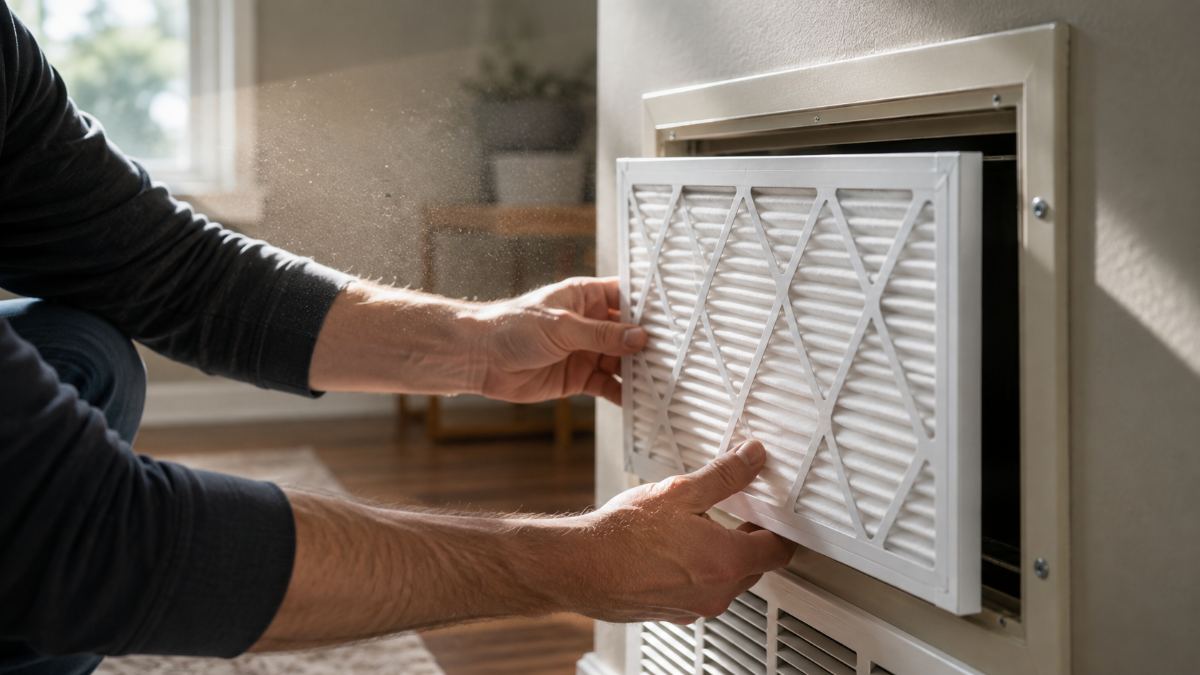
- Check the filter. Hold it to a light. If light does not pass through, replace it. Restricted airflow causes more faults than any other single thing.
- Check the system switch. It looks like a light switch near the indoor unit and gets flipped by accident constantly.
- Check the breaker. One trip, reset it once. If it trips again, leave it off and say so when you call.
- Check the condensate drain for standing water or an overflowing pan.
- Clear the outdoor unit of leaves, grass clippings and anything stacked against it.
- Open closed registers. Closing vents in unused rooms raises duct pressure and strains the blower — it does not save money.
Then stop. Gas, high-voltage electrical and sealed refrigerant systems are licensed work in New Jersey for good reason, and capacitors hold a dangerous charge even after power is off.

How Much Does HVAC Repair Cost?
Here is the honest structure of the answer, because a single number would be misleading.
Most HVAC repairs are priced as diagnostic fee + parts + labour, or as a flat rate covering all three once the fault is known. The diagnostic is what you pay for a licensed technician to determine what is actually wrong — and that step has real value, because the alternative is guessing and replacing parts until something works.
Typical ranges for common residential repairs. Treat these as orientation, not quotes:
| Repair | Typical range | Why the spread |
|---|---|---|
| Capacitor replacement | Low hundreds | Part is inexpensive; access is quick |
| Contactor replacement | Low hundreds | Similar — small part, short labour |
| Flame sensor clean or replace | Low hundreds | Often just cleaning |
| Hot-surface igniter | Low-to-mid hundreds | Part cost varies by model |
| Condensate drain clearing | Low hundreds | Rises if there is water damage to address |
| Blower motor | Mid hundreds to low thousands | Variable-speed ECM motors cost substantially more |
| Refrigerant leak repair | Mid hundreds to low thousands | Depends entirely on where the leak is |
| Evaporator coil replacement | Low thousands | Labour-heavy; often a repair-or-replace decision point |
| Compressor replacement | High | Usually the moment to price a new system instead |
For a closer look at specific jobs, we publish furnace repair costs and AC repair costs separately.
What moves the price
- Which component failed. This dominates everything else.
- Access. An air handler in a cramped attic costs more in labour than one standing in an open basement.
- Parts availability. Common parts ride on the truck. Obsolete parts for a 20-year-old system may need ordering.
- Warranty status. Many manufacturers cover parts for ten years — but typically require documented annual maintenance. Check before you authorise anything.
- Age of the equipment. Not a direct cost, but it changes whether repair is the right call at all.
Repair or replace?
A rule of thumb that holds up reasonably well: multiply the repair quote by the age of the equipment in years. Above roughly $5,000, replacement usually wins.
A $400 repair on a six-year-old system scores 2,400 — fix it. The same repair on a seventeen-year-old system scores 6,800 — put the money toward replacement instead. Judgement still applies, but it keeps emotion out of an expensive decision.
Two situations override the arithmetic. A cracked heat exchanger on an out-of-warranty furnace is a carbon monoxide risk and means replacement. And equipment still running R-22 refrigerant, phased out and no longer produced, is usually not worth a major refrigerant repair.
How to Choose an HVAC Repair Company
People search for "the best HVAC repair company" in their town, and the honest answer is that no single company is best for everyone. What you can do is apply criteria that reliably separate good contractors from bad ones — anywhere, in any market.
Verify before you book
- Licensing. In New Jersey, HVAC contractors are licensed by the state. You can look up a licence number. Ask for it.
- Insurance. Liability and workers' compensation both. If someone is injured in your home and the contractor is uninsured, that becomes your problem.
- A real local address. Not a P.O. box, not an out-of-area call centre that dispatches whoever is available.
- Reviews with substance. Look for reviews that describe the actual problem and how it was handled, not just star ratings. A handful of detailed reviews beats hundreds of generic ones.
Ask before work starts
- What is the diagnostic fee, and is it credited toward the repair if I go ahead?
- Is the price flat-rate or hourly, and will I approve it in writing before you begin?
- Is the technician who comes out licensed, and are they employed by you or subcontracted?
- What warranty covers the part, and what covers your labour?
- If this turns out to be a replacement decision, will you quote both options?
Warning signs
- A quote given over the phone before anyone has seen the system. Nobody can diagnose a fault they have not examined.
- Pressure to replace before diagnosing. A technician who recommends a new system without first identifying what failed is selling, not diagnosing.
- Refusal to put the price in writing before starting.
- Annual refrigerant top-ups with no leak search. That is a subscription, not a repair.
- Vague line items. "Repair AC — $900" is not an invoice; it is a number. You are entitled to know which part was replaced.
- Same-day-only discounts. Legitimate pricing survives a night's thought.
One genuinely useful test: ask the technician to show you what failed. A burnt contactor, a bulging capacitor, a filthy flame sensor — these are visible. Good technicians are usually pleased to explain. Evasion tells you something.
Reducing How Often You Need Repairs
Most of what we have described is preventable, and the preventive measures are unglamorous.
Change the filter. Every 90 days for a one-inch pleated filter, 60 with pets. Restricted airflow causes overheating on the heating side, frozen coils on the cooling side, and premature blower wear year-round. It is the highest-impact thing a homeowner controls.
Book maintenance seasonally. Cooling in spring, heating in autumn. A tune-up finds the weak capacitor, the pitting contactor and the restricted drain while they are still cheap. It also satisfies the documentation most manufacturer warranties require — which, if you ever file a claim, may be worth more than everything else combined.
Keep the outdoor unit clear. Two feet on all sides. Rinse the coil gently with a garden hose, never a pressure washer.
Pay attention to changes. New noises, longer run times, rooms drifting out of comfort. Systems rarely fail without warning; they fail after a warning that was reasonable to ignore.
Frequently Asked Questions
What is HVAC repair?
Diagnosing and fixing a fault in a home's heating, ventilation or air conditioning system — as opposed to replacing the equipment. It covers everything from a failed capacitor or flame sensor to a refrigerant leak, a blower motor, or a control board, and it normally follows a diagnostic visit that identifies the specific failure.
How much does it cost to repair HVAC?
Most residential repairs are priced as a diagnostic fee plus parts and labour, or as a flat rate once the fault is known. Small electrical components such as capacitors and contactors sit at the low end; blower motors and refrigerant leak repairs run considerably higher; compressor and evaporator coil failures are usually the point at which replacement deserves a quote alongside the repair. Access, parts availability and warranty status all move the number.
Which HVAC repair company is best?
There is no universally best contractor — the right one is licensed in your state, carries liability and workers' compensation insurance, works from a real local address, diagnoses before quoting, prices in writing before starting, and will show you the failed part. Apply those criteria to any company in any town and the field narrows quickly. If you are in Monmouth, Middlesex or Ocean County, Guardian Air meets all of them, and we are glad to be measured against that list.
What counts as an HVAC emergency?
Anything involving gas odour, a carbon monoxide alarm, burning smells or visible electrical damage — those mean leave the building and call from outside. No heat in freezing conditions and no cooling during a heat advisory are urgent for households with infants, elderly residents or anyone medically vulnerable. Uneven temperatures, mild noise and higher bills are real problems but can wait for a scheduled appointment.
How long does an HVAC repair take?
Most common repairs are completed in a single visit of one to three hours, because the parts that fail most often are carried on the truck. Refrigerant leak searches take longer. Repairs needing an ordered part depend on availability, which is one of several reasons ageing equipment costs more to keep running.
Should I repair or replace my HVAC system?
Multiply the repair quote by the equipment's age in years; above about $5,000, replacement usually makes better financial sense. Override that in two cases: a cracked heat exchanger means replacement regardless, and major work on an R-22 system rarely pays off. Under ten years old with a minor fault, repair almost every time.
Can I repair my HVAC system myself?
You can change filters, clear the area around the outdoor unit, rinse the condenser coil, reset a breaker once, and check thermostat settings. You should not open sealed refrigerant circuits, work inside the electrical cabinet, or touch gas components. Refrigerant handling requires federal certification, capacitors store a dangerous charge with the power off, and gas work is licensed in New Jersey.
Booking a Repair
Guardian Air is a family-owned, licensed and insured HVAC contractor serving Monmouth, Middlesex and Ocean counties — Freehold, Howell, Aberdeen, Middletown, Red Bank, Long Branch, Old Bridge, Edison, Woodbridge, Toms River, Brick, Jackson, Lakewood and the surrounding towns.
Every call starts with a real diagnosis. You get a flat-rate price before any work begins, and we will show you what failed. If a repair is the right answer, we will make it. If your system has reached the point where repair is no longer a sensible use of your money, we will tell you that and quote both paths so you can decide with the numbers in front of you.
Call (848) 276-6300 or request a visit online. You can also read more about heating repair, air conditioning repair, and the towns we cover.