October 2, 2026
Drain Services: Cleaning, Hydro Jetting, Camera Inspection and Sewer Repair
Which drain service fits which problem — snaking, hydro jetting, camera inspection or sewer repair — how to tell a branch clog from a main-line backup, why older NJ sewer lines fail, and what drain services cost.
What Are Drain Services?
Drain services are the professional cleaning, inspection and repair of the pipes that carry wastewater out of a building — from the sink, tub and toilet drains inside the house to the main sewer line that runs under the yard to the municipal sewer or septic system. They range from clearing a single slow sink to replacing a collapsed sewer lateral.
The useful way to think about drain service is in terms of where the problem is and what it is made of. A hair clog two feet into a bathroom drain and tree roots forty feet out in a clay main are both "clogged drains", but they need completely different tools, cost very different amounts, and have very different consequences if the wrong one is used. This guide explains each type of drain service, which one fits which problem, what each costs in New Jersey, and how to avoid paying for the same clog twice.
Branch Drains vs. the Main Sewer Line
Every house has two levels of drain:
- Branch drains serve individual fixtures — a kitchen sink, a bathroom group, a laundry standpipe. A clog here affects one fixture or one room.
- The main drain and sewer lateral collect everything and carry it out of the house. A clog here affects the whole house, and usually shows up first at the lowest fixture — a basement floor drain, a ground-floor shower or toilet.
The single most useful diagnostic sign a homeowner can read is whether more than one fixture is affected. If the toilet gurgles when the washing machine drains, or water comes up in the shower when you flush, the problem is in the main line. That is the point to stop using water and call, because the next flush may come up through the lowest drain in the house.
Types of Drain Services
| Service | What it does | Best for |
|---|---|---|
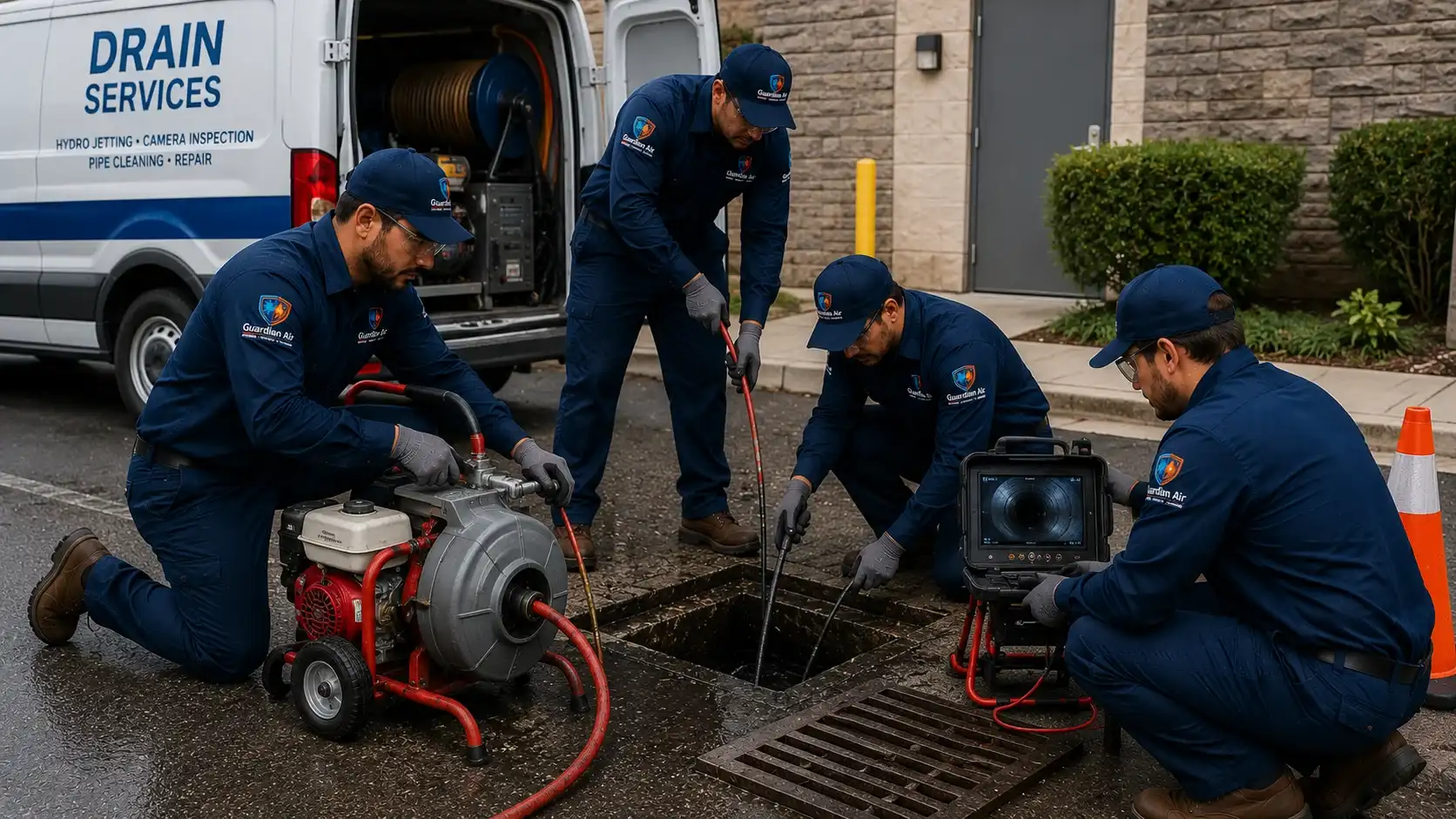
| Drain cleaning (snaking / augering) | A rotating cable breaks through or retrieves a blockage | Single clogs in sinks, tubs, toilets and main lines |
| Hydro jetting | Water at up to about 4,000 PSI scours the full pipe wall | Grease, scale, roots and clogs that keep coming back |
| Video camera inspection | A waterproof camera shows the inside of the line and its depth | Diagnosing recurring backups, root intrusion, pre-purchase checks |
| Sewer line repair | Replaces a cracked, offset or collapsed section | Localized damage found on camera |
| Trenchless repair (lining or bursting) | Rehabilitates or replaces the line with minimal digging | Damaged lines under driveways, trees and landscaping |
| Sewer line replacement | Replaces the full run from house to main | Lines that have failed along their length |
Drain cleaning (snaking)
Snaking is the right first step for most single clogs. A cable with a cutting or retrieving head is fed into the drain through the fixture or a cleanout and rotated through the blockage. It is fast and economical. Its limitation is that it opens a channel through a blockage rather than cleaning the pipe wall, so grease, scale and root growth left on the walls can rebuild the clog within months.
Hydro jetting
Hydro jetting sends high-pressure water through a nozzle that sprays backward and sideways, scouring the full circumference of the pipe and flushing debris downstream. It is the right choice when a line has been snaked before and clogged again, for kitchen lines coated in grease, and for clearing roots before a lining repair. Jetting is safe for pipes in sound condition; on fragile or damaged pipe the line should be inspected first and the pressure adjusted. More detail on our hydro jetting page.
Video camera inspection
A camera inspection is the step that turns guessing into diagnosis. The live picture shows exactly what is in the line — roots, grease, a belly where water pools, an offset joint, a crack or a collapse — and a locator in the camera head shows its position and depth from the surface. It should come before any recommendation to dig, and it is worth doing before buying an older home, since a standard home inspection does not look inside the sewer lateral. See video camera drain inspection.
Sewer repair and trenchless options
When the camera shows a pipe that is physically damaged — cracked, crushed, separated at a joint, or riddled with roots through many joints — cleaning will only buy time. A localized defect can be excavated and replaced. Longer damage can often be fixed without a trench: pipe lining cures a new resin pipe inside the old one, and pipe bursting pulls a new pipe through the old path while splitting the old one apart. Whether trenchless is possible, and whether it is actually cheaper than digging for your line, depends on depth, length, access and the condition of the host pipe. See sewer repair and line replacement.
Signs You Need Professional Drain Service
- Several drains slow or backing up at once — almost always a main-line problem.
- Gurgling from toilets or drains when another fixture is used.
- Water rising in a basement floor drain or the lowest shower.
- Sewage odor indoors or in the yard.
- A clog that returns within weeks or months of being cleared.
- Soggy, sunken or unusually green patches of lawn along the sewer route.
- Drain flies or insects around floor drains.
- A single slow drain that a plunger will not clear.
A sewage backup into the house is an emergency: stop running water, keep people and pets away from the contaminated water, and call. Our emergency plumbing team handles backups and overflowing drains.
Why Drains Fail in New Jersey Homes
Much of central New Jersey's housing was built between the 1920s and 1970s, and the sewer laterals under those homes reflect the materials of the time:
- Vitrified clay pipe — durable itself, but laid in short sections with joints that roots find and enter.
- Cast iron — common under slabs and in older homes; corrodes from the inside, building scale that catches debris and eventually cracks.
- Orangeburg pipe — a bituminized fiber pipe used roughly from the 1940s to the early 1970s. It deforms into an oval and blisters with age and is a frequent cause of collapses in homes from that era.
- PVC — the modern standard, but subject to bellies and offsets where the ground settles, which is common in sandy shore soils.
Mature street trees, sandy soil near the shore and decades of grease from kitchen drains do the rest. That is why, in an older home with recurring backups, a camera inspection is usually worth more than one more snaking.
Who owns the sewer lateral?
In many New Jersey municipalities the homeowner is responsible for the sewer lateral from the house to the municipal main, or to the property line or curb cleanout, and the town or sewer authority is responsible beyond that point. The dividing line varies by municipality, so check with your local sewer utility. Also check your homeowner's policy: standard policies often exclude sewer backup damage unless a sewer backup endorsement has been added.
Drain Service Costs in New Jersey
Most drain cleanings in New Jersey cost between $150 and $500; hydro jetting runs about $400–$800, and sewer line repairs range from about $1,000 for a spot repair to $15,000 or more for full replacement. These ranges match our drain cleaning cost guide.
| Service | Typical NJ range | What moves it |
|---|---|---|
| Service call | $89–$150 | Often applied to the work |
| Sink, tub or shower drain cleaning | $150–$350 | Access, location of the clog |
| Main line snaking | $250–$500 | Cleanout access, distance to the clog |
| Hydro jetting | $400–$800 | Line size and length, severity |
| Video camera inspection | $150–$350 | Often credited toward cleaning or repair |
| Spot sewer repair | $1,000–$3,000 | Depth, surface (lawn vs. driveway), permits |
| Full sewer line replacement | $5,000–$15,000+ | Length, depth, method, street connection |
Two things reliably reduce the total: having an accessible cleanout (installing one is often worthwhile if the house does not have one), and inspecting before committing to digging. Flat-rate pricing means the price is confirmed after the clog is located, before work proceeds.
Preventing Drain Problems
- Keep grease out of the kitchen sink. Let it cool, wipe pans with a paper towel and put it in the trash. Hot water and dish soap only move grease further down the line, where it sets.
- Flush only toilet paper. "Flushable" wipes do not break down like paper and are a leading cause of main-line clogs.
- Use hair catchers in showers and tubs.
- Skip chemical drain openers. Caustic and acid cleaners can damage older pipes and traps, rarely clear a main-line clog, and make the job hazardous for whoever has to open the drain afterward. Enzyme cleaners are a gentler option for routine maintenance.
- Know where your cleanout is and keep it accessible.
- Schedule preventive jetting every one to two years if a camera has shown recurring roots or grease — cheaper than repeated emergency calls.
- Plant trees away from the sewer route.
How to Choose a Drain Service Company
- Do they inspect before recommending excavation? Anyone proposing to dig without camera footage is guessing.
- Will they show you the footage and give you a copy?
- Is the price flat and written before work starts, with no surprise after-hours surcharges?
- Are they licensed and insured for plumbing work in New Jersey, and do they handle permits for sewer repairs?
- Do they offer more than one method? A company that only owns a snake will snake everything.
Book Drain Service With Guardian Air
A drain that keeps clogging is telling you something about the pipe, not just the clog. Guardian Air's licensed technicians will clear it, show you what is inside the line, and give you a straight answer on whether it needs anything more — with a written price before any work starts.
Call (848) 276-6300 or book a visit. You can also read about hydro jetting, camera inspections, sewer repair and leak detection.