June 20, 2026
How to Improve Indoor Air Quality at Home: A New Jersey Guide
Source control first, ventilation second, filtration third. What MERV ratings really mean, why humidity matters more than most purchases, the honest answer on duct cleaning, and why every NJ homeowner should test for radon.
By Noor Kamal, Technology Manager · Published · Updated
The EPA has found that indoor air is often more polluted than outdoor air — and Americans spend roughly 90 percent of their time indoors. That combination is the reason indoor air quality is worth understanding rather than guessing at.
It is also a field crowded with products that promise more than they deliver. So this guide is organised around a principle borrowed from the EPA itself, and it is the single most useful idea in the subject: source control first, ventilation second, filtration third. Air cleaners are the last line, not the first, and buying one while ignoring the first two is the most common and most expensive mistake homeowners make.
What follows covers what is actually in your air, what genuinely works, what the MERV numbers mean, where humidity fits, and which problems need a professional rather than a purchase.
What Is Actually in Your Indoor Air
"Air quality" is not one thing. It is several distinct categories of contaminant, and they respond to completely different interventions — which is why a single product rarely solves a whole problem.
Particulate matter
Dust, pollen, pet dander, textile fibres, skin cells, smoke and soot. This is the category filtration handles well, and the one most people are thinking of when they picture indoor air. Particles are measured in microns; the health-relevant fraction is the fine material small enough to reach deep into the lungs.
Biological contaminants
Mould spores, bacteria, viruses, dust mites and their waste, and cockroach allergens. These are humidity-driven more than anything else, which is why dehumidification often does more for an allergy sufferer than a filter upgrade.
Volatile organic compounds
VOCs off-gas from paint, adhesives, new carpet and furniture, cleaning products, air fresheners and solvents. Standard filters do essentially nothing for them — VOCs are gases, not particles. Ventilation and source control are the real answers, with activated carbon as a partial help.
Combustion products
Carbon monoxide, nitrogen dioxide and fine particles from gas ranges, fireplaces, unvented heaters and attached garages. This category is a safety issue rather than a comfort one, and it is covered separately below.
Radon
A colourless, odourless radioactive gas that enters through foundation contact with soil. It is the second leading cause of lung cancer in the United States, and it deserves its own section — particularly here.
Radon: The New Jersey Section
If you read only one part of this article, make it this one.
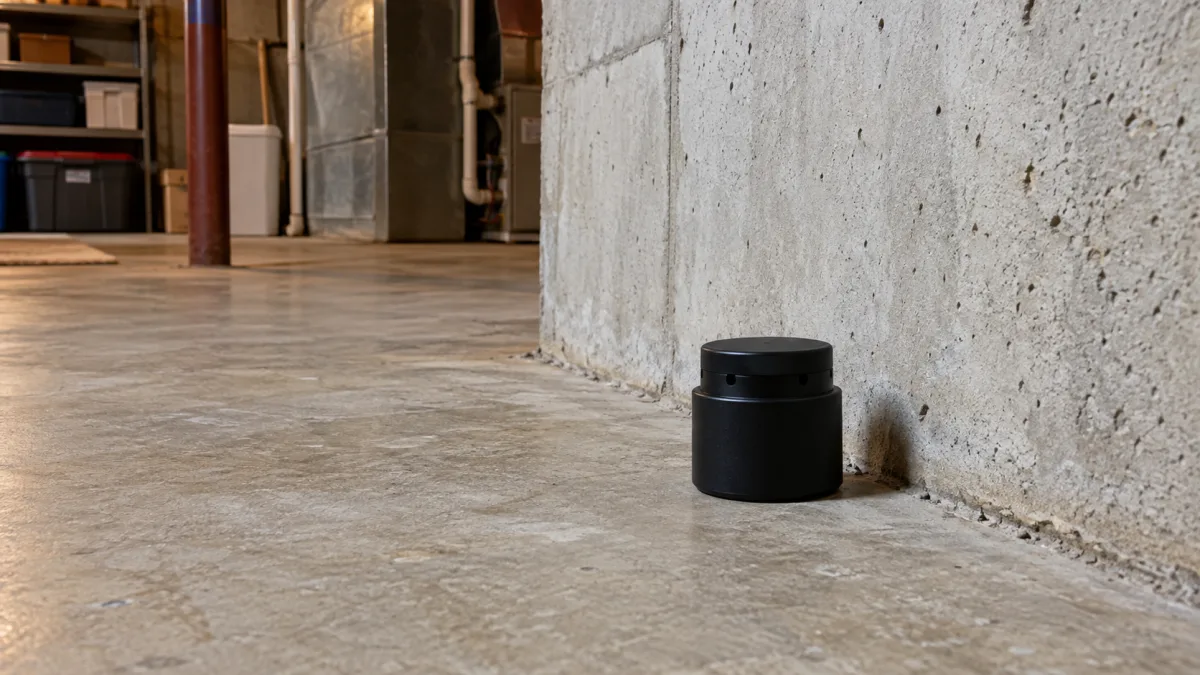
New Jersey has areas of elevated radon potential, and the state operates a formal radon programme through the Department of Environmental Protection precisely because the risk is real here. Radon cannot be smelled, seen or tasted, and no air purifier addresses it. The only way to know your level is to test.
Testing is inexpensive. Short-term test kits are widely available, and the DEP maintains a list of certified radon measurement and mitigation businesses. The EPA action level is 4.0 picocuries per litre, though it also notes that there is no known safe level and that reduction below 4.0 is worth considering.
If a test comes back high, mitigation is a well-established process — typically a sub-slab depressurisation system that vents soil gas above the roofline. It is a specific trade, separate from HVAC, and in New Jersey it is licensed.
Test for radon. It is cheap, it is the one indoor air contaminant with a direct and serious health outcome, and it is invisible to every other measure in this guide.
Step One: Source Control
Removing a pollutant beats filtering it. This is unglamorous and it is where the largest gains actually come from.
- Do not smoke indoors. Nothing else on this list comes close in impact.
- Run the kitchen exhaust when cooking — and make sure it vents outside rather than recirculating. Gas cooking in particular produces nitrogen dioxide and fine particulates.
- Vent bathrooms during and after showers, for 15 to 20 minutes afterward, to remove the moisture that feeds mould.
- Store solvents, paints and fuels outside the living space, ideally in a detached structure rather than an attached garage.
- Never idle a vehicle in an attached garage, even with the door open.
- Choose low-VOC paints and finishes, and ventilate heavily during and after any renovation.
- Reconsider fragrance products. Plug-in air fresheners and scented candles add VOCs and particulates; they mask odours rather than removing the source.
- Deal with water intrusion immediately. Mould needs moisture, and a damp basement or a slow leak under a sink will defeat everything else you do.
Step Two: Ventilation
Modern homes are built tight, which is excellent for energy efficiency and creates a real problem for air quality: contaminants that used to leak out now accumulate.
The simplest ventilation is opening windows, and on mild days it works. The difficulty in New Jersey is that the days when you most want ventilation are often the days when opening windows is least practical — high pollen in spring, high humidity in summer, cold in winter.
The engineered answer is balanced mechanical ventilation. An energy recovery ventilator (ERV) or heat recovery ventilator (HRV) brings in filtered outdoor air while exhausting stale indoor air, transferring heat — and in an ERV, moisture — between the two streams so you are not simply throwing away conditioned air.
For New Jersey's humid summers, an ERV is generally the better choice of the two, because it moderates incoming humidity rather than importing it wholesale. These are ducted installations and belong to a professional, but they solve the tight-house problem properly rather than working around it.
Step Three: Filtration, and What MERV Actually Means
MERV — Minimum Efficiency Reporting Value — rates how effectively a filter captures particles, on a scale from 1 to 16 for residential purposes. Higher numbers capture smaller particles.
| MERV | Captures | Suitable for |
|---|---|---|
| 1–4 | Large dust, lint, carpet fibre | Equipment protection only — not air quality |
| 5–8 | Mould spores, pet dander, dust mite debris | Basic residential baseline |
| 9–12 | Fine dust, some bacteria, auto emissions | Good residential range; MERV 11 is a common sweet spot |
| 13–16 | Bacteria, smoke, respiratory droplets | EPA recommendation where the system supports it |
The EPA recommends a filter of at least MERV 13, or as high as your system's fan and filter slot can accommodate. That qualifier is the important part, and it is where well-intentioned upgrades go wrong.
The trap: a filter that is too restrictive
A higher-MERV filter is denser, and density means resistance. Residential blowers are designed for a particular static pressure, and fitting a filter beyond what the system can pull air through causes real problems — reduced airflow, longer run times, a frozen evaporator coil in cooling, a tripped high-limit switch in heating, and premature blower wear.
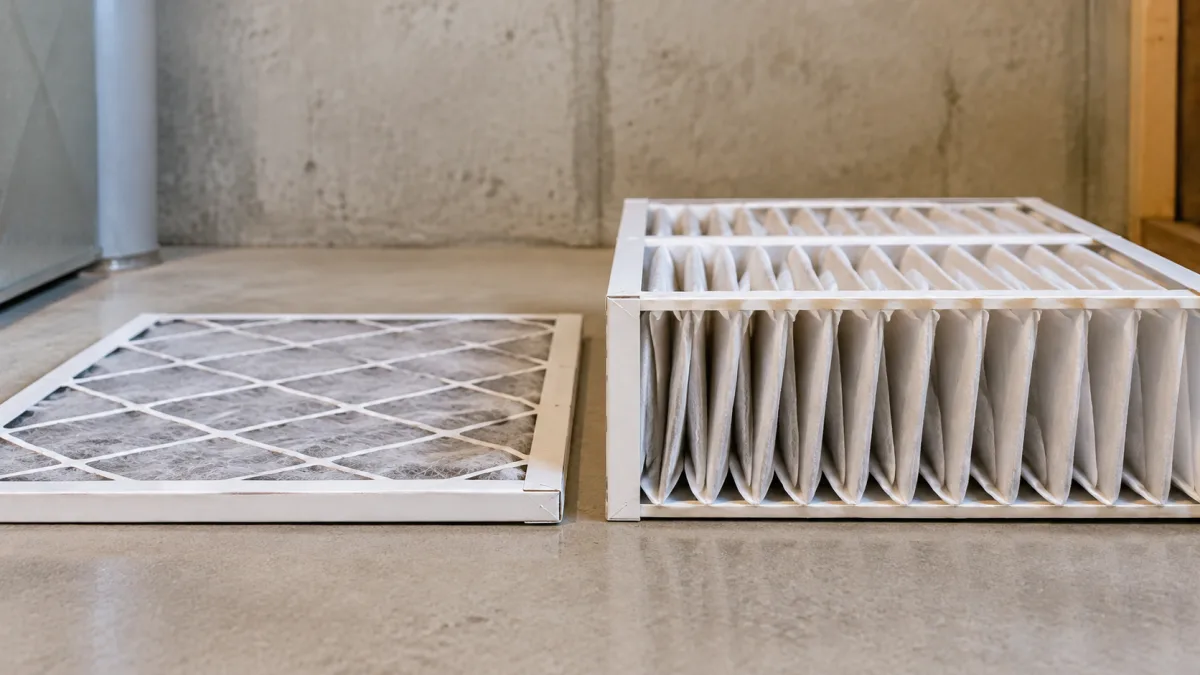
The practical resolution is usually not a denser one-inch filter but a larger filter. A four- or five-inch media cabinet offers far more surface area, which delivers high filtration efficiency at low resistance — and it typically needs changing only once or twice a year. If you want MERV 13 performance without straining the blower, that is the route.
If you are unsure what your system can handle, have static pressure measured rather than guessing. It is a quick test and it turns the question into a number.
Changing filters
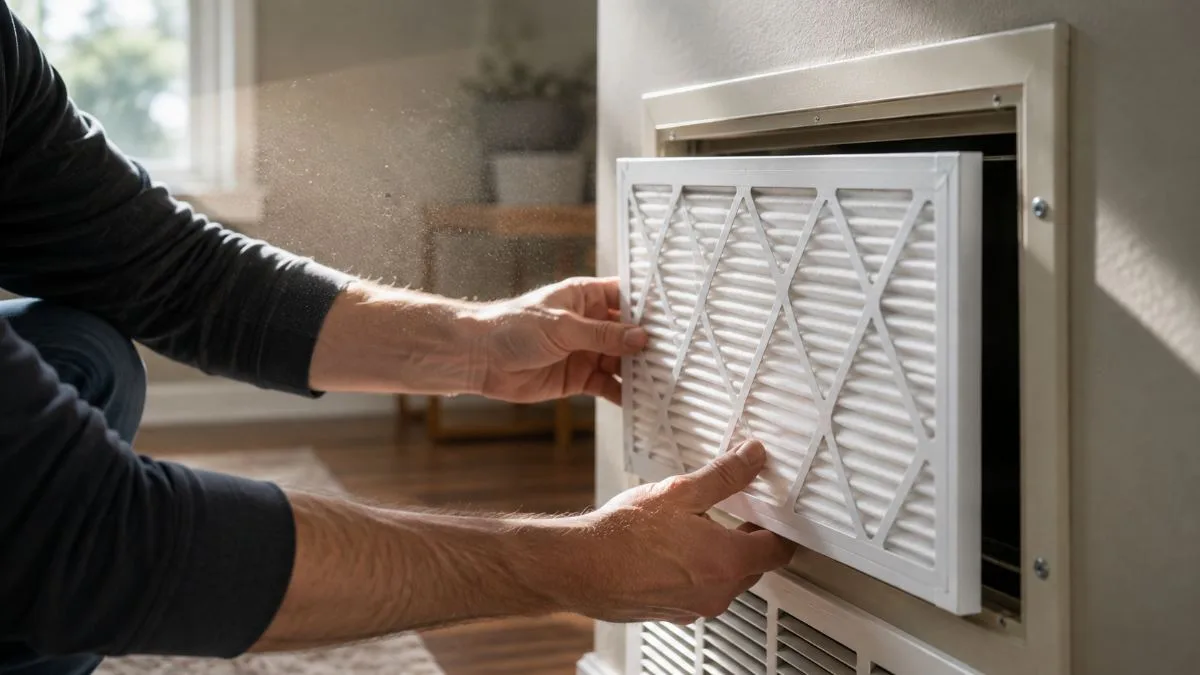
Every 90 days for a one-inch pleated filter; every 60 with pets or allergy sufferers. Media cabinets, six months to a year. A filter left in past its service life stops helping and starts restricting — and a dirty filter is the leading cause of the airflow problems described above.
Humidity: The Most Underrated Control
Keep indoor relative humidity between 30 and 50 percent. This single range does more for indoor air quality than most purchases.
Above roughly 50 percent, dust mites thrive — they absorb moisture from the air and cannot survive in drier conditions — and mould has what it needs to grow. Below about 30 percent, air feels harsh, mucous membranes dry out, wood shrinks and static increases, and fine particles remain airborne longer.
New Jersey presents both problems in the same year. Summers are humid; a basement here can sit well above 60 percent for months. Winters, with the heat running, can drop indoor humidity into the teens or twenties.
The answers are seasonal:
- Summer: your air conditioner already dehumidifies as a by-product of cooling. A correctly sized system running longer, steadier cycles removes more moisture than an oversized one that satisfies the thermostat quickly — another reason oversizing hurts. Basements usually need a dedicated dehumidifier regardless.
- Winter: a whole-home humidifier installed on the ductwork maintains humidity across the house without the refilling and localised effect of portable units.
- Year-round: a $10 hygrometer tells you where you actually are. Buy one before buying anything else.
Air Cleaners: What Works and What Does Not
Air cleaners divide into categories with genuinely different evidence behind them.
Mechanical filtration (HEPA and high-MERV)
The best-established technology. True HEPA captures 99.97 percent of particles at 0.3 microns. Portable HEPA units work well for a single room — a bedroom is the highest-value placement, since that is where you spend the most continuous hours. Whole-home media filtration treats the entire house but only while the blower runs.
Activated carbon
The one approach that meaningfully addresses gases and odours rather than particles. Often combined with mechanical filtration. Carbon saturates and must be replaced on schedule.
UV germicidal lights
Installed in the ductwork or at the evaporator coil. The strongest and least disputed benefit is keeping the coil itself free of biological growth — a coil-mounted UV lamp is essentially coil hygiene, which also protects airflow and efficiency. Claims about sterilising air in a fast-moving duct are weaker, because contact time is short.
Ozone generators — avoid
Devices marketed as producing "activated oxygen" or "energised air" generate ozone, which is a lung irritant. The EPA is explicit that ozone generators sold as air cleaners are not effective at concentrations that are safe to breathe. Do not use them in occupied spaces.
Ionisers and PCO devices
Evidence is mixed and product-dependent, and some produce ozone as a by-product. If you are considering one, look for independent third-party testing and a clear statement of ozone emissions — not marketing language.
Duct Cleaning: An Honest Answer
This is where we will say something against our own commercial interest, because the alternative is being one more contractor overselling a service.
The EPA's position is that duct cleaning has never been conclusively shown to prevent health problems, and that routine cleaning on a schedule is not necessarily warranted. What the EPA does say is that cleaning makes sense in specific circumstances:
- Visible mould growth inside ducts or on other HVAC components
- Ducts infested with vermin
- Ducts clogged with substantial visible debris, or particles actually being released into the home
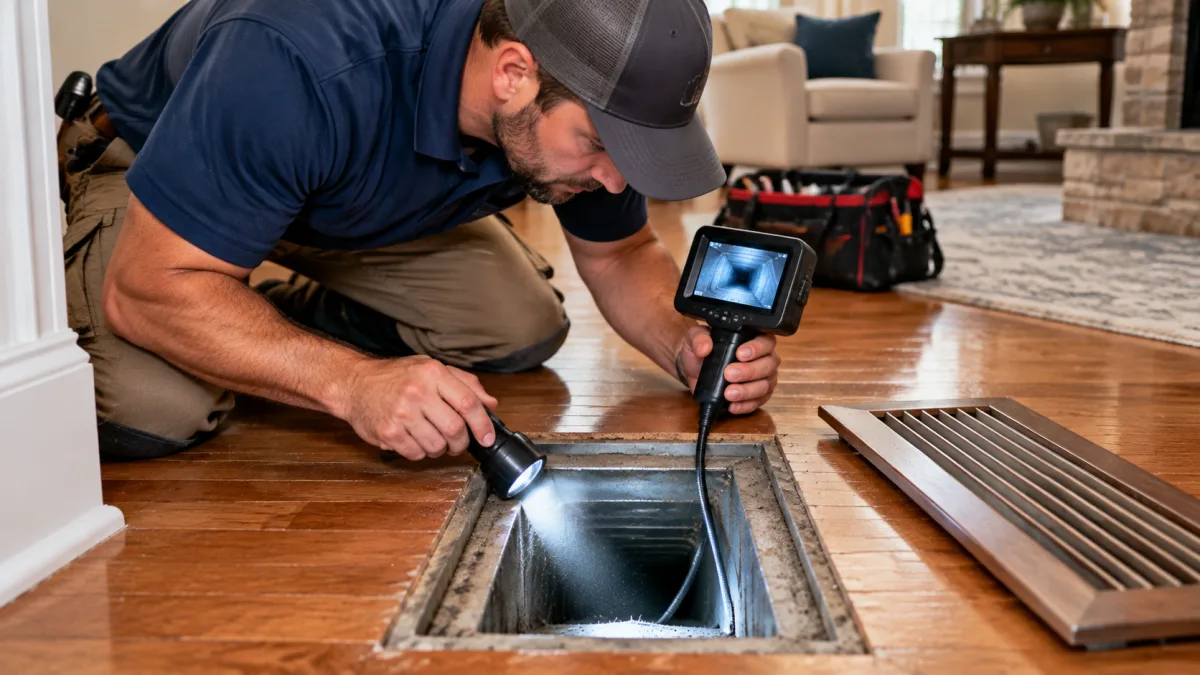
Those are real conditions and we clean ducts when they are present. What we will not tell you is that every home needs its ducts cleaned every few years. If someone quotes you duct cleaning as routine preventive maintenance with no inspection first, ask them to show you the inside of the duct. We set out the evidence in full in is air duct cleaning worth it?, and our duct cleaning cost guide lists typical prices.
Two related points do matter. If there is mould, cleaning alone will not solve it — the moisture source must be found and corrected, or it returns. And dryer vent cleaning is a genuinely different service with a genuinely different justification: lint accumulation is a fire hazard, and that one is worth doing on a schedule.
Combustion Safety and Carbon Monoxide
This section is short because the instructions are simple and non-negotiable.
Any home with fuel-burning appliances — gas furnace, boiler, water heater, range, fireplace — or an attached garage should have working carbon monoxide alarms on every level, including outside sleeping areas. CO alarms have a finite service life, typically five to seven years, after which the sensor degrades regardless of battery condition. Check the date stamped on the unit.
Signs worth acting on: a yellow rather than blue burner flame, soot around appliances, unusual condensation on windows near a combustion appliance, or household symptoms — headache, dizziness, nausea — that improve when people leave the house.
If a CO alarm sounds, get everyone outside and call from outside. Do not investigate first.
A Practical Order of Operations
If you want a sequence rather than a list:
- Test for radon. Cheap, and the only way to detect the most serious risk.
- Buy a hygrometer and find out what your humidity actually is, in summer and winter.
- Fix moisture problems — leaks, damp basements, unvented bathrooms — before anything else.
- Verify CO alarms exist, work, and are within their service life.
- Address sources: smoking, fragrance products, stored solvents, unvented cooking.
- Get filtration right — the correct MERV for your system, changed on schedule, ideally in a media cabinet.
- Correct humidity seasonally with dehumidification or whole-home humidification.
- Improve ventilation, with an ERV if the house is tight.
- Add targeted air cleaning last — a bedroom HEPA unit, carbon for odours, coil UV for biological growth on the coil.
Households With Pets, Allergies or Young Children
The general guidance above holds for everyone, but three situations justify going further than the baseline.
Pets. Dander is a continuous particulate source that no amount of filtration fully eliminates, because it is generated faster than it is captured. Shorten the filter interval to 60 days, vacuum with a HEPA-filtered machine rather than a standard one, and keep pets out of the bedroom of anyone who reacts — that single room change often does more than any device.
Allergy and asthma households. Prioritise humidity control over filtration. Dust mites are the most common indoor allergen trigger, they are humidity-dependent, and dropping below 50 percent relative humidity does more to suppress them than upgrading a filter. Wash bedding weekly in hot water, and consider reducing carpet and heavy upholstery in sleeping areas.
Infants and young children. Children breathe more air relative to body weight than adults do, which makes source control disproportionately valuable. Radon testing, working CO alarms and avoiding fragrance products matter more here than any purchase.
Getting an Assessment
Guardian Air is a family-owned, licensed and insured contractor serving Monmouth, Middlesex and Ocean counties. Our indoor air quality work covers filtration and media cabinets, whole-home humidifiers and dehumidifiers, ventilation, UV coil treatment, duct inspection and mould testing.
We will tell you when a measure is not worth it. If your ducts do not need cleaning, we will say so. If your problem is a wet basement rather than anything in your HVAC system, we will tell you that too — and the honest version of this service is a diagnosis before a recommendation.
Call (848) 276-6300 or request an assessment. You can also read about air duct cleaning, whole-home humidifiers and dehumidifiers, air purifier installation, and mould testing, or see what each of our air quality services involves and costs.
Authoritative references: the U.S. EPA's Care for Your Air and Guide to Air Cleaners in the Home, and the New Jersey DEP Radon Program.