October 6, 2026
Signs You Need a New Furnace: 9 Signs It's Time to Replace
The nine signs it is time to replace your furnace, from age and rising bills to short cycling and a cracked heat exchanger, how to tell if your furnace is going out, the $5,000 and 50% rules for repair vs replace, and NJ rebate notes.
The clearest signs you need a new furnace are age (15 to 20 years or more), repairs that keep coming back, heating bills that climb while your habits stay the same, and any fault that touches safety, above all a cracked heat exchanger. One sign on its own is usually a repair. Several together, on a furnace in the second half of its life, usually mean it is time to plan a replacement.
This guide is about the replacement decision. If your furnace is younger and you are trying to work out what a noise or a cold room means, start with the 5 signs your furnace needs repair. Below are the nine replacement signs, how to tell whether your furnace is going out, a repair-or-replace framework, electric furnace notes and what replacement involves in New Jersey.
9 Signs It's Time to Replace Your Furnace
1. Your furnace is 15 to 20 years old or older
Age is the starting point because it sets the odds for everything else. A well-maintained gas furnace usually lasts 15 to 20 years. Past that, parts are harder to get, efficiency has drifted, and the heat exchanger has been through thousands of heating and cooling cycles.
The rating plate inside the front panel usually shows the manufacture date, often encoded in the serial number. A furnace past about 15 years is not automatically finished, but every repair on it should be weighed against replacement rather than approved by reflex.
2. Repairs are getting more frequent
One repair in a season is normal. A second and third in the same winter, or the same part failing again, is a pattern. Older furnaces tend to fail in sequence: the igniter, then the inducer motor, then the control board, then the blower. Each repair is reasonable on its own, but together they can add up to a meaningful share of a new system while leaving you with the same old furnace.
3. Your heating bills keep rising
Compare the same months year over year and allow for how cold each winter was. If you are using noticeably more gas or electricity for the same comfort, the furnace is losing efficiency. Older units were commonly rated around 70 to 80 percent AFUE (Annual Fuel Utilization Efficiency), and they rarely hold that rating after 15 years. A current condensing furnace is rated 90 to 98 percent AFUE, so a big part of the case for replacement is fuel you stop wasting every winter.
Rule out a clogged filter and leaky ductwork first; both raise bills on any system.
4. Some rooms are always cold
Check ductwork, closed registers and thermostat placement first. But when a house that used to heat evenly now has rooms that never catch up, it can point to a weakening blower or a furnace that can no longer deliver its rated output, or one that was never sized correctly, which a replacement with a proper load calculation can fix.
5. The furnace short cycles
Short cycling means the furnace turns on, runs briefly, shuts off and repeats, often several times an hour. On a younger furnace it is usually a filter, flame sensor or limit switch. On an old furnace it often comes back after each fix, and every extra start-up adds wear. Persistent short cycling can also be a sign of an oversized furnace, which is a design problem that no repair will solve.
6. A yellow or flickering burner flame
A gas burner should burn with a steady blue flame. A yellow, orange or lazy flickering flame points to incomplete combustion, and incomplete combustion produces carbon monoxide. Sometimes the cause is dirty burners and a cleaning fixes it. On an older furnace it can also be a sign of a combustion or venting problem, or of a damaged heat exchanger. Have it inspected promptly.
If a carbon monoxide alarm sounds or anyone in the house has headaches, dizziness or nausea that ease when they go outside, get everyone out first and call 911 or your gas utility from outside. Diagnosis can wait until everyone is safe.
7. A cracked heat exchanger
The heat exchanger is the metal wall between the burner flames and the air your blower sends through the house. Years of heating and cooling stress the metal, and eventually it can crack. A crack can let combustion gases, including carbon monoxide, into your living space.
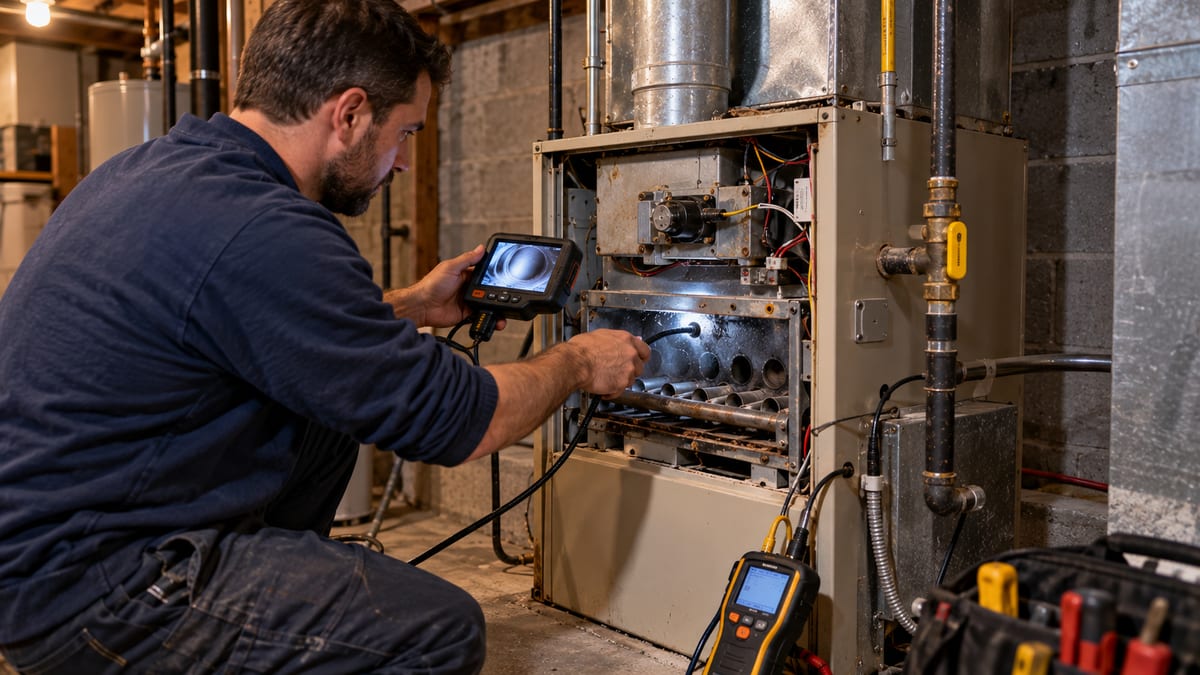
This is the one sign where the answer is almost always replacement. Heat exchanger replacement on an out-of-warranty furnace is expensive and labor-heavy, and on an older furnace the money is usually better spent on a new system. A furnace confirmed to have a cracked heat exchanger should be shut down until it is dealt with. Ask the technician to show you the evidence, such as a camera image or combustion readings, before you decide.
8. New noises: banging, rumbling, squealing or rattling
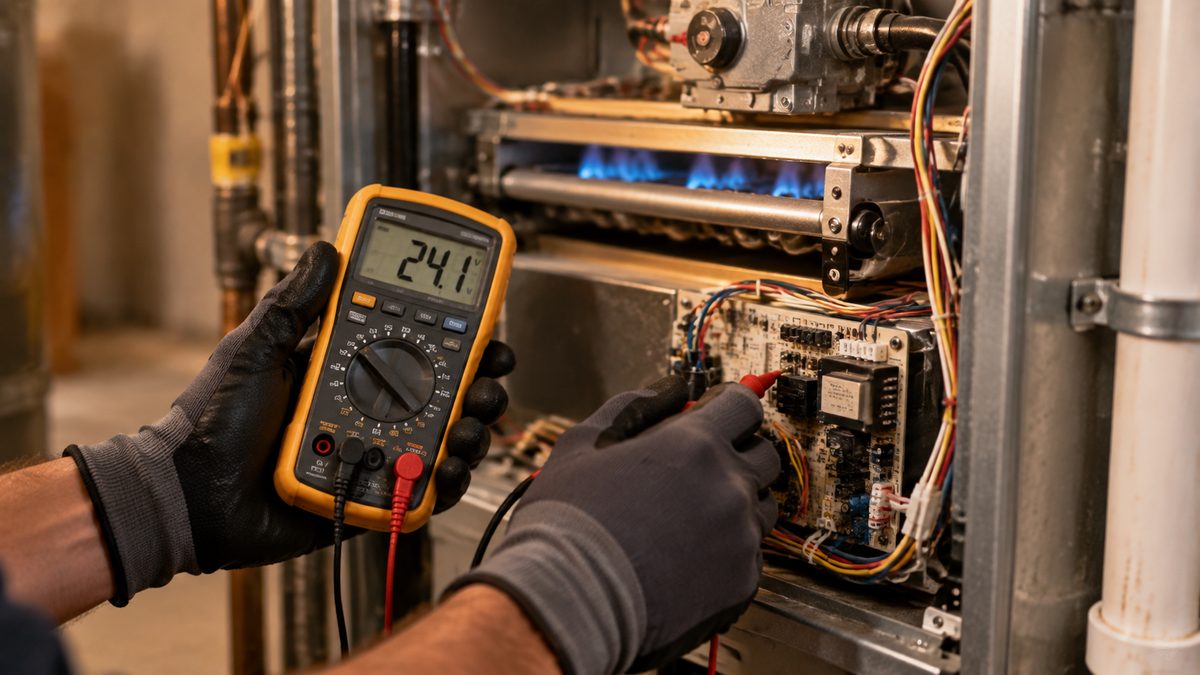
Many noises are cheap fixes: a belt, a bearing, a loose panel. On an old furnace, weigh the ones that point at expensive parts. A boom at ignition stresses the heat exchanger, and grinding from the blower can mean the motor is failing. If the fix is a major part on a furnace near or past 15 years, use the framework below before approving it.
9. Rust, soot, excess dust or dry air
Rust around the flue or the bottom of the cabinet can mean moisture problems inside the unit, and soot or dark streaks are a combustion warning. Extra dust, stale air or very dry winter air can come from a worn blower and leaky ducts. On their own these are maintenance items; alongside age and rising repairs, they strengthen the case for a new system.
Is Your Furnace Going Out? How to Tell
Furnaces rarely die without warning. When a furnace is going out, you usually see several of these at once:
- It takes longer to warm the house, and it struggles to keep up on the coldest nights
- It runs almost constantly or cycles on and off more than it used to
- Repairs are happening more than once a season
- The same lockout or error code keeps coming back after resets
- Gas or electric bills are up with no change in how you heat the house
- A technician has noted heat exchanger wear, corrosion or combustion problems on a maintenance visit
If two or three of these apply and your furnace is past about 15 years, it is time to get a replacement quote while you can still plan it. A furnace replaced on your schedule in the fall is a much better experience than one replaced in an emergency during a January cold snap.
Repair or Replace? A Simple Framework
Two rules of thumb are widely used in the trade. Neither is perfect, but together they give a solid first answer.
The $5,000 rule
Multiply the repair quote by the furnace's age in years. If the result is over about $5,000, replacement usually makes more sense. A $400 repair on a 6-year-old furnace scores 2,400, so repair it. The same $400 repair on a 17-year-old furnace scores 6,800, so put the money toward a new system.
The 50 percent rule
If a single repair would cost more than about half the price of a new furnace, replace instead. With most gas furnace replacements in our area falling in the range covered in our furnace replacement cost guide, a large repair such as a heat exchanger or a control board plus blower motor on an old furnace often crosses that line.
| Situation | Usually |
|---|---|
| Under 10 years old, minor part failure | Repair |
| Under 10 years old, major part, still under warranty | Repair, after checking the warranty |
| 10 to 15 years old, repeated repairs | Get both a repair price and a replacement quote |
| Over 15 years old, major repair quoted | Usually replace |
| Cracked heat exchanger, out of warranty | Replace |
Check the warranty before authorizing a major repair; many manufacturers cover parts for years if the furnace was registered and maintained. And if you are replacing anyway, it is the moment to consider a heat pump or dual-fuel system; our heat pump vs furnace guide walks through the running costs.
Signs an Electric Furnace Needs Repair or Replacement
Electric furnaces have no burners, no flame and no combustion gases, so flame color and carbon monoxide do not apply to the furnace itself. They heat with resistance elements switched on in stages by sequencers or relays, and they tend to fail in a different way:
- Less heat than before. When one element burns out, the others still work, so the house warms more slowly and may not keep up on the coldest days.
- Higher electric bills. The remaining elements run longer to make up the difference.
- Tripping breakers. A breaker that trips repeatedly is pointing to a real fault, such as a shorted element or a failing relay. Do not keep resetting it.
- Burning or electrical smells beyond the brief dusty smell of the first run of the season.
Electric furnace repair is often straightforward: an element, a sequencer or a relay. With no combustion parts, electric furnaces often outlast gas ones, so the replacement question is usually about operating cost. Resistance heat is expensive to run in New Jersey, and many owners of an old electric furnace look at a heat pump instead.
Replacing a Furnace in New Jersey: What to Know
Central New Jersey winters swing from mild stretches to hard cold snaps, and an old furnace tends to fail on the first heavy demand, exactly when contractors are busiest. If your furnace shows several of the signs above, plan the replacement in the fall, ideally after a furnace tune-up has documented its condition. A few New Jersey specifics:
- Permits. Furnace replacement is permitted work in New Jersey, and the permit and inspection should be included in the quote.
- Utility rebates. New Jersey Natural Gas (through its SAVEGREEN program) and PSE&G both offer incentives for qualifying high-efficiency furnaces, generally a 95 percent AFUE furnace replacing an older non-condensing unit, along with on-bill financing options. Program details and amounts change, so confirm current terms with your utility or with us before you sign. New Jersey's Clean Energy Program also lists energy-efficiency incentives for homeowners. Our offers page lists current Guardian Air promotions.
- Sizing. A new furnace should be sized with a load calculation, not matched to the old one by nameplate. Many older furnaces in the area were oversized, which is one cause of short cycling and uneven heat.
- Venting. Moving from an 80 percent furnace to a condensing furnace usually means new PVC venting and a condensate drain, and sometimes a chimney liner for the water heater left on the old flue.
Our furnace replacement cost guide breaks down each of those items and how they affect price.
Get an Honest Answer on Your Furnace
Guardian Air is a family-owned, licensed and insured heating contractor serving Monmouth, Middlesex and Ocean counties, including Aberdeen, Old Bridge and towns throughout Middlesex County. We diagnose first and give you a flat-rate price before any work begins. If a repair makes sense, we will tell you. If your furnace is past the point where repair is a good use of your money, we will quote both options so you can decide with the numbers in front of you.
Call (848) 276-6300 or request an estimate online. You can also learn more about furnace replacement with Guardian Air.