October 4, 2026
Electrical Wiring Services: Warning Signs, Rewiring, Panel Upgrades and Costs
The warning signs of failing wiring, the wiring types found in older New Jersey homes, what inspections, new circuits, panel upgrades and rewiring involve, permits and licensing, and what electrical wiring services cost.
What Are Electrical Wiring Services?
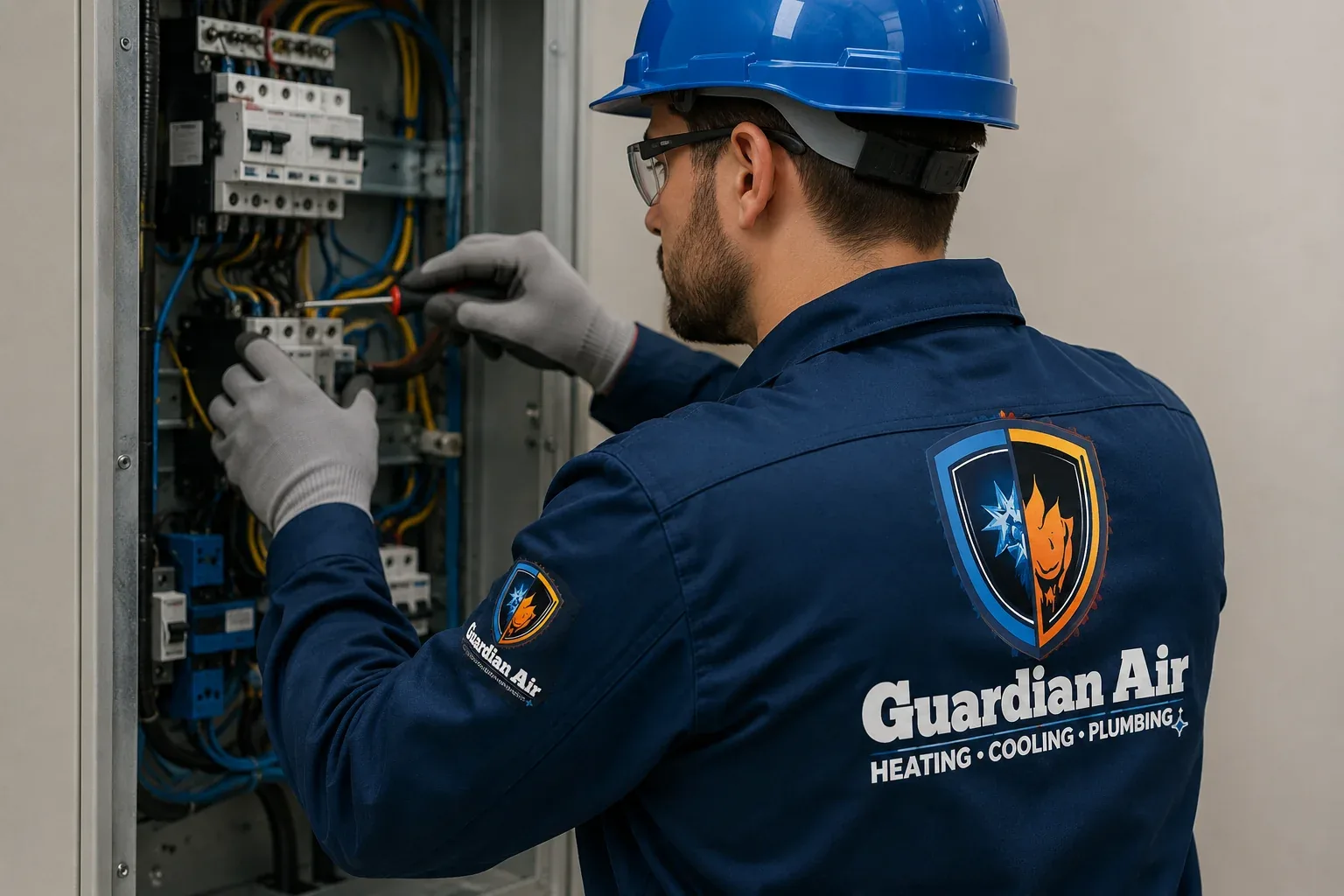
Electrical wiring services are the inspection, repair, installation and replacement of the wiring that distributes power through a building — branch circuits, outlets, switches and fixtures, the electrical panel that feeds them, and the protective devices that keep them safe. For a home they range from replacing a single scorched outlet to adding a dedicated circuit for an EV charger or heat pump, upgrading the panel, or rewiring the entire house.
Wiring is the part of a house that nobody sees and that ages without obvious symptoms. Insulation becomes brittle, connections loosen with decades of heating and cooling, and circuits designed for a 1960s kitchen end up feeding a modern one. Electrical failures and malfunctions remain one of the leading causes of home fires in the United States, and most of them start in wiring and connections rather than appliances. This guide explains the warning signs, the types of wiring found in New Jersey homes, what each kind of electrical service involves, and what it costs.
Warning Signs Your Wiring Needs Attention
Stop and call now
- A burning smell with no obvious source, or the smell of hot plastic near an outlet, switch or the panel.
- Outlets or switch plates that are warm or hot to the touch, discolored or scorched.
- Sparks when plugging something in, or arcing and buzzing sounds from outlets, switches or the panel.
- A breaker that trips again immediately after you reset it.
- Tingling or a mild shock from an appliance, faucet or switch.
If you smell burning or see smoke or scorching, switch off the affected circuit at the panel if you can do so safely, do not use the outlet, and call. If there is smoke or flame, leave the house and call 911.
Book an inspection
- Breakers that trip repeatedly, or fuses that blow, when certain appliances run.
- Lights that flicker or dim when the air conditioner, microwave or a space heater starts.
- Two-prong outlets throughout the house, or three-prong outlets with no ground behind them.
- No GFCI protection in kitchens, bathrooms, laundry areas, garages, basements or outdoors.
- Heavy reliance on extension cords and power strips because there are not enough outlets.
- A fuse box, a panel rated under 100 amps, or a panel known for safety problems (below).
- A home more than 40 years old whose wiring has never been evaluated, or a recent purchase with unknown history.
- Planned additions — an EV charger, heat pump, induction range, hot tub or finished basement.
Types of Wiring in New Jersey Homes
Central New Jersey's housing stock spans more than a century, and the wiring behind the walls often dates from when the house was built.
| Wiring | Typical era | Concerns |
|---|---|---|
| Knob-and-tube | About 1880s–1940s | No ground; brittle insulation; unsafe when buried in insulation or altered over the years; many insurers will not cover it |
| Early cloth-sheathed cable | About 1930s–1960s | Rubber insulation that cracks with age; often ungrounded |
| Aluminum branch wiring | About 1965–1973 | Connections can overheat at outlets, switches and splices; needs approved repair methods, not replacement devices alone |
| Modern NM cable ("Romex") with ground | 1960s onward, plastic-sheathed from the 1970s | Generally sound; problems are usually overloading, loose connections or DIY alterations |
Two older panel types also deserve a specific mention. Federal Pacific Electric (FPE) "Stab-Lok" and Zinsco panels, both common in homes built from the 1950s to the 1980s, have well-documented histories of breakers that may not trip under overload. Many electricians and home inspectors recommend replacing them, and some insurers ask about them.
None of this means an older home is unsafe by default. It means the wiring should be inspected by a licensed electrician who can tell you what you have and what condition it is in.
Electrical Wiring Services We Provide
Electrical safety inspection
An inspection is the right starting point for an older home, a home you have just bought, or any of the warning signs above. A licensed electrician examines the panel and its breakers, the service entrance and grounding, a sample of outlets and switches for polarity, grounding and heat damage, GFCI and AFCI protection, and the condition and type of the wiring that can be reached. You receive a written list of findings ranked by urgency.
Repairs and troubleshooting
Tracing a dead circuit, a breaker that keeps tripping, a flickering circuit, or a warm outlet, and correcting the cause — a loose connection, a failed device, a damaged cable, an overloaded circuit or an incorrect breaker.
New circuits and dedicated lines
Major appliances need their own circuits: refrigerators, microwaves, dishwashers, washers and dryers, window or mini-split air conditioners, and space heaters that are used regularly. Dedicated 240-volt circuits are needed for EV chargers, electric ranges, dryers, heat pumps and hot tubs. Adding a circuit includes confirming the panel has the capacity and space for it.
Outlets, GFCI and AFCI protection
Replacing ungrounded two-prong outlets the correct way (by running a ground, or by GFCI protection with the required labeling — never by installing a three-prong outlet on an ungrounded circuit); adding GFCI protection in wet locations, which interrupts power in a fraction of a second when current leaks to ground; and adding AFCI protection, which detects the arcing that precedes many wiring fires. Current code requires AFCI protection for most living-area circuits in new work.
Panel upgrades and replacements
Replacing a fuse box or a problem panel, or upgrading service capacity — commonly from 100 to 200 amps — when the home's electrical load has outgrown it. A service upgrade involves the utility company (JCP&L or PSE&G in most of our area) to disconnect and reconnect power, and a municipal inspection before it is re-energized.
Partial and whole-home rewiring
Replacing knob-and-tube, deteriorated cloth-sheathed cable or problem aluminum circuits with modern grounded wiring. Rewiring is usually done room by room through small, planned openings rather than removing whole walls; plaster homes take longer than drywall. Many homeowners rewire in phases, starting with the highest-risk circuits and the kitchen.
Lighting, surge protection and backup power
Recessed and fixture lighting, ceiling fans, outdoor lighting, a whole-home surge protector at the panel, and generator connections with a properly installed transfer switch or interlock so a generator can never back-feed the utility lines.
Wiring for Heat Pumps, EV Chargers and Electrification
Many New Jersey homes are adding large electric loads at once: a heat pump to replace oil or gas heat, a Level 2 EV charger, an induction range, an electric water heater. Each is reasonable on its own. Together they can exceed what a 100-amp service can safely deliver.
The right first step is a load calculation, not an automatic panel upgrade. The National Electrical Code allows an electrician to size additions to an existing home using either a standard calculation or, in many cases, twelve months of actual demand data from the utility. That often shows there is more room than expected — and where there is not, options such as load management devices, a smart EV charger that shares a circuit, or a heat pump with lower start-up current can sometimes avoid a service upgrade. Where an upgrade is needed, it can be planned once for everything on the list instead of piecemeal.
Because Guardian Air installs heating and cooling equipment as well as electrical work, a heat pump conversion can be planned with the electrical side included from the start. See our guide to heat pump services.
Permits, Code and Licensing in New Jersey
Most electrical work in New Jersey — new circuits, panel replacements and upgrades, service changes, rewiring, generator connections and EV chargers — requires a permit from the municipal construction office under the state Uniform Construction Code and an inspection by the electrical subcode official. Like-for-like replacement of an outlet, switch or light fixture is generally treated as minor work, but rules vary, so check with your town or ask the contractor.
Electrical contracting work in New Jersey must be performed under a licensed electrical contractor registered with the New Jersey Board of Examiners of Electrical Contractors. Ask for the license number and proof of insurance, and expect the contractor to pull the permit. A quote that suggests skipping the permit is a warning sign: unpermitted electrical work can complicate insurance claims and home sales, and inspection is the independent check that the work is safe.
Electrical Wiring Service Costs in New Jersey
Small electrical repairs in New Jersey usually cost $150–$400; new circuits $350–$1,500; panel upgrades about $2,500–$5,500; and whole-home rewiring roughly $10,000–$30,000 depending on size and access. These are orientation ranges. An accurate quote needs a site visit, because access, wall construction and panel capacity drive the price.
| Service | Typical NJ range | What moves it |
|---|---|---|
| Electrical safety inspection | $150–$400 | Home size, panel and wiring type |
| Outlet or switch repair / replacement | $150–$300 | First device; additional devices cost less |
| GFCI or AFCI protection (per circuit) | $150–$350 | Device vs. breaker, panel compatibility |
| New 120-volt dedicated circuit | $350–$900 | Distance from the panel, finished walls |
| New 240-volt circuit | $500–$1,500 | Amperage, wire run, panel space |
| Level 2 EV charger installation | $800–$2,500 | Distance to the garage or driveway; excludes panel upgrade |
| Whole-home surge protector | $300–$700 | Panel type |
| Generator interlock or transfer switch | $500–$1,500 | Manual interlock vs. transfer switch, inlet location |
| Panel replacement (same capacity) | $1,800–$3,500 | Number of circuits, required AFCI/GFCI breakers |
| Service upgrade to 200 amps | $2,500–$5,500 | Meter and service entrance work, utility requirements |
| Whole-home rewire | $10,000–$30,000+ | Square footage, plaster vs. drywall, attic and basement access |
Wall repair after rewiring is often quoted separately; ask whether patching and painting are included.
Why Electrical Work Is Not a DIY Project
Resetting a breaker once, testing GFCI outlets with their test button and replacing a bulb are reasonable homeowner tasks. Anything that involves opening a box, the panel or the wiring is not. Wiring mistakes rarely show up immediately — a loose connection or the wrong breaker can work for months before it overheats — and a mistake inside the panel can be fatal. Licensed, permitted work is also what your insurer and a future buyer's inspector will expect to see.
How to Choose an Electrical Contractor
- Licensed in New Jersey? Ask for the electrical contractor license number and confirm it.
- Insured? Liability and workers' compensation certificates.
- Who pulls the permit and schedules the inspection?
- Will they do a load calculation before recommending a panel upgrade?
- Is the quote written and itemized — devices, breakers, wire, wall repair and permit fees?
- What warranty applies to the workmanship?
Book Electrical Wiring Service With Guardian Air
Whether you have a warm outlet, a breaker that will not stay on, an older home you want checked, or a heat pump and EV charger on the way, Guardian Air's licensed electricians will inspect first, explain what they find in plain language and give you a written, itemized price before any work starts.
Call (848) 276-6300 or book an electrical inspection. Planning a system change at the same time? Read our guides to heat pump services and HVAC installation.