October 3, 2026
Air Quality Services: Assessments, Purifiers, Humidity Control and Duct Cleaning
What professional indoor air quality services include, how an assessment should work, which service fixes which problem — dust, allergies, mold, humidity, stale air — and what each costs in New Jersey.
What Are Air Quality Services?
Indoor air quality services are professional assessments and installations that reduce what is in the air inside a home — particles, allergens, moisture, mold, odors and chemical vapors — and keep humidity and fresh air at healthy levels. For a typical home they include an air quality assessment, upgraded filtration, whole-home air purifiers and UV systems, humidifiers and dehumidifiers, ventilation, air duct cleaning and mold testing.
The EPA has found that concentrations of some pollutants are often two to five times higher indoors than outdoors, and most people spend around 90 percent of their time inside. That makes indoor air a reasonable thing to spend money on. It also makes it an easy thing to oversell. The honest version of this service starts with finding out what the actual problem is, because a dehumidifier will not fix a dust problem and an air purifier will not fix a damp basement. This guide explains each service, what it is good for, what it costs in New Jersey and how to tell a real assessment from a sales visit.
If you want the homeowner's side first — what you can do yourself, how MERV ratings work, and why every New Jersey home should test for radon — read our guide on how to improve indoor air quality at home. This article covers the professional services.
Signs Your Home Needs Air Quality Services
- Dust returns within a day or two of cleaning.
- Allergy or asthma symptoms that are worse at home and improve when you leave.
- A musty smell, especially one that gets stronger when the HVAC system runs.
- Condensation on windows in winter, or a clammy, sticky feel in summer.
- Static shocks, dry skin and cracking woodwork in winter — air that is too dry.
- Visible mold on walls, ceilings, in closets or around the air handler.
- Lingering cooking, pet or chemical odors.
- Recent renovation, water damage, or moving into a home with an unknown history.
Types of Air Quality Services
| Service | What it treats | Does not fix |
|---|---|---|
| IAQ assessment | Identifies the actual problem and its source | Nothing by itself — it decides what will |
| Upgraded filtration / media cabinet | Dust, pollen, pet dander, fine particles | Odors, gases, humidity |
| Whole-home air purifier | Fine particles; some models also odors and VOCs | Moisture and mold at its source |
| UV germicidal light | Mold and bacteria growing on the cooling coil and drain pan | Dust and allergens in the air |
| Whole-home dehumidifier | Summer humidity, dust mites, mold risk, clamminess | Particles and odors |
| Whole-home humidifier | Dry winter air, static, irritated sinuses | Anything except dryness |
| Ventilation (ERV/HRV) | Stale air, CO2, buildup of everyday pollutants in tight homes | Outdoor pollen if unfiltered |
| Air duct cleaning | Heavy debris, pest contamination, mold in ducts | Ongoing dust from other sources |
| Mold testing | Confirms whether, where and how much mold is present | The moisture source — that needs correcting separately |
Step One: The Indoor Air Quality Assessment
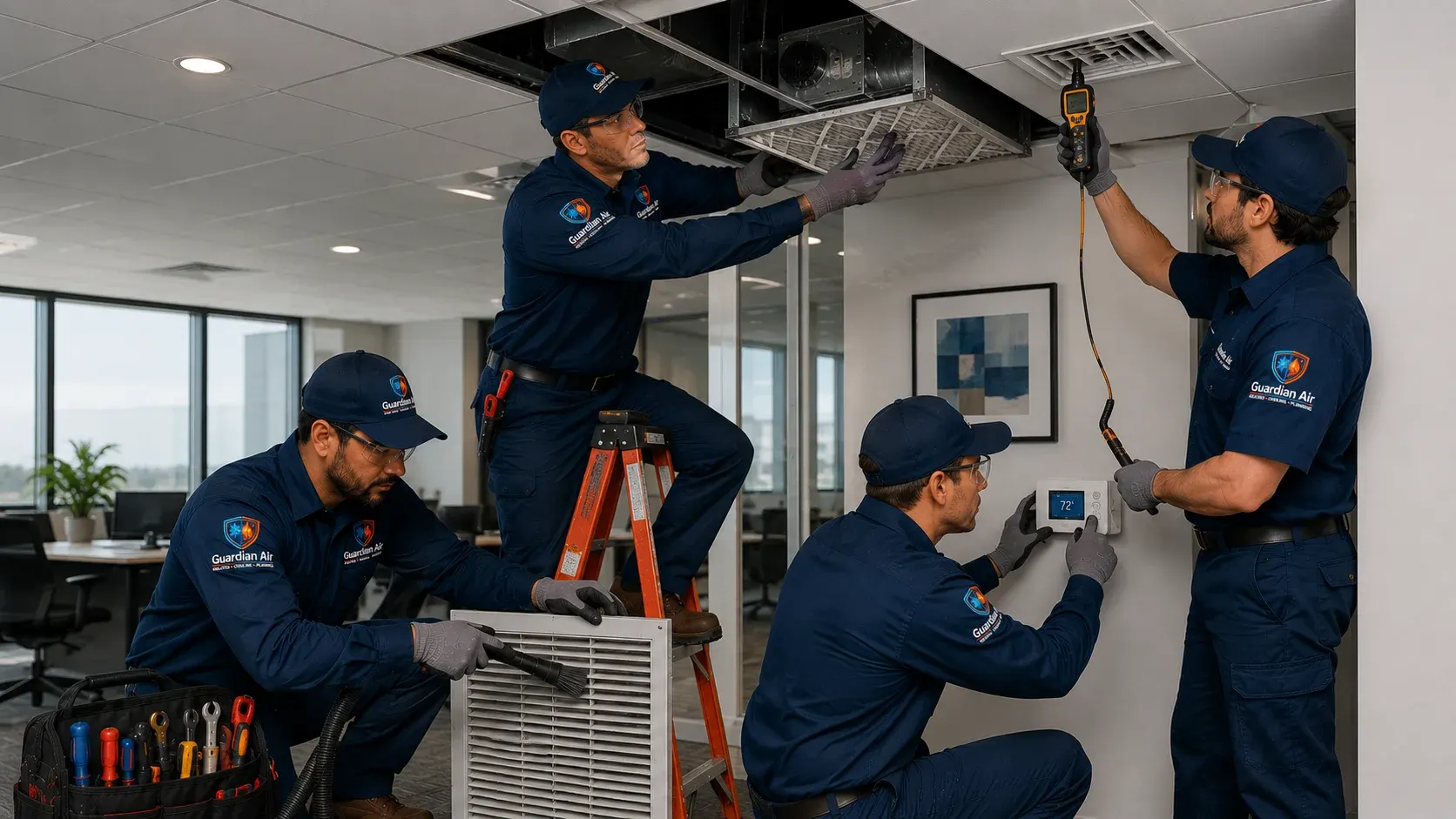
An air quality assessment should come before any equipment recommendation. A proper visit includes:
- Measurements — relative humidity and temperature in several rooms and the basement; particle counts where useful; often CO2 as a proxy for ventilation.
- An HVAC inspection — filter type, size and fit; the condition of the indoor coil and drain pan; return air leaks that pull in attic, garage or crawlspace air; airflow and static pressure.
- A look for moisture sources — basement dampness, unvented bathrooms and dryers, plumbing leaks, condensation around ducts.
- Combustion safety — on homes with gas or oil equipment, a check of venting and carbon monoxide.
- A written summary of findings and a prioritized list of what would actually help, cheapest effective measures first.
Radon is the one major New Jersey indoor air risk an HVAC assessment cannot measure: it requires a dedicated test, and mitigation should be done by a radon professional certified by the New Jersey Department of Environmental Protection. A good assessor will tell you to test for it if you have not.
Filtration and Whole-Home Air Purifiers
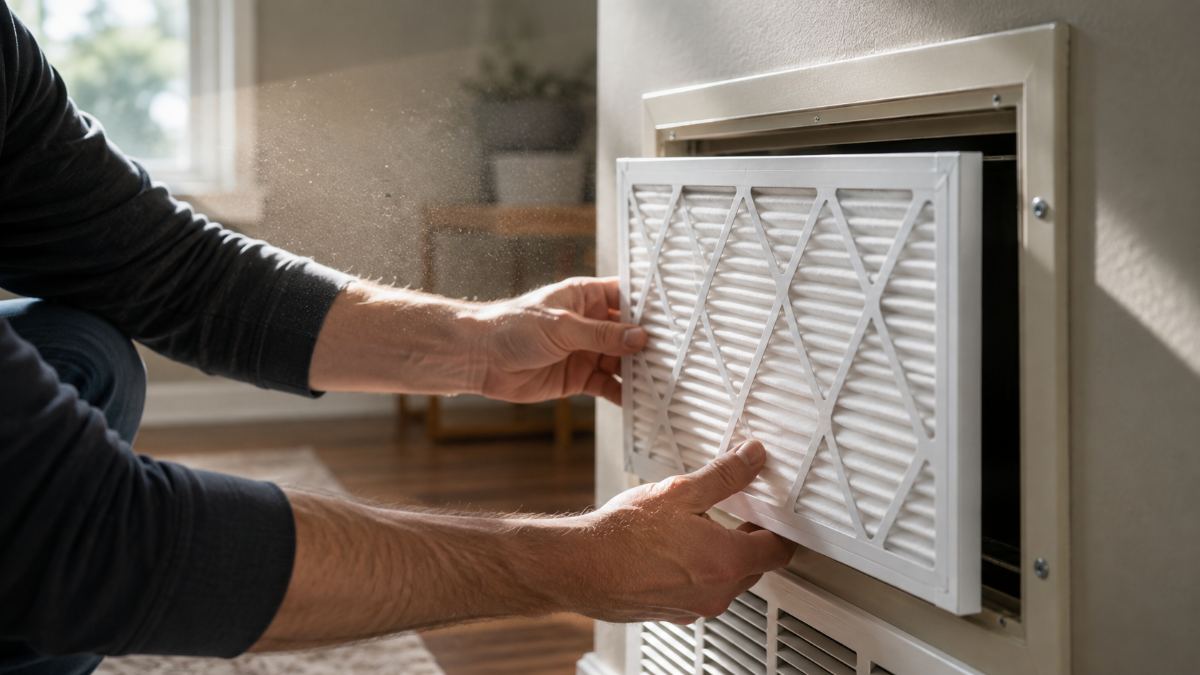
Your HVAC system already moves all of the air in the house through its filter several times an hour, which makes it the most efficient place to clean the air. The most cost-effective upgrade is often a media filter cabinet holding a 4- or 5-inch-deep filter: it captures fine particles at MERV 11–13 without choking airflow the way a dense 1-inch filter can, and the filter lasts six months to a year.
Beyond filtration, whole-home air purifiers fall into a few types:
- High-efficiency media and HEPA-style systems — mechanical capture of particles. The most proven technology.
- Carbon or activated media — added for odors and some chemical vapors.
- UV germicidal lights — mounted at the indoor coil, where they keep mold and bacterial growth off the coil and drain pan. Excellent at that job; much less effective at treating air that passes by in a fraction of a second.
- Electronic and "active" air cleaners — ionizers, PCO and similar technologies. Performance varies by product; look for independent third-party test data and a stated ozone output.
Avoid ozone generators sold as air purifiers. The EPA warns that ozone at levels that would clean the air is harmful to breathe, and California prohibits the sale of air cleaners that emit more than a very small amount of it.
Any filtration upgrade should be checked against the blower's capacity. A filter that is too restrictive for the system reduces airflow, which costs efficiency, can freeze the cooling coil and can shorten the life of the blower motor. A good installer measures static pressure before and after.
Humidity Control: Dehumidifiers and Humidifiers
Indoor relative humidity between about 30 and 50 percent is the target for most homes. Above 50–60 percent, dust mites and mold thrive; below 30 percent, air feels dry and irritates skin, eyes and sinuses.
New Jersey sees both extremes. Summer humidity — especially near the shore in Ocean and southern Monmouth counties — commonly pushes basements and crawlspaces into the 60s and 70s, while heated winter air can drop into the 20s. Whole-home equipment handles both automatically:
- Whole-home dehumidifiers connect to the ductwork or condition the basement directly, drain automatically, and remove far more water than portable units with buckets. They are often the single most effective allergy and mold measure in a damp house.
- Whole-home humidifiers — bypass, fan-powered or steam — add moisture through the furnace or air handler in winter. They should be controlled by outdoor temperature so windows do not run with condensation on cold nights.
See whole-home humidifiers and dehumidifiers for equipment details.
Ventilation
Newer and well-sealed homes save energy by leaking less air, but that also means everyday pollutants — moisture from cooking and showers, CO2, chemical vapors from furnishings and cleaning products — accumulate unless air is exchanged on purpose. The fix is controlled ventilation:
- Exhaust fans that actually vent outdoors in bathrooms and over the range, sized and run long enough to do the job.
- Energy recovery ventilators (ERVs), which exchange stale indoor air for filtered outdoor air while transferring heat and some moisture between the two streams, so the fresh air costs less to heat and cool. ERVs generally suit New Jersey's humid summers better than heat recovery ventilators (HRVs).
Older, leakier homes usually get enough air exchange already; for them, sealing return ducts that draw air from attics, garages and crawlspaces is often the more important ventilation fix.
Air Duct Cleaning and Mold Testing
Duct cleaning is worth doing when there is a reason to do it — visible mold in the ducts, pest contamination, heavy debris after a renovation, or debris actually blowing out of the registers. It is not routine maintenance that every home needs on a fixed schedule. When it is done, it should use source removal: the system is placed under negative pressure with a powerful collector while brushes and air whips dislodge debris, so nothing is pushed into the rooms. Be wary of "$99 whole-house" offers; a proper cleaning takes a crew several hours. See air duct cleaning.
Mold testing makes sense after water damage, when there is a persistent musty odor with no visible source, when symptoms point to mold, or before buying a home. The test establishes where and how much; the lasting fix is always the moisture source — a leak, a damp basement, a sweating duct, or an oversized air conditioner that cools without dehumidifying. See mold testing.
Air Quality Service Costs in New Jersey
Most individual indoor air quality services in New Jersey cost between a few hundred dollars and about $2,800, with whole-home dehumidifiers and air purifiers at the upper end. These ranges match the prices on our service pages and cost guides; your quote depends on your home and equipment.
| Service | Typical NJ range | Notes |
|---|---|---|
| Media filter cabinet upgrade | $300–$800 | Replacement filters typically $40–$90, once or twice a year |
| UV germicidal light (coil) | $500–$1,200 | Lamp replaced annually |
| Whole-home air purifier | $500–$2,500 | Depends on technology: media, UV or active air scrubber |
| Whole-home humidifier | $400–$1,000 | Steam models at the upper end |
| Whole-home dehumidifier | $1,500–$2,800 | Depends on capacity and ducting |
| Air duct cleaning | $300–$1,000 | Most homes $450–$750; see our duct cleaning cost guide |
| Dryer vent cleaning (add-on) | $100–$200 | Worth doing on a schedule — lint is a fire hazard |
| Mold assessment | Visual evaluation to a few hundred dollars | Depends on area and number of samples |
Which Service Fits Which Problem?
- Allergies and dust: filtration upgrade first; humidity below 50 percent second; a purifier or duct cleaning only if the assessment supports it.
- Musty smell or mold: mold testing and finding the moisture source; dehumidification; UV at the coil if growth is on the coil; duct cleaning if the ducts are contaminated.
- Clammy summers, damp basement: whole-home dehumidifier, and a check that the air conditioner is not oversized.
- Dry winters: whole-home humidifier with outdoor-temperature control.
- Stuffy, stale air in a tight home: ventilation — exhaust fans first, then an ERV.
- Odors: source first; carbon media for what remains.
- Pets: better filtration and shorter filter intervals.
How to Choose an Air Quality Company
- Do they measure before recommending? Humidity, airflow and an inspection of the system should come before a product pitch.
- Do they recommend the cheapest effective measure first? A filter and a dehumidifier solve more problems than any gadget.
- Can they show independent test data for any air cleaner they sell, including ozone output?
- Will they check static pressure so a filtration upgrade does not starve the system of air?
- Are they licensed and insured in New Jersey, with written, flat-rate quotes?
Book an Indoor Air Quality Assessment
Guardian Air will measure your home, inspect your system, and tell you which measures will make a real difference — and which will not. If your problem is a wet basement rather than anything in your HVAC system, we will say so.
Call (848) 276-6300 or request an assessment. You can also read about air purifier installation, humidity control, air duct cleaning and mold testing.