September 29, 2026
Heat Pump Cost in 2026: Installed Prices for New Jersey Homes
How much does a heat pump cost in 2026? Installed NJ prices for ducted, ductless, cold-climate, dual-fuel and geothermal systems, plus what drives quotes up and the rebates still available.
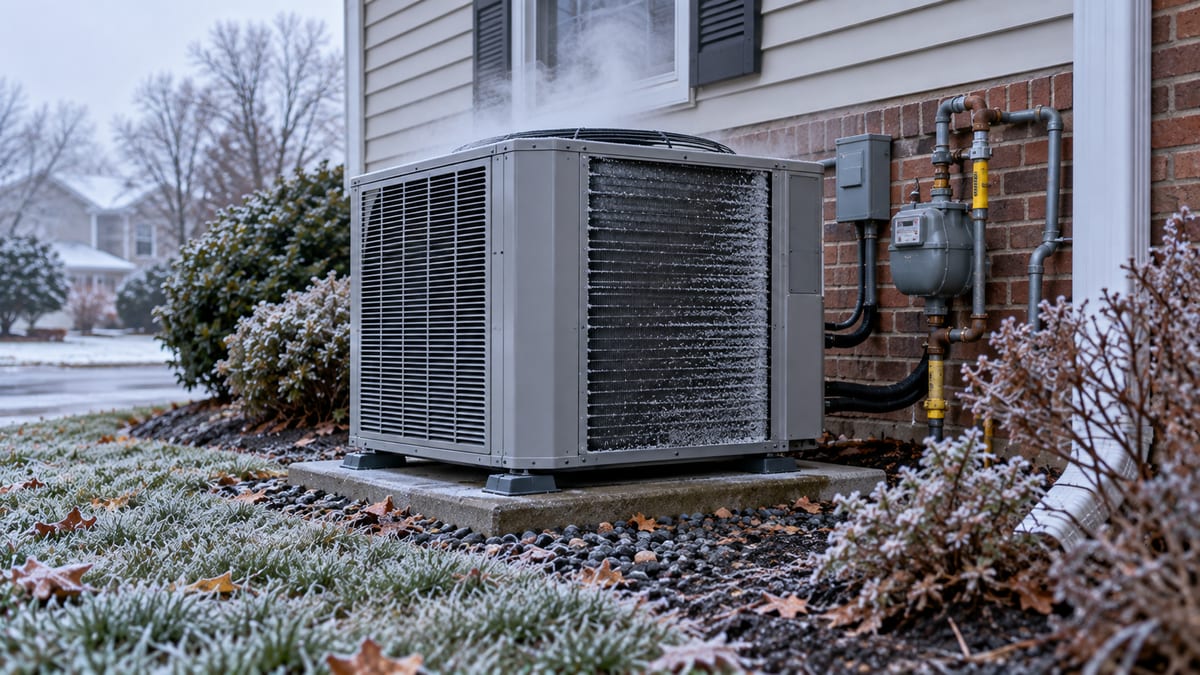
The typical heat pump cost in 2026 is about $6,000 to $16,000 installed for a New Jersey home. A single-zone ductless mini-split starts around $4,000. A ducted air-source system on existing ductwork usually lands between $8,000 and $14,000, and a whole-home cold-climate system with electrical upgrades can pass $20,000. Geothermal starts near $25,000.
That is a wide spread, and it should be. "A heat pump" can mean one wall unit in a sunroom or a variable-speed system that heats a 3,000-square-foot colonial through a January cold snap. This guide breaks the price into the pieces we actually quote in the basements and attics we work in across Monmouth, Middlesex and Ocean counties, explains what moves each number, and shows how to tell a fair quote from a padded or a dangerously thin one.
One thing this guide does not cover is whether a heat pump will be cheaper to run than your current system. That depends on your fuel and local energy prices, and we worked through the New Jersey numbers in our heat pump vs furnace guide. Here we stick to what it costs to buy and install one.
How Much Does a Heat Pump Cost in 2026?
The large national cost surveys give a useful starting point. Fixr reports that most homeowners pay $5,000 to $15,000, with a national average of about $8,350. This Old House, based on its 2026 survey of 1,000 homeowners, puts the average central (ducted) heat pump at about $10,575 installed, an average mini-split at about $3,250, and geothermal at about $17,000 for small to medium homes, with large homes passing $30,000.
National averages blend cheap-labor markets with expensive ones, and they blend simple swaps with full conversions. In central Jersey, labor rates, permit requirements, older electrical services and the need for equipment that performs well at 10°F all push real prices toward the middle and upper part of those ranges. Here is what we see on our own jobs in 2026:
| System type | Typical 2026 installed price in central NJ | What usually drives the high end |
|---|---|---|
| Ductless mini-split, single zone | $4,000–$7,500 | Long line-set run, wall bracket on a second floor, new circuit |
| Ductless mini-split, multi-zone (2–5 heads) | $9,000–$22,000 | Number of heads, ceiling cassettes, line-set routing through finished space |
| Ducted air-source, replacing an AC or heat pump | $8,000–$14,000 | Variable-speed equipment, new air handler, duct modifications |
| Ducted cold-climate heat pump | $12,000–$20,000+ | Larger capacity for full heat load, panel upgrade, backup heat strips |
| Dual-fuel add-on to an existing gas furnace | $7,000–$13,000 | A2L-compatible coil, furnace control upgrade, new thermostat |
| Geothermal (ground-source) | $25,000–$45,000+ | Well drilling or trenching, site access, loop size |
The rest of this guide explains where those numbers come from, so you can check any quote you receive against them.
What Goes Into Heat Pump Cost: Line by Line
A complete estimate should list every item below, even the ones that come to zero on your job. When two quotes for "the same heat pump" differ by $4,000, the difference is almost always in these lines rather than in the equipment.
| Component | Typical 2026 NJ range | Notes |
|---|---|---|
| Equipment (outdoor unit, indoor air handler or coil) | $3,500–$10,000 | Depends on capacity, SEER2/HSPF2 tier, single-stage vs variable-speed |
| Installation labor | $2,000–$5,500 | 1–2 days for a ducted swap; 1–3 days for multi-zone ductless |
| Electrical: dedicated 240V circuit and disconnect | $400–$1,200 | Needed for almost every new outdoor unit |
| Electrical: panel or service upgrade to 200A | $2,500–$5,000 | Only when the existing panel can't carry the load; involves the utility |
| Refrigerant line set | $0–$1,500 | Reuse only if it tests clean and is sized correctly for the new unit |
| Ductwork modifications | $500–$3,000 | Transitions, return upsizing, sealing |
| New ductwork (whole house) | $6,000–$15,000 | Only for homes without usable ducts; ductless is often cheaper |
| Pad, stand or wall bracket | $150–$700 | Raised stands are standard for us in snow-prone and flood-prone yards |
| Condensate drain or pump | $75–$450 | Indoor air handler and every ductless head produce water |
| Thermostat or controls | $150–$600 | Variable-speed and dual-fuel systems need compatible controls |
| Permits and inspection | $100–$600 | Set by your town's construction office; often mechanical plus electrical |
| Removal and refrigerant recovery | $150–$500 | Old refrigerant must be recovered by a certified technician |
Equipment: SEER2 and HSPF2 tiers
Heat pumps carry two efficiency ratings. SEER2 measures cooling efficiency over a season. HSPF2 measures heating efficiency over a season. Both were updated in 2023 with tougher test procedures, which is why the numbers look lower than the old SEER and HSPF ratings on your existing unit. The federal minimum for a split-system heat pump is 14.3 SEER2 and 7.5 HSPF2.
Price climbs with each tier, mostly because the compressor and fan technology change:
| Tier | Typical ratings | Compressor | Added cost vs base (installed) |
|---|---|---|---|
| Base | 14.3–15 SEER2, 7.5–7.8 HSPF2 | Single-stage | — |
| Mid | 15.2–17 SEER2, 7.8–8.1 HSPF2 | Two-stage | +$1,000–$2,500 |
| Premium / cold-climate | 17–22+ SEER2, 8.1–9.5+ HSPF2 | Variable-speed inverter | +$3,000–$6,500 |
In New Jersey we rarely recommend the base tier for a home that will rely on the heat pump for most of its heat. A single-stage unit loses capacity quickly as the temperature drops, which means more time on electric backup strips. The mid tier is also where utility rebates start: ENERGY STAR certification and most New Jersey utility programs set their floors at around 15.2 SEER2 and 7.8 HSPF2, with a separate, higher bar for cold-climate units.
Labor
Labor is the line that varies most between contractors and between houses. A ducted heat pump replacing an existing heat pump or central AC, with the outdoor unit going in the same spot, is typically a one-day job for a two-person crew. A new air handler in a tight attic, a line set that has to be fished through finished walls, or a multi-zone ductless system with four heads can take two to three days. In older Monmouth County homes we often find attic air handlers with barely enough room to kneel, which adds hours on its own.
Electrical: dedicated circuit and panel capacity
Every outdoor unit needs its own 240V circuit, sized to the nameplate on the equipment, plus a disconnect within sight of the unit. That is routine. The expensive surprise is the panel.
Many homes in our area built before the 1980s still have 100-amp service. A heat pump by itself usually fits, but a ducted heat pump with 10 kW of backup heat strips, alongside an electric range, dryer and perhaps an EV charger, can exceed what a 100-amp panel can carry. The fix is a load calculation first and, if needed, an upgrade to 200-amp service. That work involves an electrical permit, coordination with JCP&L or PSE&G for the disconnect and reconnect, and sometimes a new meter pan. It commonly adds $2,500 to $5,000. Dual-fuel systems usually avoid it, because the gas furnace serves as backup instead of electric strips.
Line set: reuse or replace?
The refrigerant lines between the indoor and outdoor units can sometimes be reused, which saves several hundred dollars and avoids opening walls. We only reuse a line set when it is the right diameter for the new equipment, passes a nitrogen pressure test and deep vacuum, and has been properly flushed. With the move to new A2L refrigerants, manufacturers' installation instructions spell out what is acceptable, and a contractor who skips those steps risks the compressor and your warranty.
Mounting, condensate and the details that prevent callbacks
In winter, a heat pump's outdoor coil freezes and defrosts repeatedly, shedding water. If the unit sits on a pad at grade, that meltwater refreezes into an ice block under the coil. We set most heat pumps on a raised stand or wall bracket, which also keeps them above drifting snow and, near the shore, above minor flood water. Indoors, the air handler or each ductless head needs a condensate drain, and where gravity won't work, a pump with a safety switch.
Ducted Air-Source Heat Pump Cost
This is the most common heat pump we install: an outdoor unit paired with an indoor air handler (or with a coil on top of an existing gas furnace, covered below), using the home's existing ducts.
| Home size / capacity | Single-stage | Two-stage | Variable-speed |
|---|---|---|---|
| Up to ~1,500 sq ft (2–2.5 tons) | $7,500–$10,000 | $9,000–$12,000 | $11,500–$15,000 |
| ~1,500–2,500 sq ft (3–4 tons) | $8,500–$11,500 | $10,000–$13,500 | $13,000–$17,000 |
| 2,500+ sq ft (4–5 tons or two systems) | $10,000–$14,000 | $12,000–$16,000 | $15,000–$22,000+ |
Square footage is only a rough guide. The capacity should come from an ACCA Manual J load calculation, a room-by-room estimate of heat loss and gain based on walls, windows, insulation, air leakage and our local design temperatures. For a heat pump this matters more than for a furnace: an undersized unit leans on expensive backup heat, while an oversized one short-cycles in summer and leaves the house clammy. Sizing by "same tonnage as the old AC" is one of the most common and costly mistakes we see.
Ductless Mini-Split Heat Pump Prices
Ductless systems are the answer for homes without ducts: houses heated by baseboard, oil-fired boilers or steam radiators, additions, finished attics and garages. Each indoor head connects to the outdoor unit with its own line set, so there is no ductwork to build or lose heat through.
| Configuration | Typical 2026 installed price in central NJ |
|---|---|
| Single-zone, one wall head (9,000–12,000 BTU) | $4,000–$6,000 |
| Single-zone, larger or cold-climate model (15,000–24,000 BTU) | $5,500–$7,500 |
| Multi-zone, 2 heads | $9,000–$12,500 |
| Multi-zone, 3 heads | $11,500–$16,000 |
| Multi-zone, 4–5 heads | $15,000–$22,000 |
Ceiling cassettes, floor consoles and concealed ducted heads cost more than standard high-wall units, both for the equipment and for the installation. Line-set routing is the biggest labor variable. On a ranch house, lines often run straight through an exterior wall behind each head. On a two-story colonial, getting lines to second-floor bedrooms neatly, usually in paintable line-hide covers on the exterior, adds time. For whole-home heating we often recommend several single-zone systems or a ducted cold-climate system rather than one large multi-zone outdoor unit, because multi-zone units can struggle to modulate down for a single small room. Our ductless mini-split installation page covers the indoor unit styles in more detail.
Cold-Climate Heat Pump Cost
A cold-climate heat pump is built to keep delivering most of its rated heat well below freezing, typically with a variable-speed inverter compressor and enhanced vapor injection on some models. The Department of Energy notes that, thanks to advances in the technology, air-source heat pumps are now a legitimate option for colder regions where they once weren't used.
For ENERGY STAR's cold-climate designation, a ducted unit must reach at least 8.1 HSPF2 (8.5 for ductless), a coefficient of performance of at least 1.75 at 5°F, and at least 70% of its rated heating capacity at 5°F. New Jersey utility programs use essentially the same threshold for their top rebate tiers. Expect cold-climate equipment to add roughly $2,500 to $6,000 over a standard single-stage heat pump of the same size, putting a typical ducted cold-climate system at $12,000 to $20,000 installed. If the house has no gas service and the heat pump will be the only heat source, this is the category we recommend, and it is where the panel upgrade question most often comes up.
Dual-Fuel: Adding a Heat Pump to an Existing Furnace
For the many homes in our area that already have a gas furnace in decent shape, the most cost-effective way to add a heat pump is often to replace the central air conditioner with a heat pump and keep the furnace as backup. This is called a dual-fuel or hybrid system. The heat pump handles cooling and mild-weather heating, and the furnace takes over below a set outdoor temperature.
Because the ducts, furnace, venting and gas line stay, the job looks a lot like an AC replacement: a new outdoor unit, a new matching coil on the furnace, a line set, the electrical circuit, and a thermostat or control that can manage both. That is why dual fuel typically runs $7,000 to $13,000 installed rather than the price of a whole new system. The furnace does need to be compatible. With A2L refrigerants, the furnace has to respond to the coil's leak sensor by starting its blower, which may require a newer control board or a mitigation kit. If the furnace is more than 15 years old, it may make more sense to replace both together; our furnace replacement cost guide breaks down that side of the quote.
New Jersey Natural Gas specifically rewards this setup: its SAVEGREEN hybrid heat program offers rebates of up to $2,000 for a single-zone home or $4,000 for a two-zone home when an air-source heat pump is paired with a gas furnace or boiler and an integrated thermostat, subject to efficiency minimums and the program's June 30, 2027 install deadline. Check the current terms before you sign, since amounts can change during the cycle.
Geothermal Heat Pump Cost (Briefly)
Ground-source or geothermal heat pumps exchange heat with the earth through buried loops rather than with outdoor air. They are the most efficient heat pumps available, and the Department of Energy puts their life expectancy at 20+ years for the heat pump itself and 25 to 50 years for the buried loops. The catch is the loop field. Drilling vertical wells or excavating horizontal trenches is most of the cost, and in New Jersey a typical home installation runs $25,000 to $45,000 or more. It makes the most sense on new construction or a major renovation, on a lot with drilling access, for owners planning to stay a long time. JCP&L lists a separate geothermal rebate, but the federal residential clean energy credit that used to cover 30% of geothermal systems ended for expenditures after 2025, which changes the math considerably.
Cost of Replacing a Heat Pump vs a New Installation
If you already have a heat pump, the cost of replacing it is usually at the lower end of the ranges above. The ducts, circuit, disconnect, pad location and often the line set are already in place, and the permit is typically a straightforward replacement. A like-for-like heat pump replacement in our area generally runs $7,500 to $13,000 for a ducted system, more for variable-speed equipment.
A first-time installation costs more because every one of those pieces may be new. The biggest jumps come from:
- Converting from oil or propane with no existing ductwork, which usually means ductless or new ducts.
- Replacing electric baseboard, where the electrical service may already be near its limit.
- Adding cooling where there was none, which often reveals undersized returns that need to be fixed.
There is one more replacement-specific issue in 2026. If your existing indoor coil or air handler uses R-410A and is relatively new, you can't pair it with a new A2L outdoor unit. A heat pump replacement almost always means replacing both halves together, so budget for the full matched system.
The 2025 Refrigerant Change and What It Did to Heat Pump Prices
Under the EPA's Technology Transitions rule, new residential split-system air conditioners and heat pumps moved from R-410A to lower global-warming refrigerants starting January 1, 2025. Most manufacturers chose R-454B; some use R-32. Both are classified as A2L, meaning mildly flammable, so most ducted equipment now includes refrigerant leak sensors and controls that start the indoor blower to disperse refrigerant if a leak is detected.
For homeowners, that change had three cost effects:
- Higher equipment prices. A2L systems came to market at noticeably higher prices than the R-410A models they replaced, and 2026 equipment prices have not fallen back.
- Matched systems only. An A2L outdoor unit needs an A2L-rated indoor coil or air handler, which removes the old option of replacing just the outdoor half.
- Dwindling R-410A options. The original rule gave split systems built before 2025 until January 1, 2026 to be installed. The EPA has since removed that deadline, so R-410A systems whose components were all made before 2025 can still be installed until supplies run out. That can be useful for an urgent repair-level replacement, but stock is limited and R-410A refrigerant itself is getting more expensive as production is phased down.
Ask any contractor which refrigerant the quoted equipment uses, and if it is R-410A, why.
Heat Pump Cost in New Jersey: Permits, Rebates and Financing
Permits under the NJ Uniform Construction Code
Installing or replacing a heat pump in New Jersey requires a permit from your municipality's construction office under the Uniform Construction Code. A new outdoor unit with a new circuit typically involves both a mechanical (or building) and an electrical subcode, each with its own inspection. Replacing a furnace, air conditioner or condensing unit with a new one of like capacity is listed as "minor work" under N.J.A.C. 5:23-2.17A, so work can begin once the office has been notified, before the permit is issued. Heat pumps aren't named in that list, so how a like-for-like heat pump swap is handled is up to your construction office. The permit application has to be sealed by a licensed Master HVACR contractor. Fees vary by town, and most utility rebate programs want to see the permit, so an installer who suggests skipping it is costing you money as well as protection.
The federal tax credit is gone
Much of what is still online promises a 30% federal credit of up to $2,000 for a heat pump. That credit, Section 25C, was ended by the One Big Beautiful Bill Act signed July 4, 2025. The IRS confirms it is not allowed for any property placed in service after December 31, 2025. A heat pump installed in 2026 gets no federal tax credit. If a quote still deducts one, ask for it to be removed.
Utility rebates
New Jersey's efficiency incentives now run mainly through the utilities, under programs overseen by the Board of Public Utilities for the cycle running through June 30, 2027. The NJ Clean Energy Program site links to each utility's offerings. What you qualify for depends on who supplies your electricity and your gas:
- JCP&L (most of Monmouth and Ocean counties): its HVAC rebate program listed, as of September 2026, tiered rebates for ENERGY STAR air-source heat pumps, with the highest tier reserved for cold-climate units, a separate rebate for ductless mini-splits, and a geothermal rebate. Tiers are tied to SEER2, EER2 and HSPF2 minimums.
- PSE&G (much of Middlesex): its HVAC Instant Rebates program applies the rebate at purchase through participating contractors and offers on-bill repayment for qualifying heat pump projects.
- NJNG: the hybrid heat rebate for dual-fuel systems described above, plus 0% on-bill repayment of up to $25,000.
Rebate amounts and requirements change during the program cycle, so treat any figure you see, including ours, as "up to" and confirm the current terms before signing. We list the rebate as a separate line on our estimates and check the model numbers against the program's requirements. Anything we're running on top of utility programs is on our offers page.
What Drives a Heat Pump Quote Up
- Undersized electrical service that needs a panel or service upgrade.
- Bad or missing ductwork. A heat pump moves more air per ton than many old furnaces were designed for, so small returns and leaky ducts need fixing.
- Difficult access: attic air handlers, crawlspaces, second-floor ductless heads, long line-set runs.
- Cold-climate and variable-speed equipment, which cost more up front but reduce backup heat use.
- Backup heat strips sized for an all-electric home, which also affect panel capacity.
- Shore conditions. Near salt water we often recommend coated coils and stainless hardware, and raised mounts in flood zones.
- Emergency timing. A replacement in the first cold week of January leaves no time to compare equipment or wait for a better-matched unit.
When a Heat Pump Is Not Worth the Cost
We install a lot of heat pumps, and we still talk people out of some. A heat pump may not be the right buy when:
- You have a young, efficient gas furnace and a working AC. Tearing out working equipment rarely pays back. Wait until the AC needs replacing, then consider a dual-fuel heat pump in its place.
- The house leaks heat badly. Air sealing and attic insulation first can let you buy a smaller, cheaper heat pump, and the Department of Energy's heat pump guidance likewise recommends pairing a heat pump with insulation and other weatherization.
- The electrical upgrade dwarfs the benefit. If a whole-home electric system requires a $5,000 service upgrade on a house you'll sell in two years, a dual-fuel setup or a single ductless zone may be the sensible middle ground.
- You'd be buying the cheapest single-stage unit to heat the whole house. In our climate that often means heavy reliance on electric strips and disappointing winter bills.
How to Compare Heat Pump Quotes
Get at least two written estimates and put them side by side. For each one, check:
- Exact model numbers for the outdoor unit and the indoor air handler or coil, and an AHRI certificate showing the matched system's SEER2, EER2 and HSPF2.
- How the size was chosen: a Manual J load calculation, not the old unit's tonnage.
- Refrigerant type and whether the indoor side is being replaced to match.
- Electrical scope: new circuit, disconnect, and whether a panel load calculation was done.
- Line set: new or reused, and if reused, how it will be tested and cleaned.
- Duct work: transitions, return changes, sealing.
- Mounting and condensate: raised stand or bracket, drain or pump.
- Backup heat: strip size, or the switchover plan for dual fuel.
- Permit pulled by the contractor, with inspections attended.
- Warranty: parts, compressor and labor, and whether registration is required.
- Rebates: which program, who files, and whether the price shown is before or after.
Red flags
- A price given over the phone or without anyone looking at your panel, ducts and outdoor location.
- No mention of the electrical panel on a whole-home electric system.
- A new A2L outdoor unit quoted against your existing indoor coil.
- A 2026 quote that still subtracts a federal tax credit.
- No permit, or an offer of a discount to skip it.
- "Today only" pricing that pressures you to sign before comparing.
On safety: heat pumps run on 240V circuits and now carry mildly flammable refrigerant. Installing one is not a DIY project, including the "DIY" mini-split kits sold online. Improper electrical work is a fire risk, and refrigerant work requires EPA certification. After installation, regular HVAC maintenance keeps the system at rated efficiency and protects the warranty. If the terminology is new, our primer on what HVAC is and how the parts work is a good place to start.
Our Take on Heat Pump Cost
For most central Jersey homes, a realistic budget is $8,000 to $14,000 for a well-installed ducted heat pump, $4,000 to $7,500 for a single ductless zone, and $12,000 to $20,000 for a whole-home cold-climate system. If you have a gas furnace with years left in it, a dual-fuel heat pump replacing your AC is usually the best value. Spend your money on correct sizing, matched A2L equipment, and a clean electrical and refrigerant installation before you spend it on the top efficiency tier. Then claim every utility rebate your equipment qualifies for.