October 15, 2026
Clogged Drain? How to Fix It & What Drain Cleaning Costs
One slow drain or the whole house? That single question tells you whether this is a ten-minute fix or a main line problem. What to try yourself, why plumbers hate chemical drain cleaners, and 2026 central NJ drain cleaning prices.
By Guardian Air · Published · Updated
The single most useful thing to work out about a clogged drain is whether one fixture is affected or several. One slow sink is a local clog in that fixture's trap or branch line, and a plunger or pulling the P-trap often fixes it. Several fixtures draining slowly, a gurgling toilet, or water appearing at a floor drain means the problem is in the main line that serves the whole house — and that needs a professional, not a bottle of drain cleaner. Branch drain snaking runs $150 to $350 in central New Jersey; main line clearing $250 to $500; hydro jetting $400 to $800. Skip the chemical cleaners entirely: they rarely clear a real clog and they create a genuine burn hazard for whoever snakes the line afterwards.
Written by the Guardian Air HVAC & plumbing team · Reviewed for accuracy October 2026
Drains are the most common plumbing call we run, and a decent share of them are things a homeowner could have handled in fifteen minutes with a plunger. An equally decent share are the opposite: someone spent a fortnight pouring chemicals down a line that was blocked by tree roots fifty feet out in the yard. This guide sorts one from the other.
Start Here: One Fixture or Several?
Your drain system is a tree. Each fixture has a trap and a small branch line; branches join larger drains; everything converges on one main line that leaves the house and becomes your sewer lateral. Where the blockage sits determines both the symptom and the fix.
| What you observe | Where the clog is | What it needs |
|---|---|---|
| One sink, tub or shower draining slowly | That fixture's trap or branch line | Often DIY; otherwise branch snaking |
| One toilet blocked, everything else fine | The toilet trap | Flange plunger, then a closet auger |
| Every fixture on one bathroom slow | That bathroom's branch | Professional snaking |
| Toilets and showers backing up together | Main line | Main line clearing; camera if it recurs |
| Toilet gurgles when the washer drains | Main line, partially blocked | Main line clearing |
| Water rising at a basement floor drain | Main line, downstream of everything | Stop using water; call immediately |
| Sewage smell plus slow drains | Main line, or a dry/blocked vent | Professional diagnosis |
If you take one thing from this article: water coming up at the lowest drain in the house means stop running water and call someone. That is the main line telling you it has nowhere left to put anything, and continuing to run taps or flush puts sewage on your floor.
Why Drains Clog, By Fixture
Kitchen sink
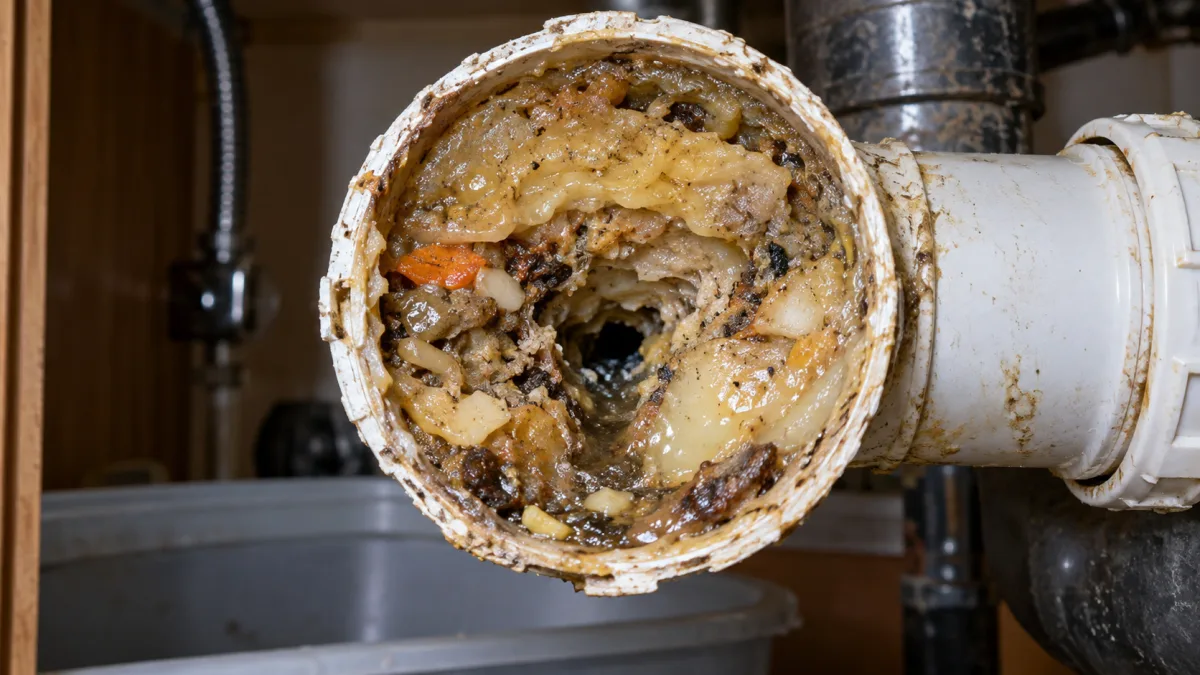
Grease, fats and oils. They go down warm and liquid, then cool and congeal on the pipe wall, and coffee grounds, starch and food fibre build onto that layer until the opening closes. Garbage disposals make it worse, not better — they grind solids into a slurry that packs beautifully into a greasy pipe. Running hot water afterwards just moves the grease further along to somewhere harder to reach.
Bathroom sink
Hair bound together with soap scum and toothpaste, usually caught on the pop-up stopper assembly an inch or two down. This is the single easiest clog to fix yourself and the one people most often pay for.
Shower and tub
Hair and soap scum again, generally within the first foot. Hard-water scale narrows the pipe over years and gives it something to cling to.
Toilet
Too much paper, or something that should never have been flushed. "Flushable" wipes are the worst offender in our service area by a wide margin — they do not break down, they catch on anything rough, and they knit together into a mat. Cotton buds, dental floss, sanitary products and paper towel all behave the same way. If a toilet blocks repeatedly with normal use, something is lodged in the trap or the line.
Laundry
Lint, detergent residue and the sheer volume a washer dumps at once. A standpipe that was marginal for years will overflow the moment the drain narrows slightly.
Main line
Three causes, and in older New Jersey neighbourhoods it is usually the first:
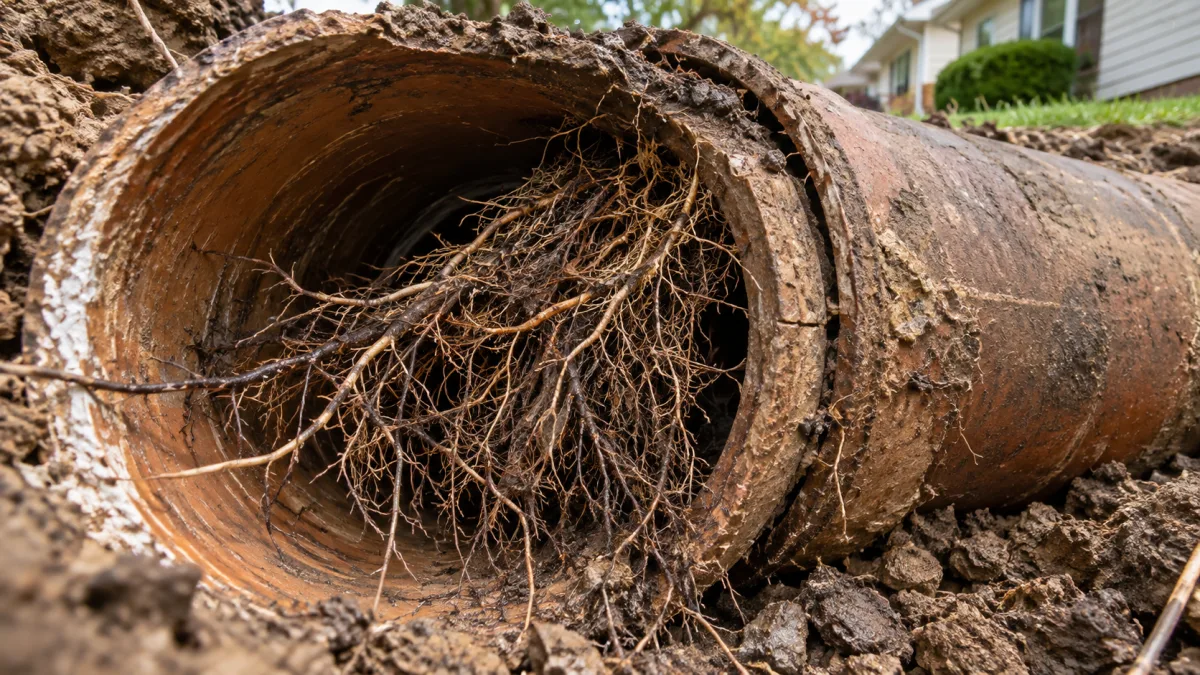
- Tree roots. Roots find the moisture at a clay-tile joint, enter as hair-fine threads and grow into a dense mat inside the pipe. Any established street with mature trees — much of Red Bank, Freehold, Middletown, Perth Amboy — has clay laterals and roots looking for them.
- Grease and scale, accumulated over decades and narrowing the bore.
- Pipe failure. A bellied (sagging) section holds water and collects solids. A collapsed section or offset joint blocks outright. Orangeburg pipe — bituminised wood fibre used for private laterals in homes built roughly 1945 to 1972, with a 30 to 50 year service life — deforms and delaminates as it fails, and plenty of it in our area is now well past its design life.
What to Try Yourself (and What Not To)
Do: the plunger, properly
Most people under-use a plunger. For a sink, block the overflow opening with a wet cloth first, or you just push air out of it. Get a seal, then work it with steady strokes — it is the pull that breaks a clog loose as much as the push. For a toilet, use a flange plunger, not the flat cup type.
Do: pull the P-trap
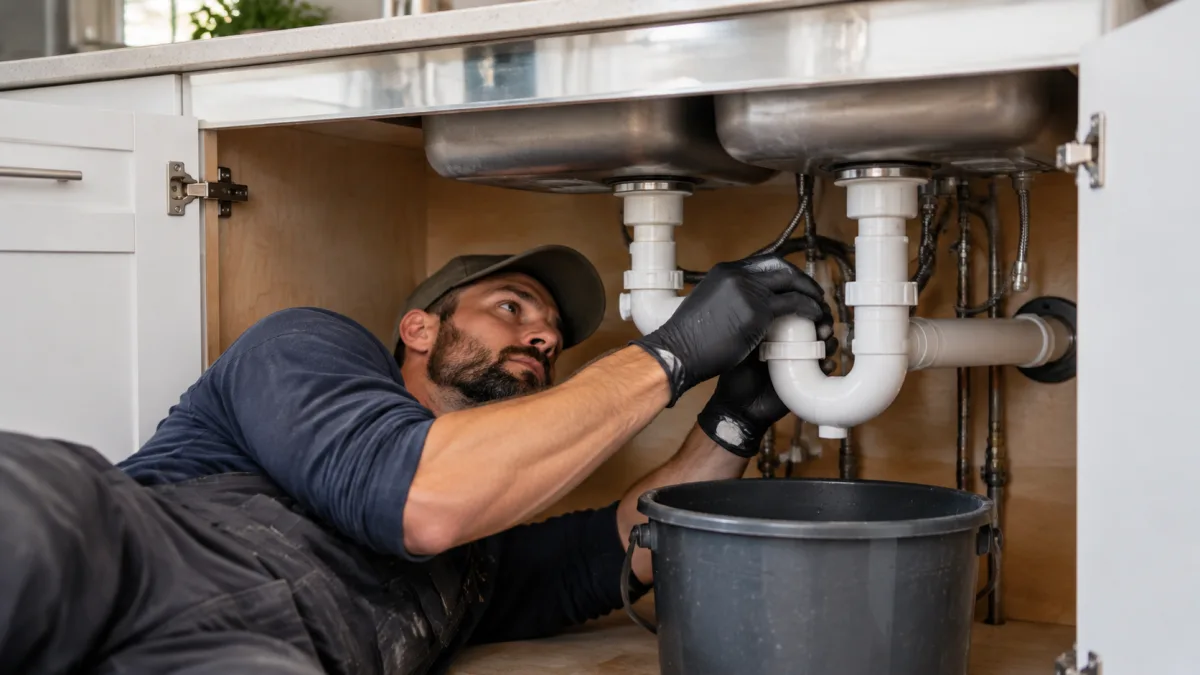
Under the sink, the U-bend has slip nuts you can usually undo by hand. Put a bucket under it. Nine times out of ten on a bathroom sink the blockage is right there or in the stopper linkage just above. Clean it, reassemble hand-tight, run water and check for drips.
Do: clear the stopper
Lift out a shower strainer or unscrew a sink pop-up and pull the hair mat off it. Honestly, this is most bathroom drain complaints.
Do: hot water and dish soap on a greasy kitchen drain
Only if the drain is still moving, and only if you have not poured chemicals in. A kettle of hot — not boiling, which can soften PVC and crack porcelain — water with a good squeeze of degreasing dish soap can loosen a soft grease clog. Follow with a long run of hot water.
Do: a hand auger, carefully
A 25-foot drum auger from a hardware shop is genuinely useful on a branch line. Feed it gently and let it turn; do not force it. If it stops hard at the same point every time, you have found something that is not a soft clog.
Don't: chemical drain cleaners
We would rather you used nothing. The reasons are practical, not squeamish:
- They often do not work on a real clog. Caustic cleaners need to reach and dissolve the blockage. If the drain is fully stopped, the chemical sits in standing water above the clog, slowly attacking the pipe it is in contact with instead.
- They damage pipes. The heat generated by lye reacting in a confined space softens PVC and attacks the joints in older metal waste pipes. Repeated use thins what it touches.
- They are a burn hazard for whoever comes next. This is the one that matters most. Trapped caustic liquid splashes back when a drain is plunged or snaked. A plumber working a cable into a line full of undisclosed drain cleaner can take it in the face.
If you have already used one: flush the drain with plenty of cold water, wait at least 24 hours, and tell your plumber when they arrive. That is not a confession, it is a safety briefing, and we would much rather know.
Don't: snake a line you have just put chemicals in, or force a cable past a hard stop
A powered cable in untrained hands can punch through a weakened older pipe or wrap and whip. If a hand auger finds something solid, stop.
What Professional Drain Cleaning Costs
Central New Jersey, 2026, and these match the figures in our drain services guide.
| Service | Typical cost |
|---|---|
| Service call / diagnostic | $89–$150, credited toward the work |
| Branch drain snaking (sink, tub, shower, toilet) | $150–$350 |
| Main line snaking through a cleanout | $250–$500 |
| Camera inspection | $150–$350, often credited against a repair |
| Hydro jetting | $400–$800 |
| Sewer spot repair | $1,000–$3,000 |
| Sewer line replacement | $5,000–$15,000+ |
Snaking versus hydro jetting
A cable bores a hole through the blockage and gets you flowing again. Hydro jetting uses high-pressure water to scour the pipe wall back to its full diameter, removing the grease and scale layer that the cable only punched through. Snaking is the right first move on most clogs. Jetting is the right call for recurring grease, heavy scale and root debris after cutting — but it should only be used on pipe known to be sound, which is why a camera inspection often comes first. On fragile Orangeburg or badly deteriorated clay, jetting pressure can do damage.
When a camera is worth it
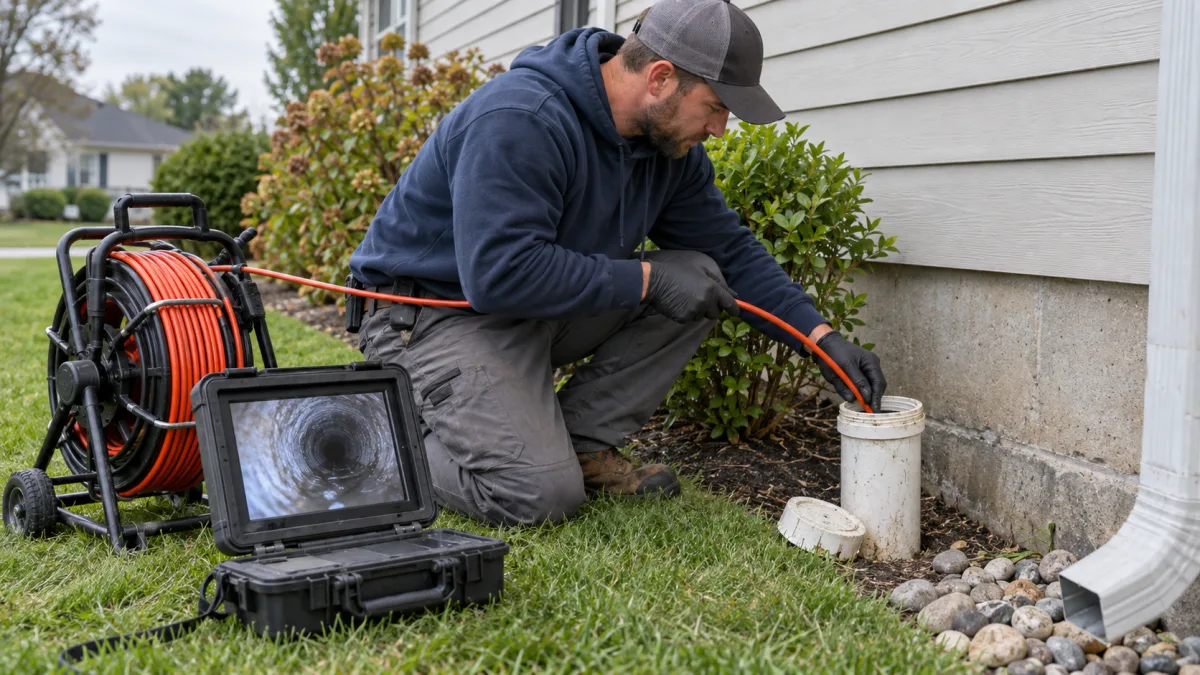
If the main line has blocked more than once, stop paying to clear it repeatedly and spend $150 to $350 finding out why. A camera inspection shows roots, cracks, bellies, offset joints, collapsed sections and pipe material, and it locates the defect by distance and depth so any repair is targeted rather than exploratory. If you are buying an older home in this area, it is one of the best inspection dollars you can spend — a failing lateral is the homeowner's bill, and in most New Jersey towns that responsibility runs all the way to the public main, sometimes under the street.
Keeping Drains Clear
- Nothing greasy down the kitchen sink. Wipe pans; pour fat into a tin and bin it once set.
- Strainers on every drain. A $3 shower strainer prevents most of what we charge $150 to remove.
- Only paper down the toilet. Including the wipes the packet calls flushable.
- Run plenty of water with the disposal, and keep fibrous waste out of it.
- Enzyme treatments, not caustics. Bacterial-enzyme products digest organic film slowly and safely. They are maintenance, not a rescue for a blocked drain.
- Root-prone lateral? Plan for it. If a camera has shown root intrusion at a clay joint, a scheduled cutting and jetting every year or two is far cheaper than an emergency backup, and lining the pipe ends the cycle permanently.
- Know where your cleanout is. Usually a capped fitting outside near the foundation or in the basement. Finding it in daylight is better than finding it during a backup.
Book Drain Cleaning With Guardian Air
Guardian Air clears branch drains and main lines, cuts roots, hydro jets and runs camera inspections across Monmouth, Middlesex and Ocean counties — Freehold, Red Bank, Middletown, Howell, Toms River, Brick, Lakewood, Edison, Woodbridge, Perth Amboy and the towns around them. Flat-rate pricing quoted before we start, and if your main line keeps blocking we will show you on camera why. Call (848) 276-6300 or book online. See also our drain services, sewer repair and sewer line repair cost guide.