October 6, 2026
HVAC Installation Service: Sizing, Costs, Permits and What a Proper Install Includes
How to choose and size a new heating and cooling system, what happens on installation day, the commissioning checks that prove it was done right, New Jersey permits, the refrigerant transition, and what HVAC installation costs.
By Noor Kamal, Technology Manager · Published · Updated
What Is HVAC Installation Service?
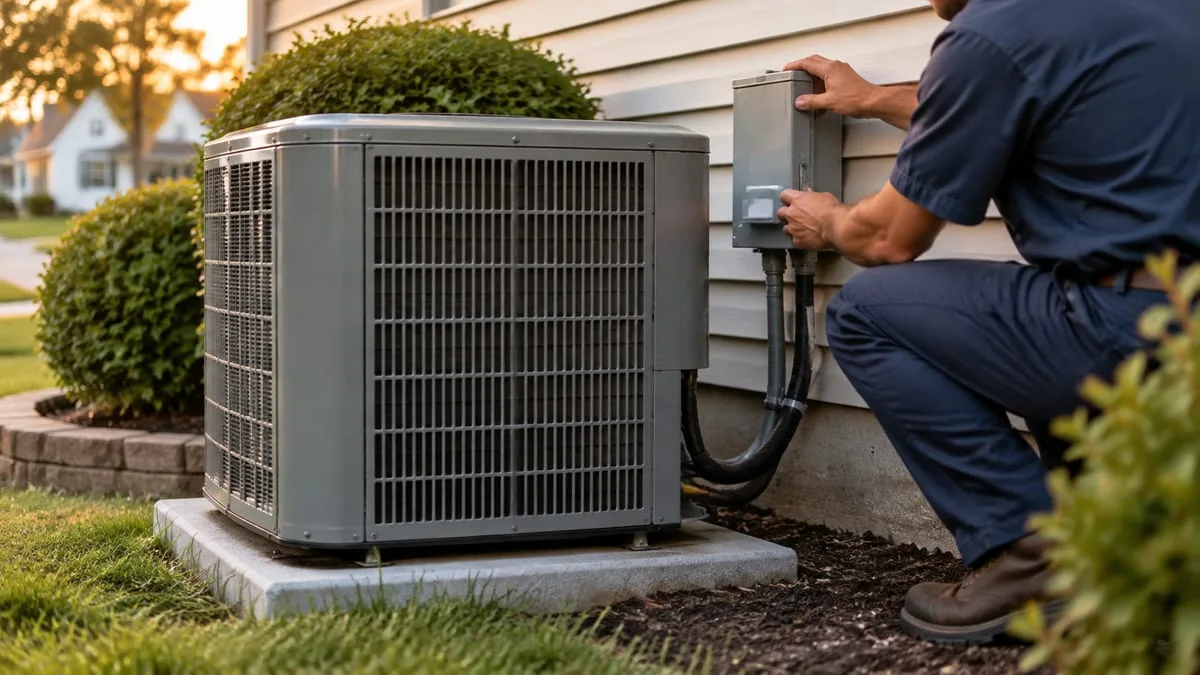
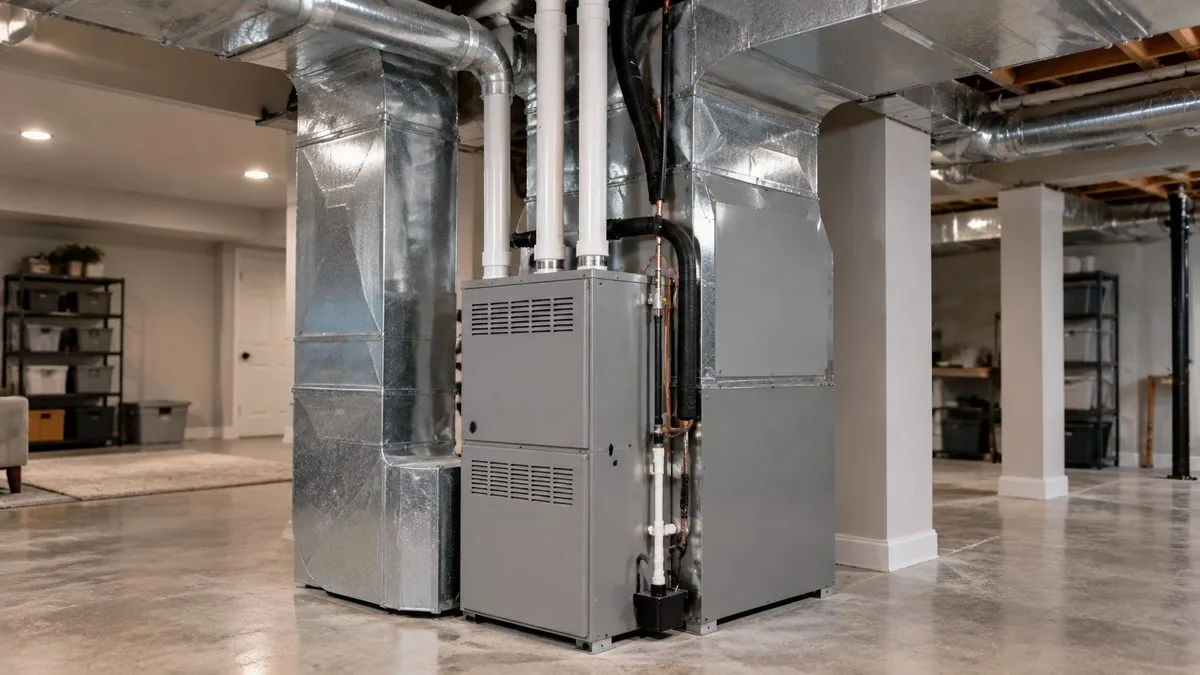
HVAC installation service is the design, fitting and commissioning of new heating and cooling equipment — a furnace, air conditioner, heat pump, boiler, ductless mini-split or complete system — including the load calculation, permits, removal of old equipment and the testing that proves the new system performs as rated. It applies to replacing a system at the end of its life, adding air conditioning to a home that never had it, converting fuels, and new construction or additions.
Installation is the one HVAC service where quality is almost invisible on the day and decisive for the next fifteen to twenty years. A badly sized, poorly charged or unbalanced system still turns on and still blows air. It just costs more to run, controls humidity poorly, cycles too often and wears out sooner. Industry field studies have repeatedly found that a large share of residential systems are installed with incorrect refrigerant charge or airflow, which is why this guide concentrates on what a correct installation actually involves — so you can tell good quotes from fast ones.
When You Need HVAC Installation
- End-of-life replacement. Furnaces typically last 15–20 years, central air conditioners and heat pumps 12–17, and boilers 20–30. Past that range, efficiency drops and repairs stack up.
- A major failure on older equipment. A compressor, cracked heat exchanger or failed coil on an ageing system is usually the moment to replace rather than repair. Multiply the repair quote by the equipment's age in years; above about $5,000, replacement usually wins.
- Adding central air or ductless cooling to a home heated by a boiler or baseboard.
- Fuel conversion — oil to gas, or to an electric heat pump.
- Additions, finished basements and renovations that change the load the system has to meet.
- Comfort problems no repair fixes — rooms that never reach temperature, persistent humidity, or a system that has always been noisy.
If you are still deciding whether to fix or replace, 5 signs your furnace needs repair and HVAC repair cover that decision in detail.
Choosing the Right System for a New Jersey Home
New Jersey's climate — cold winters, humid summers — makes both heating and cooling performance matter. These are the main options (our guide to HVAC system types explains how each one works):
| System | Best for | Trade-offs |
|---|---|---|
| Gas furnace + central AC | Homes with ductwork and a gas supply | Two pieces of equipment to maintain; the most common NJ setup |
| Heat pump (air-source) | Ducted homes wanting one system for heating and cooling | Modern cold-climate models heat efficiently well below freezing; electric rates matter |
| Dual fuel (heat pump + gas furnace) | Homes with gas that want lower heating costs | Heat pump runs most of the year; furnace takes over in deep cold |
| Ductless mini-split | Homes without ducts, additions, finished attics, problem rooms | Indoor units are visible on the wall; one per zone |
| Boiler (hot water) | Homes with radiators or baseboard | Excellent heating comfort; cooling needs a separate system |
For more on specific systems, see heat pumps (and our guide to heat pump services once one is installed), ductless mini-splits, furnace replacement and AC installation.
Sizing: Why the Load Calculation Matters Most
The correct size of an HVAC system is determined by a room-by-room load calculation — ACCA Manual J — not by square footage, and not by the size of the old unit. Manual J accounts for insulation, windows and their orientation, air leakage, ceiling height, occupants and local climate data. Two houses of identical size can need very different equipment.
Getting the size wrong in either direction costs you:
- Oversized equipment reaches the thermostat setting quickly and shuts off, short cycling. In summer it stops before removing enough moisture, leaving the house cool but clammy. The extra starts wear out components faster, and you paid more for capacity you do not use.
- Undersized equipment runs constantly on the hottest and coldest days and still falls behind.
Two companion calculations complete the design. Manual S selects equipment whose real capacity matches the load at local design conditions. Manual D checks that the ductwork can carry the airflow the new equipment needs. Replacing equipment without checking the ducts is the most common reason a new system performs no better than the old one.
Be wary of any installer who sizes by rule of thumb — "one ton per 500 square feet" — or simply matches the old unit, which may itself have been oversized decades ago.
Efficiency Ratings and Standards Explained
- SEER2 measures seasonal cooling efficiency. In the northern region, which includes New Jersey, the federal minimum for a new split central air conditioner is 13.4 SEER2.
- HSPF2 measures heat pump heating efficiency. New split heat pumps must meet at least 7.5 HSPF2 (and 14.3 SEER2 for cooling).
- AFUE measures how much of a furnace's fuel becomes heat. Condensing furnaces reach 95% or more; the federal minimum for most new gas furnaces is 80% today, with a higher standard scheduled to take effect in 2028.
Higher ratings cost more up front and save more over time. The right tier depends on how long you plan to stay and your energy rates. A higher-efficiency system installed badly will not reach its rating, so installation quality should always come before the rating on the brochure.
The refrigerant transition
Under the federal AIM Act, new residential air conditioners and heat pumps have moved from R-410A to lower-global-warming refrigerants, mainly R-454B and R-32. These are classed A2L — mildly flammable — so equipment includes leak detection sensors and installers follow updated procedures. If you are replacing only the outdoor unit or only the indoor coil, ask your installer about compatibility: A2L equipment generally has to be installed as a matched system rather than paired with old R-410A components.
What Happens on HVAC Installation Day
A typical replacement of a furnace and central air conditioner in a home with sound ductwork takes one day. Here is the sequence a good crew follows:
- Protect the house. Floor coverings along the work path; drop cloths around the equipment.
- Shut down and recover refrigerant. Refrigerant is recovered from the old system with certified equipment, never vented.
- Remove old equipment and dispose of it responsibly.
- Set the new equipment. Indoor unit and coil in place, outdoor unit level on a new pad with correct clearances.
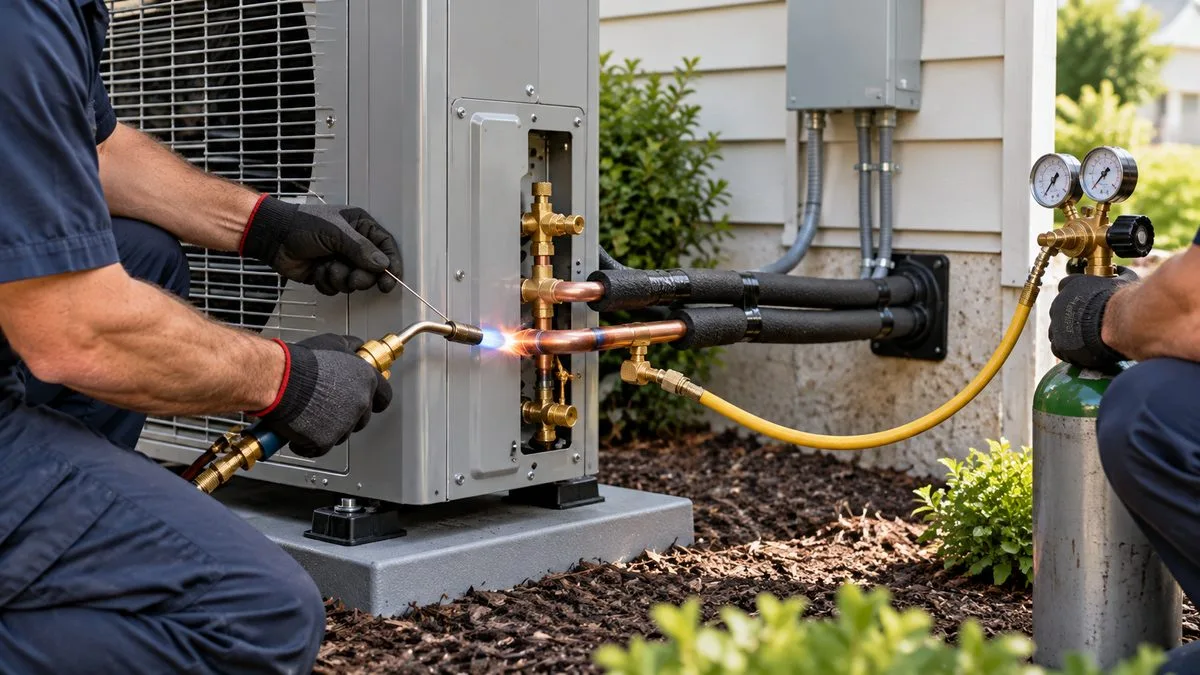
- Connect the refrigerant lines. The line set is brazed with nitrogen flowing to prevent internal scale, then pressure-tested with nitrogen to find any leak before refrigerant is introduced.
- Evacuate the system. A deep vacuum, confirmed with a micron gauge, removes moisture and air that would otherwise damage the compressor.
- Connect gas, venting, electrical and condensate. High-efficiency furnaces need PVC venting and a condensate drain; gas lines are leak-tested.
- Adapt ductwork to the new equipment with sealed transitions.
- Install the thermostat and configure it for the new system.
- Commission the system — the step that decides whether the new equipment performs as rated (below).
- Walk-through and paperwork. How to operate the system, filter size and schedule, warranty registration, and the permit inspection.
Heat pumps, ductless systems and jobs with duct modifications may take two to three days. Ductless installations usually take one day for a single zone and longer for multi-zone systems.
Commissioning: How to Know It Was Installed Right
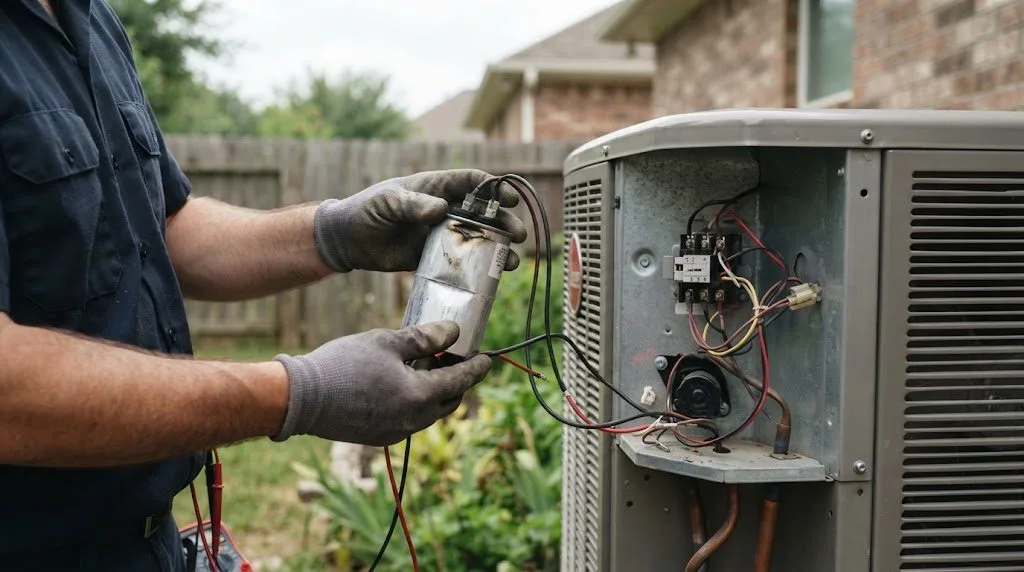
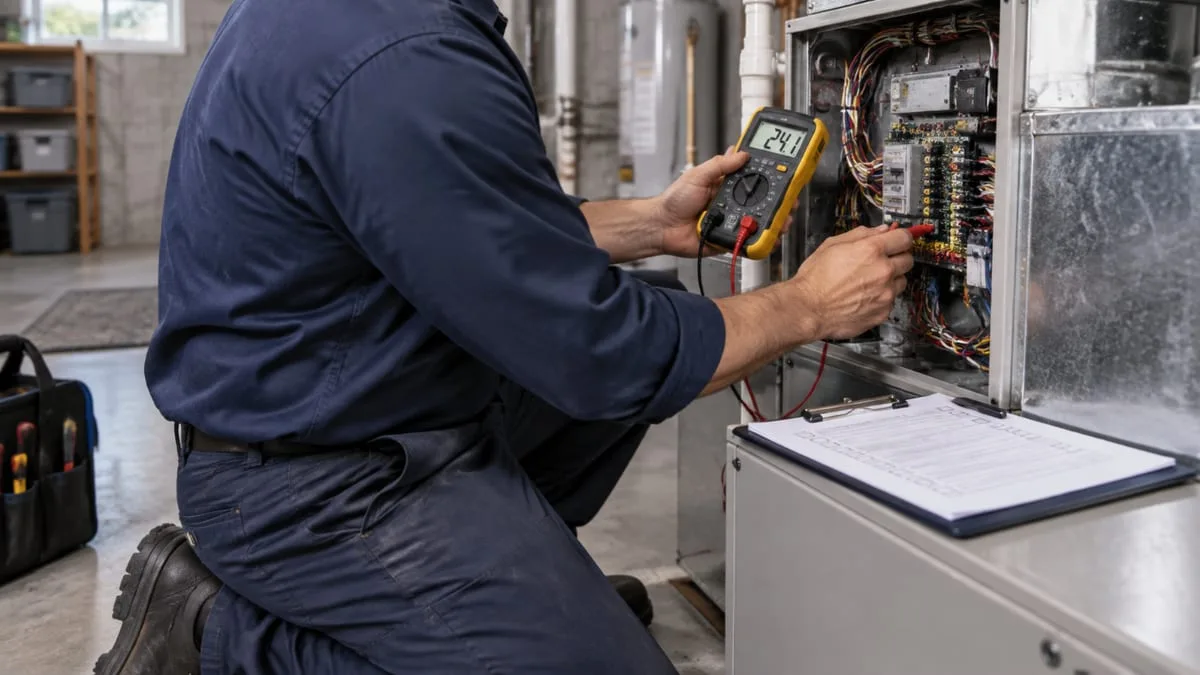
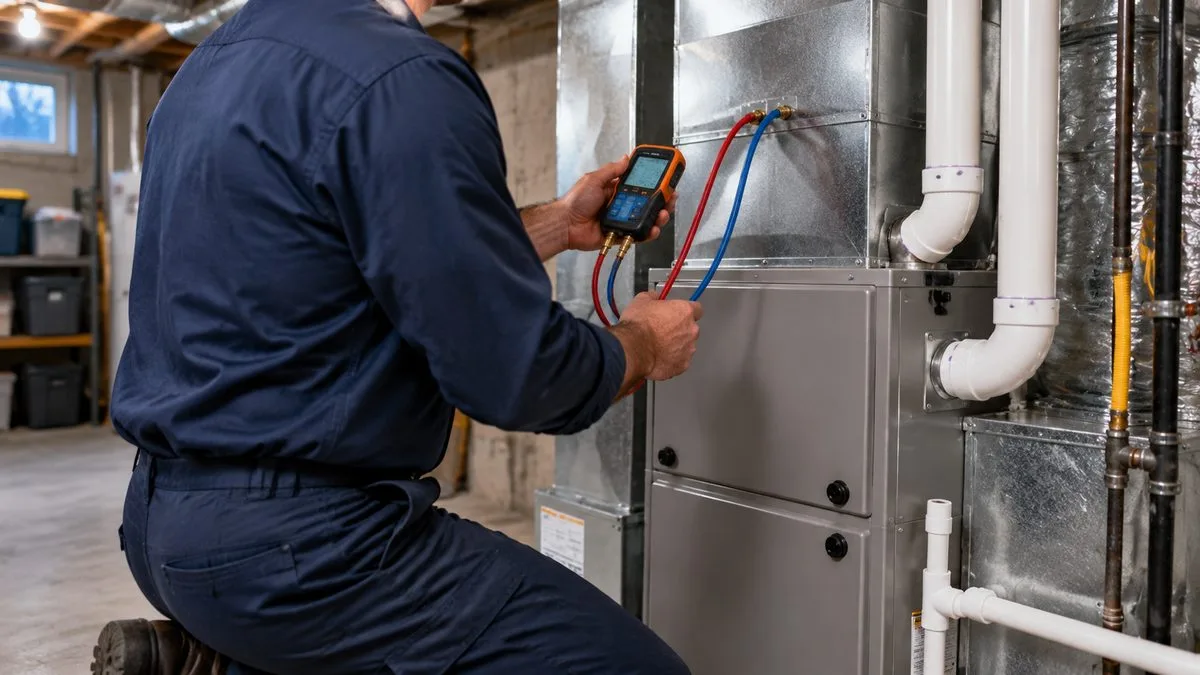
Commissioning is the testing that proves a new system is charged, airflowed and burning correctly — and it is the step most often skipped. Ask your installer to record these readings and give you a copy:
- Refrigerant charge verified by superheat or subcooling against the manufacturer's target.
- Total external static pressure, confirming the ducts are not strangling the blower.
- Airflow set to the equipment's requirement, typically around 350–400 CFM per ton of cooling.
- Temperature rise across the furnace within the rated range on the nameplate.
- Combustion analysis and a carbon monoxide check on gas equipment.
- Gas pressure set to specification.
- Safety controls proven — limits, pressure switches, condensate overflow switch.
- Temperature split across the indoor coil in cooling mode.
A written commissioning record is also your baseline: every future maintenance visit can compare against it.
Permits, Inspections and Licensing in New Jersey
Replacing or installing heating and cooling equipment in New Jersey generally requires a permit from your municipality's construction office under the state Uniform Construction Code, followed by an inspection once the work is complete. Your installer should pull the permit, not you — and a quote that suggests skipping it to save money is a red flag. Unpermitted work can complicate insurance claims and home sales.
The contractor should also hold a New Jersey Master HVACR licence, carry liability and workers' compensation insurance, and have technicians certified under EPA Section 608 to handle refrigerant. Guardian Air handles permitting and code compliance on every installation.
How Much Does HVAC Installation Cost in New Jersey?
Most full HVAC system replacements in New Jersey cost between $6,000 and $14,000, with individual equipment ranging from about $3,500 for a single-zone ductless system to $12,000 or more for a heat pump. These are orientation ranges; an accurate price needs a site visit and load calculation. For deeper breakdowns, see our guides to furnace replacement cost, AC replacement cost and heat pump installation cost.
| Installation | Typical NJ range | What moves it |
|---|---|---|
| Gas furnace replacement | $4,000–$8,000 | Efficiency (80% vs 95%+), venting changes, blower type |
| Central air conditioner | $5,000–$10,000 | Size, SEER2 tier, new coil and line set, electrical work |
| Heat pump | $5,000–$12,000 | Cold-climate capability, size, variable speed |
| Ductless mini-split (single zone) | $3,500–$6,000 | Capacity, line length; multi-zone costs more |
| Complete system (furnace + AC or air handler + heat pump) | $6,000–$14,000+ | Equipment tier, ductwork condition, access |
What drives the price
- Equipment type and efficiency tier — single-stage, two-stage or variable-speed.
- Ductwork — reusing sound ducts versus repairing, sealing or resizing them.
- Electrical and gas work — a new circuit, disconnect or gas line, and occasionally an electrical panel upgrade.
- Venting — converting to PVC venting for a high-efficiency furnace, or lining a chimney.
- Access — attics, crawl spaces and tight closets take longer.
- Accessories — smart thermostats, zoning, whole-home dehumidifiers and upgraded filtration.
Rebates, incentives and financing
Incentive programmes change often. The federal energy-efficiency tax credit for home HVAC equipment (Section 25C) ended for equipment installed after December 31, 2025, so check any figure you read against current rules. New Jersey's Clean Energy Program, utility energy-efficiency programmes and manufacturer promotions still frequently offer rebates on qualifying high-efficiency equipment, particularly heat pumps — our guide to New Jersey heat pump and HVAC rebates tracks what is on offer. Your installer should know what currently applies and help with the paperwork. See current offers and ask about financing.
Should You Replace the Furnace and AC Together?
Often, yes. The furnace blower moves the air for the air conditioner, and the indoor coil sits on top of the furnace, so the two work as one system. Replacing both together:
- ensures a matched, rated combination, which manufacturer ratings and many warranties assume;
- avoids paying for labour twice when the second unit fails a few years later;
- allows ducts, coil and line set to be addressed in one visit;
- makes the move to A2L refrigerant cleaner, since new outdoor units generally require a matched indoor coil.
Replacing just one makes sense when the other is fairly new — say, under eight years old — and in good condition.
When Is the Best Time for HVAC Installation?
Spring and autumn are the best times to install HVAC in New Jersey. Demand is lower, scheduling is flexible, and you can do it before you need the system — so the decision is made on your timetable, with time to compare quotes, rather than in a heat wave or a freeze. If your equipment is past its expected life, plan the replacement in the shoulder season instead of waiting for it to fail in January or July.
Questions to Ask Before You Hire an Installer
- Will you do a Manual J load calculation? And will you check the ductwork (Manual D)?
- Who pulls the permit, and when will the inspection happen?
- What exactly is included? New line set or reuse? New pad, disconnect, thermostat, condensate pump, duct transitions?
- Will you give me the commissioning readings?
- What warranties apply? Manufacturer parts, compressor or heat exchanger, and the installer's own labour warranty. Many manufacturers require registration within a set period after installation for the full parts term — ask who registers it.
- Are you licensed and insured in New Jersey? Ask for the licence number and certificate.
- Is the quote written and itemised? Compare quotes on equipment model numbers, not just brand and price.
Red flags: a price given over the phone without a visit, sizing by square footage alone, pressure to sign the same day, and any suggestion of skipping the permit.
Get a Free HVAC Installation Estimate
A good installation starts with someone measuring your home, not guessing from its size. Guardian Air's licensed technicians will calculate the load, check your ductwork, explain your options in plain language and give you a written, itemised quote.
Explore furnace replacement, AC installation, heat pumps and ductless mini-splits, read our guide to HVAC service, or book your estimate.