September 22, 2026
HVAC Maintenance: What It Includes, What It Costs, and Whether Plans Are Worth It
What HVAC maintenance actually includes, the four phases of planned maintenance, how often a system needs servicing, what it costs in New Jersey, and an honest answer on whether HVAC maintenance plans are worth the money.
By Noor Kamal, Technology Manager · Published · Updated
What Is HVAC Maintenance?
HVAC maintenance is scheduled, preventive service performed on heating and cooling equipment while it is still working properly — inspection, cleaning, adjustment and early repair, carried out on a calendar rather than in response to a breakdown. Done twice a year, it is the cheapest thing a homeowner can do to keep a system efficient, safe and out of the emergency queue.
That is the short answer. The longer one matters, because "maintenance" is a word contractors use to mean anything from a genuine instrumented inspection to a fifteen-minute filter swap with an invoice attached. This guide covers what HVAC system maintenance actually includes, the four phases of planned maintenance the trade works to, what it costs in New Jersey, whether HVAC maintenance plans are worth paying for, and how commercial HVAC maintenance differs from residential work.
HVAC maintenance is the routine, planned servicing of the equipment that heats, cools and ventilates a building — the furnace or boiler, the air conditioner or heat pump, the blower, the ductwork, the filter, and the controls that sequence all of it. If you are still getting your bearings on the equipment itself, our guide to what HVAC means and how each system type works covers the vocabulary.
The defining feature of maintenance is timing. It happens before anything is wrong. That is also exactly why people skip it: there is no symptom prompting the call, no cold house, no water on the basement floor. The appointment competes with things that feel urgent, and it loses.
The argument for doing it anyway is mechanical rather than moral. The failures that strand people on the coldest night of the year are almost never sudden — they are the visible end of a slow drift that was measurable months earlier. A run capacitor does not fail without warning; its capacitance falls out of tolerance gradually and can be read with a meter in thirty seconds. A condenser coil does not block overnight; it loads with cottonwood and dust over two or three summers while the compressor works progressively harder against rising head pressure. A heat exchanger does not crack the day it finally fails inspection.
Proper HVAC maintenance is, more than anything else, measurement — catching those drifts while they are still a $20 part and an adjustment rather than a $2,000 emergency and a week without heat.
Maintenance, repair and replacement are three different jobs
These three get used interchangeably, and they should not be:
- Maintenance is planned work on equipment that is running. You choose the date.
- Repair is corrective work on equipment that has failed or is failing. The equipment chooses the date, and it is rarely convenient. Our guide to HVAC repair covers what actually breaks and what it costs to fix.
- Replacement is capital spending, driven by age, efficiency, or a fault that costs more to fix than the remaining life is worth. Our guide to HVAC installation, sizing and permits covers that decision.
Maintenance is the only one of the three whose timing and price you control. That is most of its value.
What Is HVAC Preventive Maintenance?
HVAC preventive maintenance is maintenance performed on a fixed schedule to prevent failure, as opposed to reactive maintenance, which responds to failure after it happens. In the trade you will also hear preventative maintenance (same thing, longer spelling) and planned preventive maintenance, or PPM, which is the term facilities managers use for the documented version of it.
There is a third category worth knowing about, because it is increasingly what your equipment already does: predictive maintenance, where sensor data and trended readings determine when a component is serviced rather than a calendar. Communicating thermostats and modern variable-speed systems log fault codes and runtime data that a technician can read, which is why a good maintenance visit on newer equipment starts at the control board rather than with a screwdriver.
For a house, preventive is the right model. The equipment is not instrumented enough to predict much, the failure cost is high, and the service is cheap relative to the thing it protects.
What Are the 4 Phases of Planned Maintenance in HVAC?
Planned maintenance in HVAC is conventionally broken into four phases, performed in this order on every visit: inspection, cleaning, adjustment, and repair. The sequence is not arbitrary — each phase produces the information the next one needs.
Phase 1 — Inspection
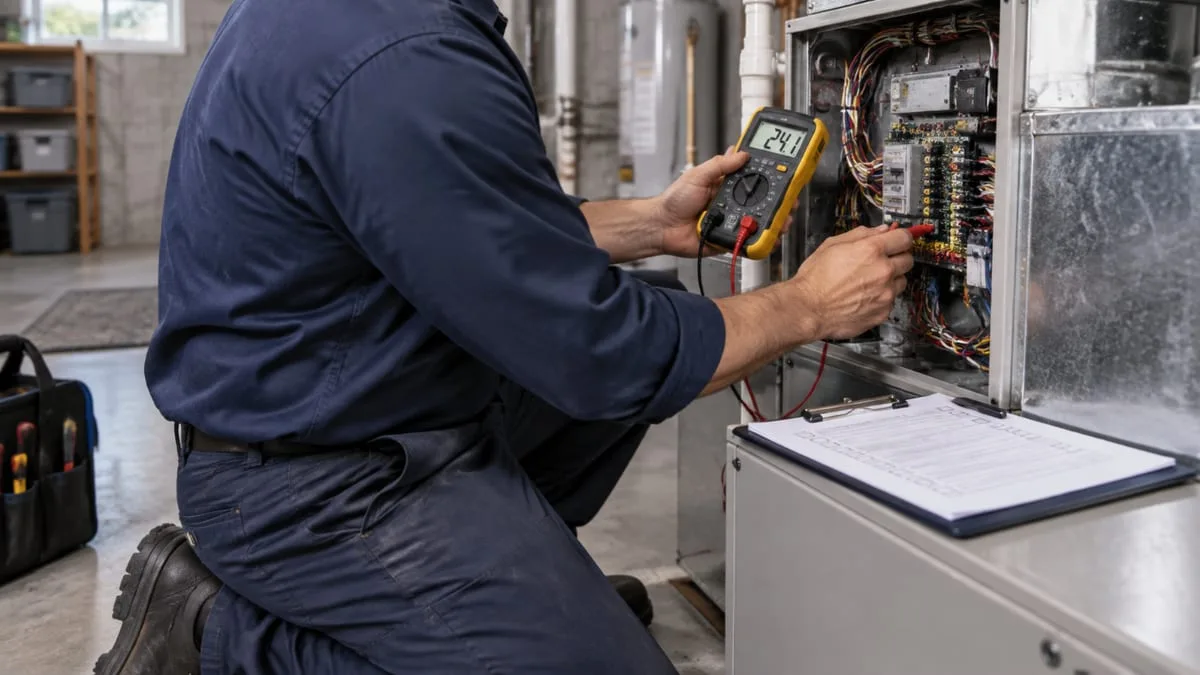
The technician establishes the system's current condition before touching anything. Visual inspection of the cabinet, coils, ductwork, flue, wiring and condensate path, plus instrument readings: capacitor microfarads against the rated value, amp draw on the compressor and blower, refrigerant pressures, temperature split across the evaporator, static pressure across the air handler, and combustion figures on a gas appliance.
Inspection is where the money in maintenance actually is. A cleaning-only visit that never brings out a meter tells you nothing about the components most likely to strand you.
Phase 2 — Cleaning
Dirt is not cosmetic in an HVAC system — it is a thermal and airflow problem. This phase covers replacing or washing the filter, cleaning the evaporator and condenser coils, clearing the condensate drain line and trap, cleaning the blower wheel, cleaning the flame sensor on a gas furnace, and clearing debris from around the outdoor unit.
A condenser coil packed with cottonwood raises head pressure, which raises compressor amp draw, which raises your bill and shortens the compressor's life. A blower wheel caked with dust loses a meaningful share of its airflow, which is the quiet cause of frozen evaporator coils in summer and overheating heat exchangers in winter.
Phase 3 — Adjustment
With the system clean, readings mean something, so the technician brings it back to specification: tightening electrical connections loosened by years of thermal cycling, calibrating or reconfiguring the thermostat, setting blower speed for the correct airflow, adjusting gas pressure and burner operation, aligning and tensioning belts on belt-driven equipment, and lubricating motors and bearings that still have ports for it.
Adjustment is where a system that "works" becomes a system that works efficiently. Equipment installed correctly and never touched since still drifts, because the building, the ductwork and the components all age.
Phase 4 — Repair
The final phase acts on what the first three found. A capacitor reading below tolerance, a pitted contactor, a frayed belt, a cracked condensate pan, a corroded wire — these get replaced now, on a planned visit at planned pricing, rather than in August at emergency rates. Anything larger gets quoted and scheduled, not decided under pressure.
Run all four phases consistently and the total cost of owning the equipment drops — not because any one visit saves much, but because failures stop happening at the worst possible moment and the worst possible price.
What Should Be Included in HVAC Maintenance?
A real HVAC maintenance service is a checklist with instruments attached, not a visual once-over. Ask any company what their visit includes; if nobody can describe it task by task, there probably isn't a checklist.
Cooling-season maintenance checklist
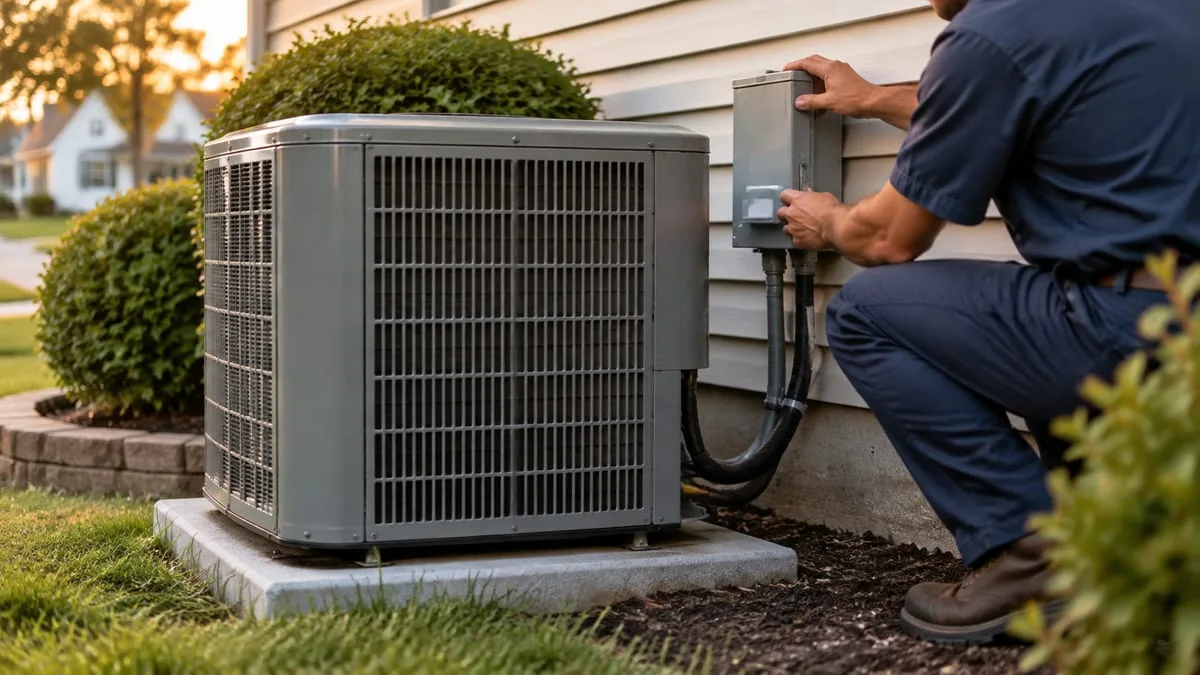
Performed in spring, before the first hot stretch — this is what a proper AC tune-up covers:
- Inspect and replace the air filter, and confirm the size and MERV rating suit the system.
- Clean the evaporator and condenser coils, and straighten bent condenser fins.
- Check and clear the condensate drain line and trap, and confirm the safety float switch works. A blocked drain is the most common cause of water damage from an air conditioner.
- Check refrigerant charge by superheat or subcooling — not by topping up. Low refrigerant means a leak, and a leak needs finding, not feeding.
- Measure the temperature split across the evaporator coil and compare it against the design figure.
- Test and calibrate the thermostat, including staging and fan behaviour.
- Inspect and test the capacitor and contactor — microfarad readings against rated tolerance, contact surfaces checked for pitting.
- Check electrical connections and amp draw on the compressor, condenser fan and blower motor.
- Clean the condenser fan and blades, and confirm the fan runs balanced and clear of debris.
- Check blower components, airflow and static pressure. High static pressure is the most under-diagnosed problem in residential HVAC, and it shortens the life of everything downstream of it.
- Lubricate moving parts where serviceable, and verify proper system cycling from call to satisfaction.
- Confirm the unit runs to the manufacturer's published specification, and leave a written copy of the readings behind.
Heating-season maintenance checklist
Performed in autumn (our New Jersey furnace maintenance checklist goes through it item by item). A furnace tune-up repeats the electrical and airflow work above and adds the combustion side, which is the part of HVAC maintenance that is genuinely about safety rather than efficiency:
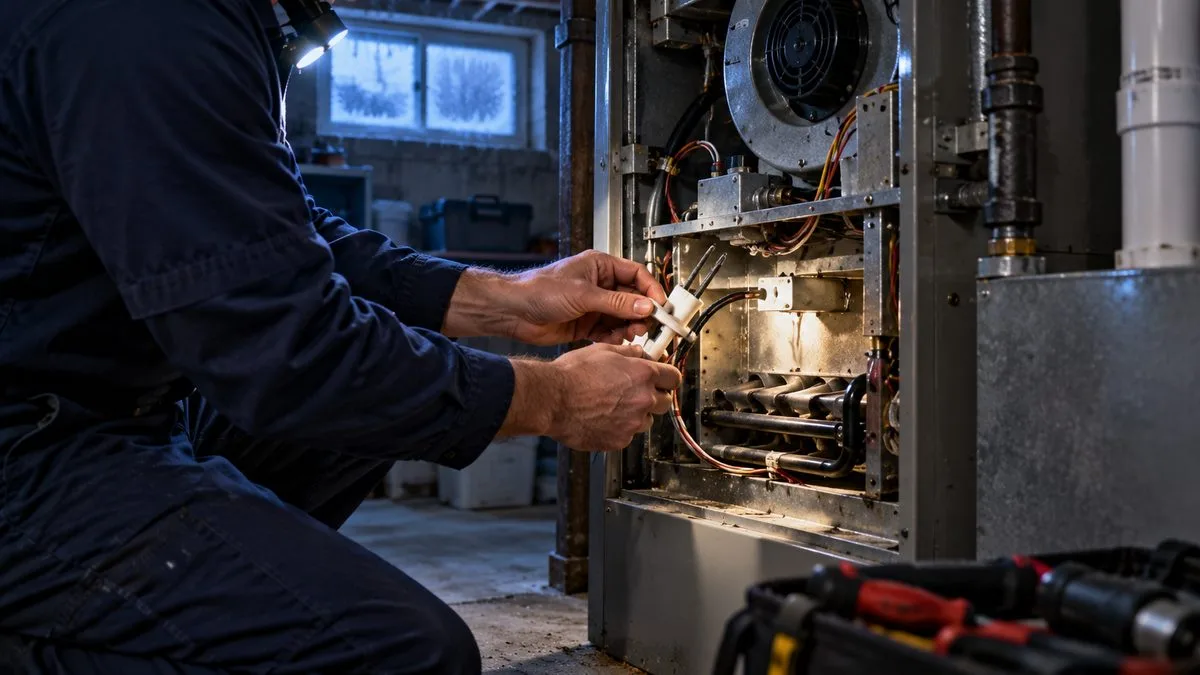
- Inspect the heat exchanger for cracks or corrosion — the single most important item on the list.
- Clean the flame sensor and burners, and observe the full ignition sequence.
- Test the draft and flue, and take a carbon monoxide reading at the vent.
- Verify every safety control — limit switch, pressure switch, rollout switch, and the gas valve's response to each.
- Check gas pressure and flame quality. A steady blue flame is correct; persistent yellow is not.
- Confirm temperature rise across the heat exchanger falls inside the range printed on the data plate.
- On a boiler, check water pressure, the expansion tank, circulator operation and the relief valve. Boiler service is a distinct skill set from forced-air work.
- On a heat pump, test defrost operation and auxiliary heat staging — the two things that quietly double a winter electric bill when they misbehave.
What you should do between visits
The highest-value maintenance task in your home takes ninety seconds and needs no tools: change the filter. A 1-inch pleated filter needs checking monthly and changing every one to three months; 4- or 5-inch media filters typically run six to twelve months. A loaded filter starves the blower, drops airflow, freezes evaporator coils in summer and overheats heat exchangers in winter.
Resist the urge to buy the highest MERV rating on the shelf. A filter denser than the system was designed for causes the same restriction as a dirty one. For most homes MERV 8 to 11 is the sensible band — going higher is a conversation to have with a technician who can measure your static pressure first, or a reason to look at a properly sized whole-home air purifier instead.
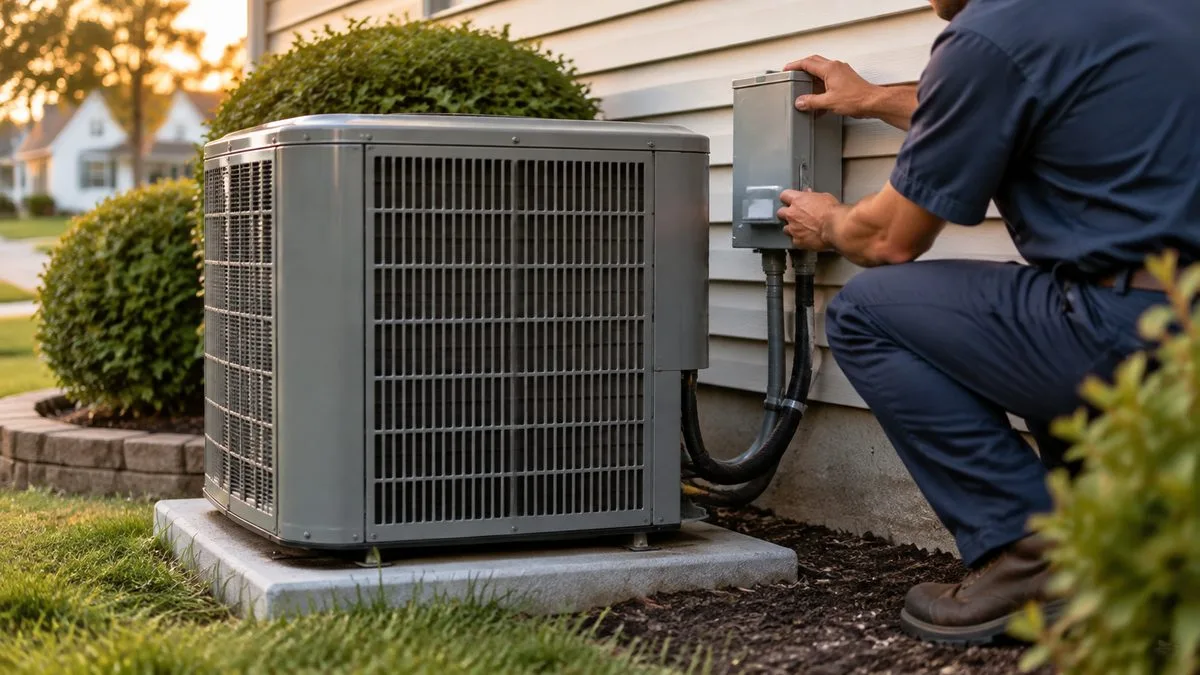
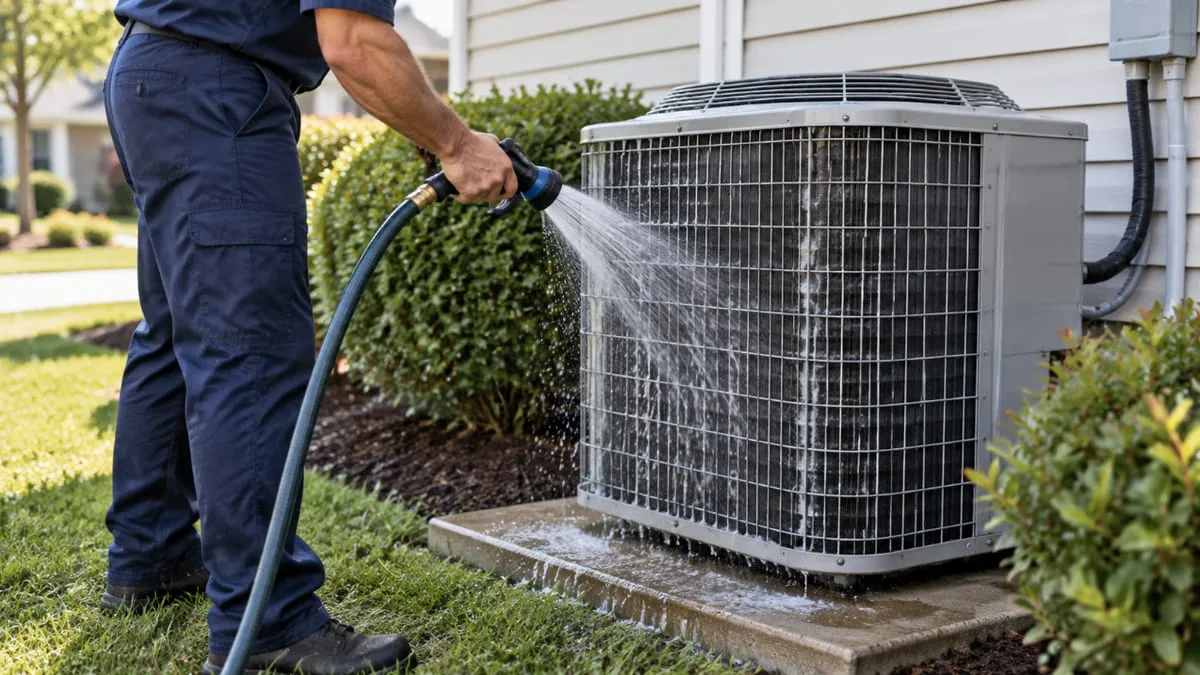
Beyond the filter: keep two feet of clearance around the outdoor unit, rinse the condenser fins gently with a hose each spring with the power off, keep supply and return vents unblocked by furniture, and pour a cup of warm water down the condensate drain occasionally during cooling season. If rooms have never heated or cooled evenly, that is a duct problem rather than an equipment one — see duct cleaning and inspection.
How Often Should HVAC System Maintenance Be Done?
The working rule is twice a year for any system that both heats and cools: cooling serviced in spring, heating serviced in autumn.
| System type | Professional visits per year | When |
|---|---|---|
| Furnace + central air conditioner | 2 | Spring and autumn |
| Heat pump (heats and cools) | 2 | Spring and autumn |
| Boiler (heat only) | 1 | Early autumn |
| Ductless mini-split | 1–2 | Spring; autumn if it carries heat |
| Commercial rooftop unit | 2–4 | Quarterly on high-duty equipment |
A heat pump genuinely earns two visits, because it runs year-round and accumulates roughly double the annual hours of a cooling-only condenser. If you have a furnace and a separate air conditioner and you will only pay for one visit, do the heating one — combustion safety is not an efficiency question.
What Does HVAC Maintenance Service Cost?
Pricing varies with the equipment and how many systems a property runs, so the figure worth asking for is a written, flat-rate quote before the visit rather than after it. An honest contractor will give you one over the phone. Our guide to HVAC service costs shows how a maintenance visit compares with diagnostic and repair calls.
Set against what a breakdown costs, the case for maintenance is mostly arithmetic. Our AC repair cost guide and furnace repair cost guide break repair pricing down line by line, and our current seasonal offers usually include something on maintenance.
Are HVAC Maintenance Plans Worth It?
For most homeowners with equipment under about twelve years old, yes — and the reason is usually not the one that gets advertised. Plans typically run $150 to $500 a year for two visits, priority scheduling and a repair discount of 10 to 20 percent. Here is what each channel actually returns.
1. Warranty protection — the one that matters most
Nearly every major manufacturer conditions its parts warranty on documented annual professional maintenance. That word documented is where people get caught. A compressor failure in year seven on a system with no service records can turn a covered claim into a five-figure conversation. A maintenance plan produces exactly the paper trail a warranty claim requires, which for many households justifies the plan on its own.
2. Efficiency you have already paid for
Neglected systems lose efficiency measurably year over year — dirty coils, drifting charge and restricted airflow compound on each other. A system bought at 18 SEER2 and never serviced does not stay an 18 SEER2 system. Maintenance does not make equipment better than new; it stops you silently paying for capacity you bought and no longer receive.
3. Avoided emergency repairs
A capacitor caught out of tolerance in April is a routine part on a scheduled visit. The same capacitor failing in an August heat wave is an emergency call-out, a premium rate, and a house at 88 degrees while you wait. The part costs the same either way; everything around it does not.
4. Equipment life
Maintained equipment reaches the top of its service-life range and neglected equipment reaches the bottom — a difference of three to five years on a $10,000 asset. Amortised across the life of the system, that alone outweighs the plan.
When an HVAC maintenance plan is not worth it
We tell people to skip it in three situations, and it is worth saying so plainly:
- The system is already at end of life. If a furnace is 22 years old, maintenance is not the right spend — budget the replacement instead and buy single visits until then.
- You are selling within a year. One pre-listing visit with a written report does more for a sale than a plan will.
- The plan is a filter change with a brochure. If it does not include instrument readings and a written report, it is a discount card, not maintenance. Ask what they measure before you sign.
We make the full financial case, with the numbers, in why annual AC maintenance pays for itself.
Commercial HVAC Maintenance Is a Different Discipline
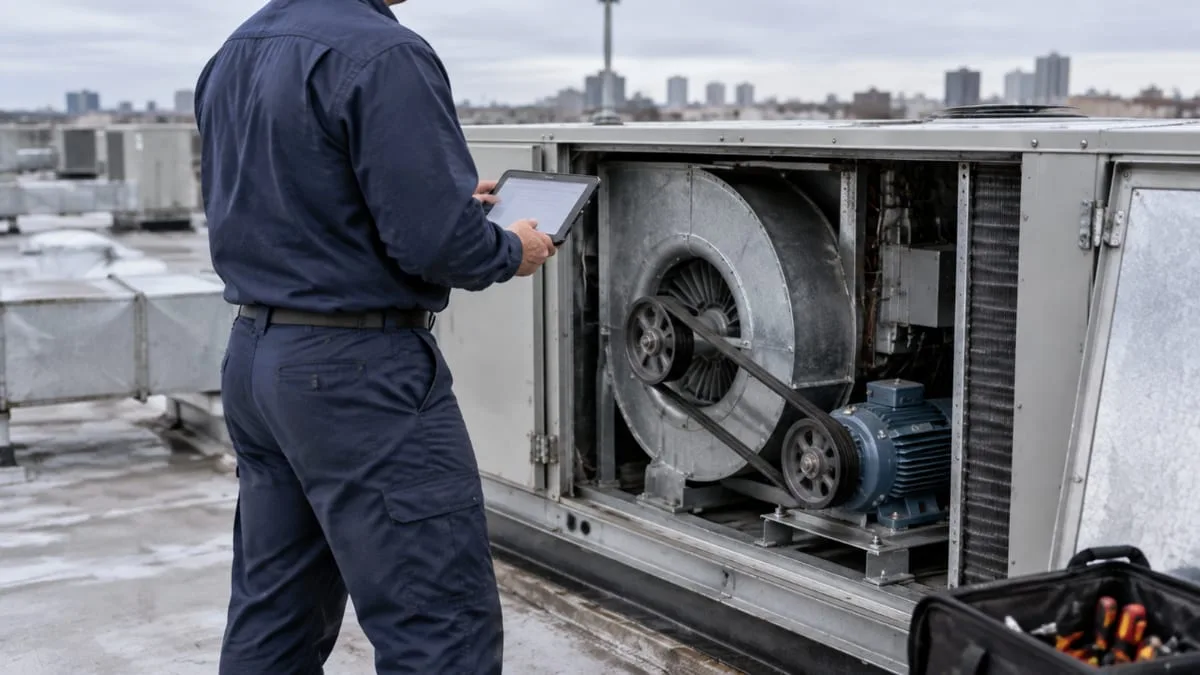
Commercial HVAC maintenance shares the physics with residential work and very little else. The equipment is usually packaged rooftop units rather than split systems, it runs far longer duty cycles, and it serves a building where a failure stops trading rather than making a family uncomfortable. Commercial HVAC service covers the wider service relationship.
The practical differences:
- Frequency. Quarterly is the baseline, monthly on continuously running rooftop units, chillers and cooling towers. Commercial filter racks load in weeks, not seasons.
- Belts and bearings. Belt-driven blowers need tension and alignment checks that residential ECM motors simply do not have.
- Economizers. Among the most commonly broken components on any rooftop unit, and invisible until the energy bill or an inspection finds them. They need verifying every season.
- Outside air. Ventilation rates in a commercial space are frequently a code obligation rather than a comfort preference.
- Documentation. For a restaurant, medical office or multi-tenant building, the written service record has standalone value at inspection and lease-renewal time.
This is a summary of a subject that deserves its own treatment — scope per interval, how often each class of equipment needs servicing, and the three ways contracts are priced are all covered in commercial HVAC maintenance services.
Budgeting rule of thumb: most operators plan somewhere around $0.15 to $0.30 per square foot per year for HVAC maintenance, or roughly $1,500 to $6,000 annually per system depending on size and duty cycle. Nearly every commercial building is better served by a scheduled agreement than by calling when something breaks — which is the reasoning behind our commercial HVAC maintenance contracts. When something does fail anyway, commercial HVAC repair gets dispatched ahead of non-contract work.
Choosing an HVAC Maintenance Company
Searching for HVAC maintenance near me returns a long list, and the differences between the names are not visible from the listings. Four checks separate them quickly.
Verify the licence and insurance. New Jersey requires HVAC contractors to hold a state licence — ask for the number and confirm it. Ask for a certificate of insurance covering both liability and workers' compensation. If a technician is injured in your home and the company carries no comp coverage, that exposure can land on your homeowner's policy.
Ask what the visit includes, task by task. "We'll check everything over" is not an answer. A company doing real HVAC maintenance service can tell you which readings they take and will leave you a copy of them.
Insist on flat-rate pricing in writing before work begins. Hourly pricing on an unknown fault means you are carrying the risk of a slow diagnosis.
Be wary of urgency that arrives before evidence. A cracked heat exchanger or a failing compressor is a serious finding, and a technician who has found one should be able to show you the evidence and let you get a second opinion without resistance. Maintenance visits that reliably discover expensive problems are a sales model, not a service.
Guardian Air provides residential and commercial HVAC maintenance across Monmouth, Middlesex and Ocean counties — see our full services, browse our service areas, or book a maintenance visit directly.