October 5, 2026
HVAC Service: What It Includes, What It Costs, and When to Book It
The four types of HVAC service, exactly what a proper service visit includes, how often each system needs one, what HVAC service costs in New Jersey, and the questions that separate a good HVAC service company from a busy one.
By Noor Kamal, Technology Manager · Published · Updated
What Is HVAC Service?
HVAC service is any professional work performed on a heating, ventilation or air conditioning system — routine maintenance, diagnosing and repairing a fault, installing or replacing equipment, or responding to an emergency breakdown. In everyday use, "booking an HVAC service" usually means one of the first two: a scheduled tune-up while the system still works, or a diagnostic visit because it has stopped working properly.
The distinction matters because the four kinds of HVAC service are priced differently, scheduled differently and judged differently. A maintenance visit is judged on what it measures and records. A repair is judged on whether the diagnosis was right the first time. An installation is judged years later, on whether the system was sized and commissioned correctly. This guide explains what each one involves, what a proper service visit actually includes, how often you need one, what it costs in New Jersey, and how to tell a good HVAC service company from a busy one.
If you are new to the equipment itself, what HVAC means covers how furnaces, air conditioners, heat pumps and ductless systems work before you read on.
The Four Types of HVAC Service
Almost every HVAC service call falls into one of four categories. Knowing which one you need before you phone saves time, because it tells the company what kind of technician to send and how long to book.
1. Maintenance (tune-ups)
Scheduled, instrumented servicing while the system is still running normally. The technician cleans, tests and measures, then records readings so that slow drift — a weakening capacitor, a slipping refrigerant charge, a fouling coil — shows up before it becomes a breakdown. Most homes need this once a year per system; heat pumps need it twice. Our full guide to HVAC maintenance covers the checklist and the plans in detail.
2. Diagnostic and repair
Something is wrong, and the job is to find out exactly what before replacing anything. The diagnostic is the valuable part: a licensed technician tests the circuit, sequence or refrigerant side methodically rather than swapping parts until the symptom goes away. Common findings, typical costs and the repair-or-replace question are covered in HVAC repair.
3. Installation and replacement
Fitting new equipment — a full system, a furnace, an air conditioner, a heat pump or a ductless mini-split. This is the category where workmanship matters most and is hardest for a homeowner to judge, because a badly sized or poorly commissioned system still turns on. HVAC installation service explains load calculations, permits, the refrigerant transition and what a proper installation day looks like.
4. Emergency service
An urgent response outside the normal booking queue — no heat in freezing weather, a gas smell, water pouring from the air handler, no cooling during a heat advisory. The work itself is the same as a repair; what changes is priority and, at many companies, price. Emergency HVAC service explains what genuinely qualifies, what to do in the first ten minutes, and how after-hours pricing works.
What Does an HVAC Service Include?
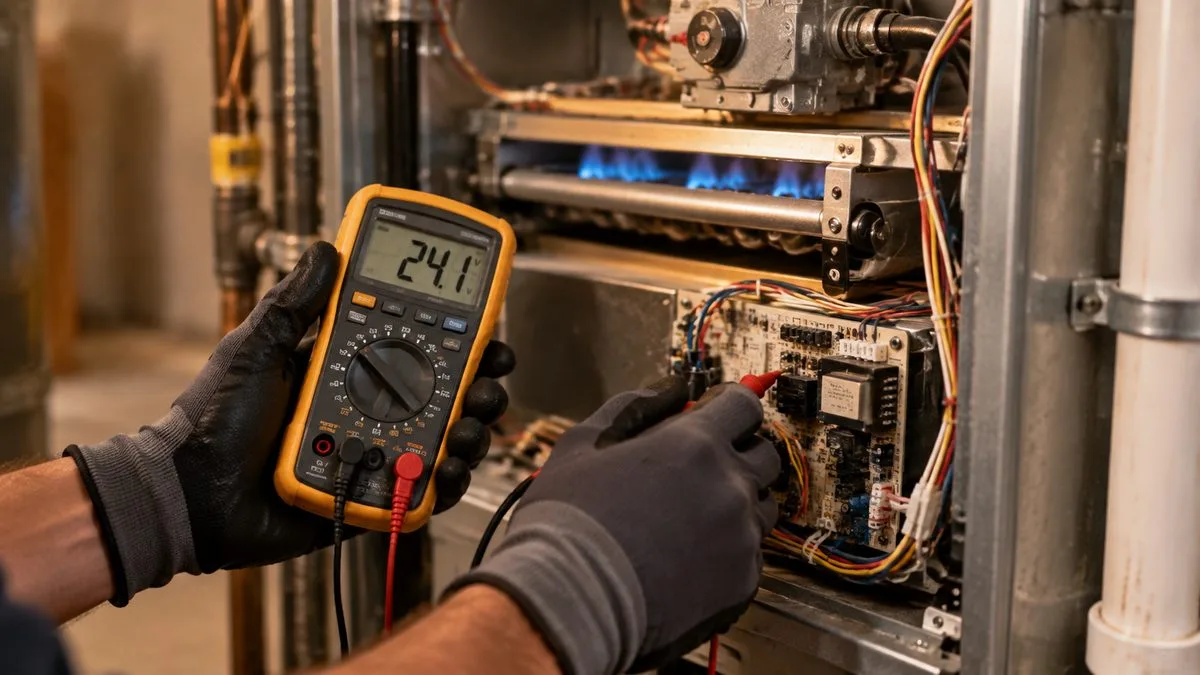
A proper HVAC service visit includes a safety check, electrical testing, an airflow check, refrigerant or combustion performance testing depending on the season, cleaning of the parts that foul, and a written record of the readings. The written record is what separates a real service from a quick look: without numbers, there is no way to know whether anything has changed since last year.
Here is what should happen, in roughly the order a good technician works:
- History and symptoms. Any noises, cold rooms, bill changes or error codes you have noticed. This takes two minutes and often points straight at the fault.
- Thermostat. Calibration against a reference thermometer, correct system type configured, wiring secure, schedule sensible.
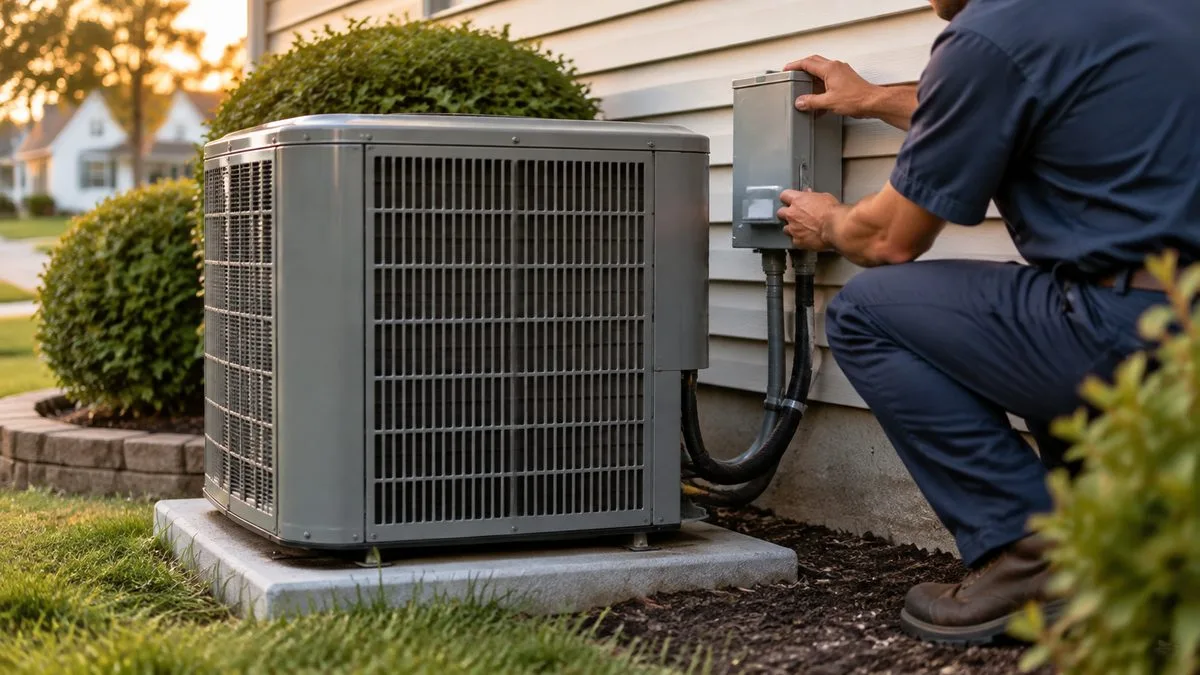
- Power and electrical. Voltage at the unit, tightness of connections, contactor condition, and capacitor values measured against their rated tolerance. Capacitors are the most common single failure in a home HVAC system, and they almost always weaken measurably before they fail.
- Airflow. Filter condition, blower wheel cleanliness, blower motor amp draw, and ideally a static pressure reading across the system. Restricted airflow causes more faults than any other single cause.
- Performance. The seasonal part of the visit — refrigerant-side testing in cooling season, combustion testing in heating season (details below).
- Condensate. Drain line flushed, pan inspected, safety float switch tested. A blocked drain is the classic source of a stained ceiling under an attic air handler.
- Cleaning. Outdoor coil rinsed, flame sensor cleaned, debris cleared from around the outdoor unit.
- Report. Readings recorded, anything worn flagged with a clear urgency — "replace now", "watch next visit" or "fine".
Cooling-side checks (spring and summer)
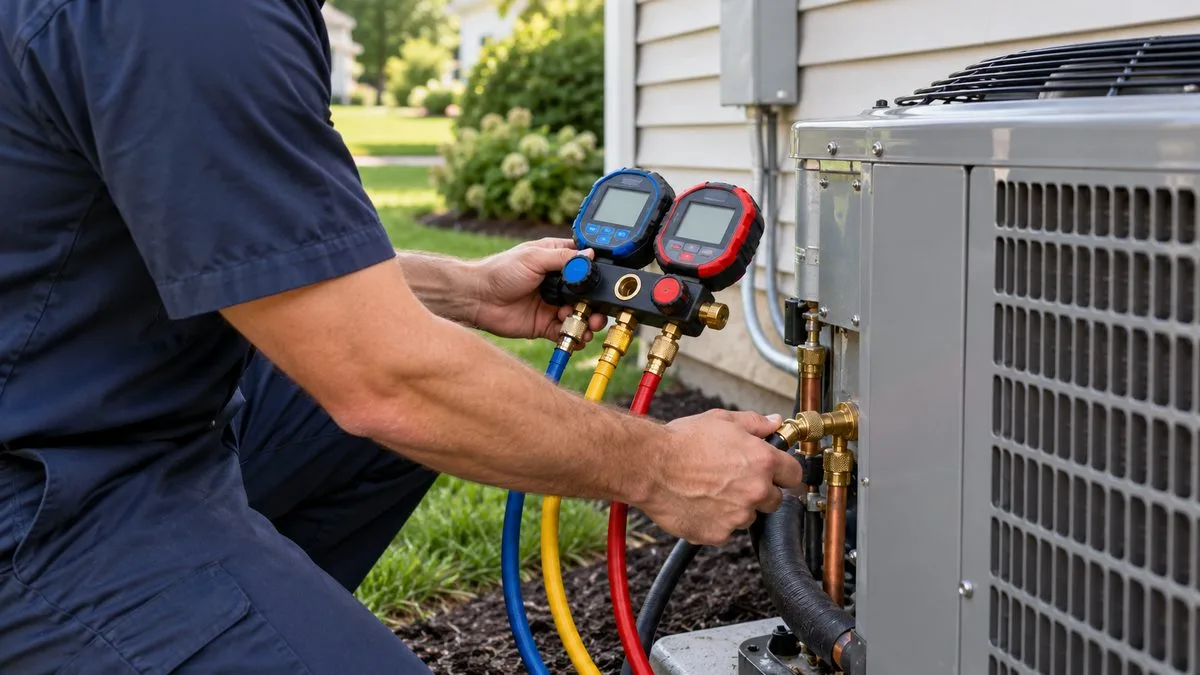
- Refrigerant charge verified by superheat or subcooling, not by "topping up". A system that needs refrigerant has a leak; adding more without finding it is paying twice.
- Temperature split across the indoor coil — typically in the range of 16–22°F on a correctly charged system with good airflow.
- Compressor and condenser fan motor amp draw compared against nameplate.
- Outdoor coil condition and cleaning, since a dirty condenser coil raises head pressure and shortens compressor life.
Heating-side checks (autumn)
- Burner inspection and flame characteristics — a clean blue flame, not a lazy yellow one.
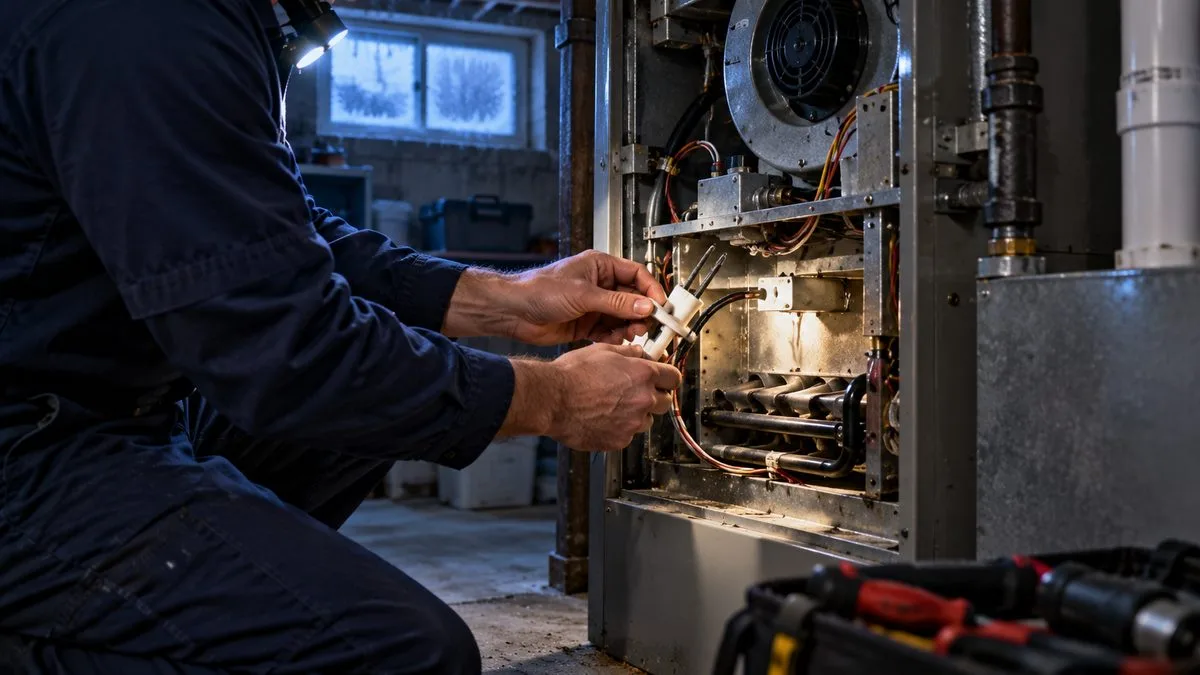
- Heat exchanger inspection for cracks or corrosion, the most important safety check in the whole visit.
- Ignition sequence, flame sensor signal and all safety limits proven to trip.
- Venting and draft, plus a carbon monoxide check at the flue and in the living space.
- Gas pressure and temperature rise across the furnace, compared against the manufacturer's rated range.
For boilers, the heating-side list also covers expansion tank pressure, relief valve, circulator operation and low-water cut-off. See furnace tune-ups and AC tune-ups for the seasonal visits we run, and our furnace maintenance checklist for the heating side item by item.
How Often Do You Need HVAC Service?
Most homes need HVAC service once a year per system: the air conditioner in spring and the furnace or boiler in autumn. A heat pump needs service twice a year, because it heats and cools and so runs in both seasons. Service falls due sooner if you notice a symptom — that is a diagnostic visit, not a tune-up, and it should not wait for the calendar.
| Equipment | Service interval | Best time to book |
|---|---|---|
| Central air conditioner | Once a year | April–May, before the first heat |
| Gas furnace | Once a year | September–October |
| Boiler (hot water or steam) | Once a year | September–October |
| Heat pump | Twice a year | Spring and autumn |
| Ductless mini-split | Once or twice a year | Spring; add autumn if it heats |
| Filters (1-inch) | Every 1–3 months | Yourself — no visit needed |
| Filters (4–5 inch media) | Every 6–12 months | Yourself or at the tune-up |
Timing matters more than most people expect. A spring AC service booked in April is a routine appointment; the same call in the first heat wave of July joins a queue of breakdowns. The same is true for heating in October versus the first freezing week of December.
How Much Does HVAC Service Cost in New Jersey?
In New Jersey, a routine HVAC maintenance service typically costs $100–$200 per system, and a diagnostic service call typically costs $80–$150, often credited toward the repair. Repairs and replacements are priced on top of that and vary far more widely.
| Type of HVAC service | Typical NJ range | Notes |
|---|---|---|
| Maintenance / tune-up | $100–$200 per system | Less per visit on a two-season plan |
| Diagnostic service call | $80–$150 | Frequently credited toward the repair |
| Small repair (capacitor, contactor, flame sensor) | Low hundreds | Parts are inexpensive; labour is short |
| Major repair (blower motor, refrigerant leak, coil) | Mid hundreds to low thousands | Driven by the component and access |
| Full system replacement | $6,000–$14,000+ | Equipment type, efficiency tier, ductwork |
| After-hours emergency call | Standard rate plus a premium at many firms | Ask before you book |
Treat those as orientation rather than quotes. For job-by-job detail, see our AC repair cost guide and furnace repair cost guide.
Flat-rate or time-and-materials?
Companies price HVAC service one of two ways. Flat-rate pricing quotes the whole repair — parts and labour — as one number once the fault is diagnosed, so you know the cost before you agree to it. Time-and-materials bills labour by the hour plus parts, which can be cheaper for a quick job and more expensive for a slow one. Neither is dishonest; what matters is that you get the number in writing before work starts.
What moves the price
- The failed component — this dominates everything else.
- Access — an air handler in a tight attic costs more labour than a furnace standing in an open basement.
- Parts availability — common parts ride on the truck; parts for older systems may need ordering.
- Timing — evenings, weekends and holidays carry a premium at many companies.
- Warranty status — many manufacturer parts warranties require documented annual service, so a missed tune-up can turn a covered part into a paid one.
Signs Your System Needs HVAC Service Now
These are the symptoms that justify a diagnostic visit rather than waiting for the next scheduled tune-up:
- Short cycling — the system starts and stops every few minutes (see furnace short cycling causes).
- Weak or warm airflow from the vents while the system is running — our guide to an AC that is not cooling covers the summer version.
- New noises — grinding, squealing, banging on start-up or a loud hum from the outdoor unit.
- Ice on the refrigerant lines or indoor coil in summer.
- Water around the furnace, air handler or condensate pump.
- Rooms that no longer match — one floor or one room noticeably warmer or cooler than it used to be.
- A jump in energy bills with no change in weather or habits.
- A burning or electrical smell — switch off at the breaker and call.
A gas smell, a sounding carbon monoxide alarm or water pouring through a ceiling is not a booking — it is an emergency. Leave the house for gas or CO and call from outside; our emergency HVAC service guide lists exactly what to do. If the question is whether a failing furnace is worth fixing at all, 5 signs your furnace needs repair covers the replace-or-repair decision.
What You Can Do Between HVAC Service Visits
Homeowner upkeep does not replace professional HVAC service, but it does stop most of the avoidable calls:
- Change the filter on schedule. Hold it to a light — if light does not pass through, it is overdue.
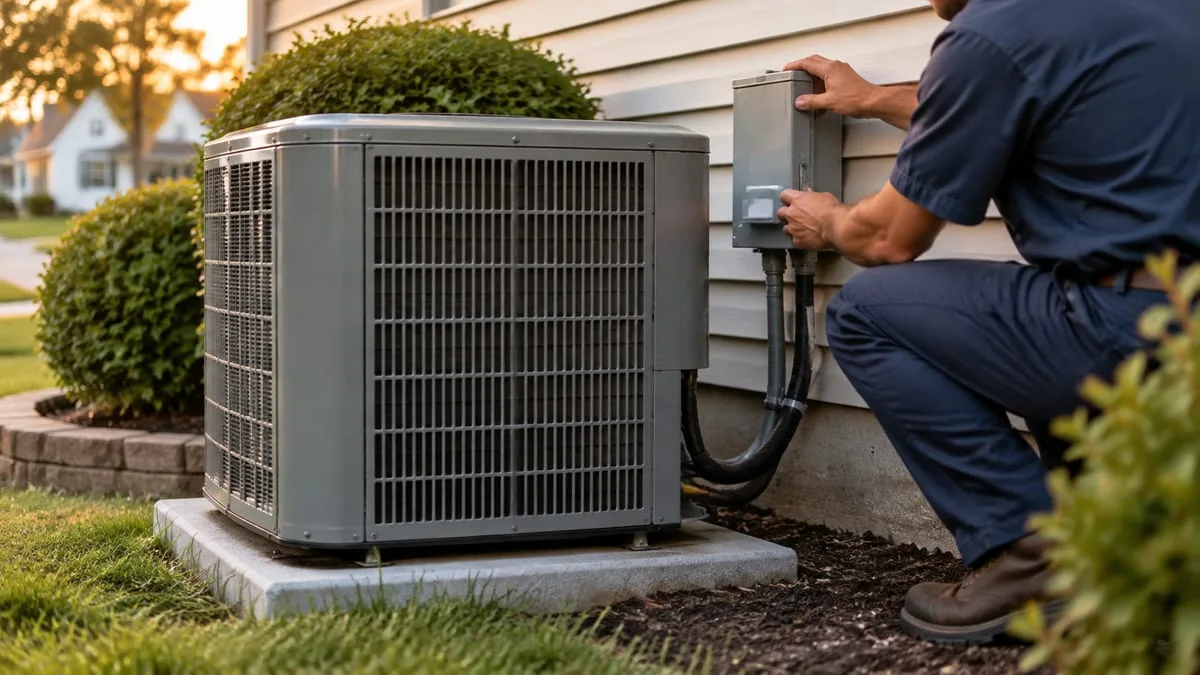
- Keep two feet clear around the outdoor unit. Trim shrubs, move stored items, clear leaves and grass clippings.
- Keep supply and return vents open and unblocked. Closing registers in unused rooms raises duct pressure; it does not save money.
- Test your carbon monoxide alarms monthly and replace them at the end of their rated life.
- Watch the condensate drain in summer for standing water in the pan.
- Note changes — noises, cold spots, bill jumps — and mention them at the next visit.
Stop at anything involving gas, high-voltage wiring or the sealed refrigerant circuit. Those are licensed work in New Jersey, and capacitors hold a dangerous charge even when the power is off.
How to Choose an HVAC Service Company
A search for "HVAC service near me" returns plenty of names, and the reviews alone rarely separate them. These questions do:
Are you licensed in New Jersey? HVAC work in New Jersey requires a licence from the State Board of Examiners of Master HVACR Contractors. Ask for the number and check it — it takes a minute on the state's licence lookup.
Are you insured? Ask for a certificate covering general liability and workers' compensation. If an uninsured technician is injured in your home, the problem can become yours.
Do your technicians hold EPA Section 608 certification? It is a federal requirement for anyone who handles refrigerant, so the answer should be an immediate yes.
Will I get the price before the work starts? A good company diagnoses, explains the fault, quotes it and waits for your decision. Pressure to decide on the spot — especially toward replacement — is the clearest warning sign in the trade.
What does the service report look like? Ask for a sample. Recorded readings with a plain-English summary is what you want; a ticked checklist tells you nothing next year.
Who answers when it breaks at night? Find out how the company handles after-hours calls and what they charge for them before you need one.
Residential vs. Commercial HVAC Service
The principles are identical; almost everything else changes at commercial scale. Rooftop units run far longer hours, need belt and economizer service that home systems do not have, carry ventilation obligations set by code, and fail at a much higher cost because a closed business is more expensive than an uncomfortable evening. If you manage a commercial property, read commercial HVAC service for how that work is structured and priced.
Book HVAC Service with Guardian Air
Whether you need a seasonal tune-up, a fault diagnosed or a straight answer on whether an older system is worth keeping, the first step is the same: a licensed technician on site, measuring rather than guessing.
Guardian Air is licensed and insured across Monmouth, Middlesex and Ocean counties. Explore heating, cooling and indoor air quality services, check current offers, or get in touch to schedule HVAC service.