October 19, 2026
Furnace Short Cycling: Causes, Fixes & Repair Costs
Furnace short cycling or turning on and off repeatedly? Learn what a normal cycle looks like, how to tell a flame sensor problem from an overheating one, safe homeowner checks, what our NJ technicians find, and 2026 central NJ repair costs.
By Noor Kamal, Technology Manager · Published · Updated
Furnace short cycling is usually caused by a dirty flame sensor, a clogged air filter or closed vents that make the high-limit switch shut the burners off, an oversized furnace, a misplaced or misconfigured thermostat, or a blocked vent or condensate drain. Check the filter, vents and thermostat first; if it continues, call a technician.
Written by the Guardian Air HVAC team · Reviewed for accuracy October 2026
A furnace that turns on and off repeatedly (or, as many callers put it, "the heater is short cycling") is one of the most common heating calls we get in Monmouth, Middlesex and Ocean counties, and one of the most misunderstood. Some homeowners hear the burners light every few minutes and assume the furnace is working hard. Others think it is broken when it is cycling normally on a mild day. This guide explains what a normal cycle looks like, how to tell the two very different kinds of short cycling apart, what you can safely check yourself, what our technicians usually find, and what the fixes cost in central New Jersey in 2026.
Heat pumps and central air conditioners can short cycle too, for some of the same reasons (airflow, sizing, thermostat). This article focuses on gas furnaces. If you have a heat pump, see our guide to a heat pump not heating.
What Is Furnace Short Cycling?
Short cycling means the furnace starts, runs for a short time, shuts off before the house is properly heated, and then starts again, over and over. Carrier describes it as a unit that turns on and off repeatedly in cycles that are often less than 5 to 10 minutes. The key idea is that the off-switch is being triggered by something other than a satisfied thermostat, or the thermostat is being satisfied far too quickly.
What a normal furnace cycle looks like
A normal gas furnace heat cycle goes in this order:
- The thermostat calls for heat.
- The inducer (draft) motor starts and clears the heat exchanger and vent. A pressure switch confirms the vent is open.
- The hot-surface igniter glows, the gas valve opens and the burners light.
- The flame sensor confirms there is a flame. If it does not "see" one within a few seconds, the gas valve closes.
- After a short warm-up delay, the blower starts and pushes warm air through the ducts.
- When the thermostat is satisfied, the burners shut off, and the blower runs a little longer to pull the remaining heat out of the heat exchanger.
Manufacturers give slightly different rules of thumb for how long the burner portion should last. Lennox says it typically takes about five minutes for a furnace to complete a full cycle, and that shutting off in under five minutes could mean short cycling. Trane puts a normal cycle at least 7 minutes long. In our experience, a furnace that is sized correctly typically runs somewhere around 8 to 15 minutes per cycle in moderate weather, and longer, sometimes almost continuously, on the coldest nights.
How many cycles per hour is normal?
Your thermostat decides this. Most thermostats have a cycle rate setting, measured in cycles per hour (CPH). Honeywell defines it as the maximum number of times a system will run in an hour when using 50% of its capacity to hold a temperature. The installation guide for Honeywell's PRO TH1000/TH2000 thermostats lists 5 CPH for gas or oil furnaces under 90% efficiency and 3 CPH for furnaces over 90% efficiency, the high-efficiency condensing furnaces with white PVC vent pipes.
What that means in practice:
- At 3 CPH and half load, a cycle is about 20 minutes: roughly 10 minutes on and 10 off.
- At 5 CPH and half load, a cycle is about 12 minutes: roughly 6 on and 6 off.
- On a very cold night the furnace runs longer and cycles less. On a mild day it runs shorter and also cycles less.
So a gas furnace starting 3 to 5 times an hour in moderate weather is normal. A furnace starting 8, 10 or 12 times an hour, or running for only a minute or two at a time, is short cycling.
The Two Kinds of Furnace Short Cycling
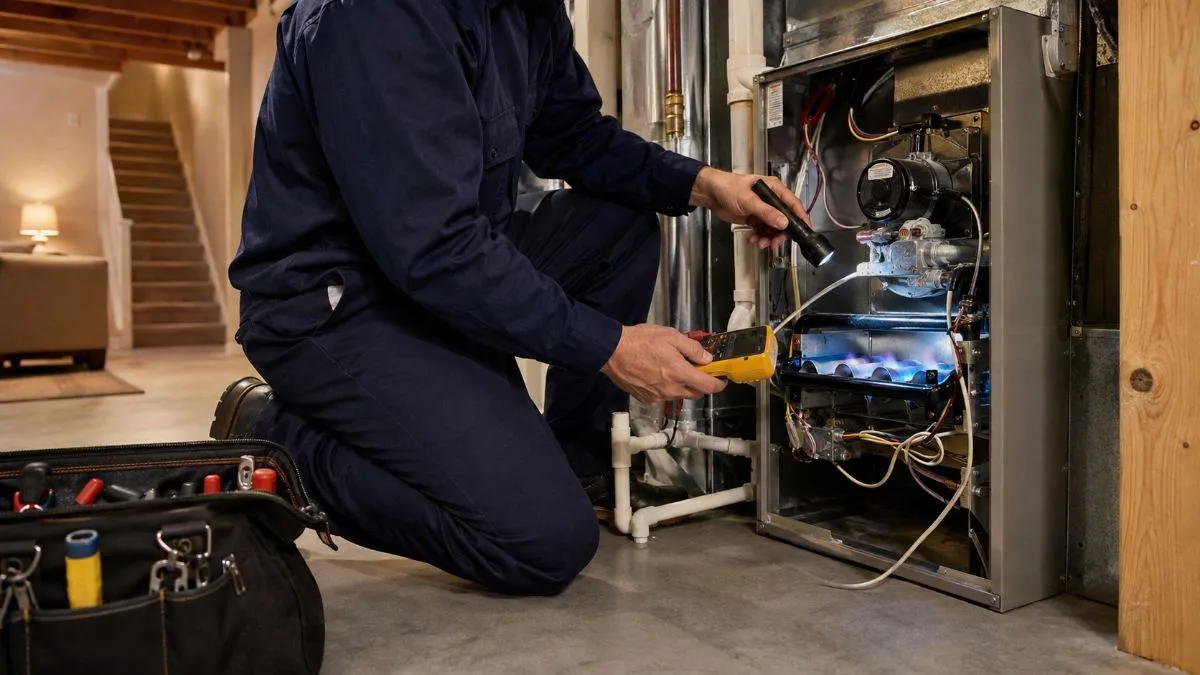
When someone tells us "my furnace is short cycling," the first question is how long does it actually run? The answer splits the problem into two very different groups of causes. Stand near the furnace during a call for heat, listen, and if your furnace has a small viewing window in the burner or blower door, watch through it. Do not remove the panels.
Pattern 1: Furnace starts, then stops within seconds
The inducer starts, the burners light, and then within a few seconds (usually under ten) the flame goes out. The furnace waits, purges and tries again. On many furnaces, after a few failed tries it locks out, often for about an hour depending on the brand, then starts the whole sequence over. Homeowners describe this as "the furnace starts then stops" or "the furnace keeps shutting off" and the house slowly gets colder.
This is an ignition or safety-proving problem, not an overheating one. The usual suspects:
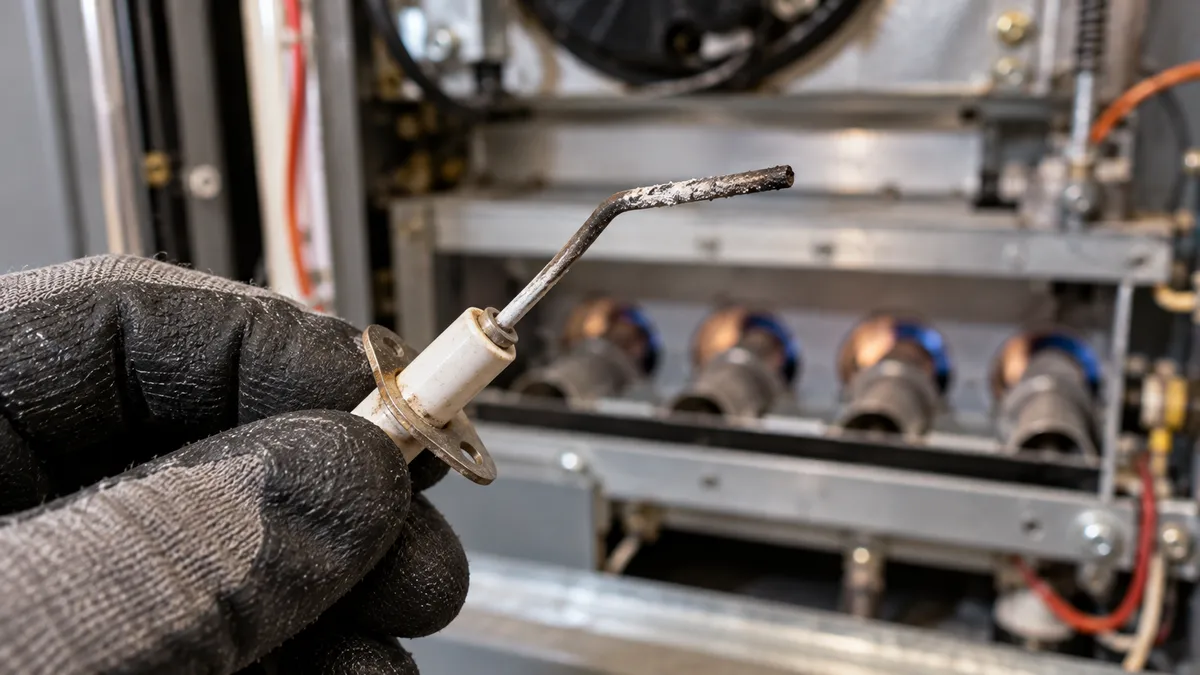
- Dirty flame sensor. In our experience, by far the most common. A thin layer of oxide and carbon builds up on the sensor rod and it can no longer prove the flame, so the control board closes the gas valve as a safety measure. Both Lennox and Carrier list a dirty or faulty flame sensor as a cause of short cycling.
- Poor ground or a cracked sensor insulator. The flame signal travels through the burner and the furnace's ground. A loose ground wire or cracked porcelain gives the same symptom as a dirty rod.
- Pressure switch dropping out. If the inducer cannot hold enough draft, the pressure switch opens and the burners shut off. Causes include a blocked or snow-covered vent, a waterlogged condensate trap, a cracked pressure hose or a weak inducer motor. Sometimes the inducer runs and stops before the burners even light.
- Weak igniter or low gas pressure. Less common, but a burner that lights slowly or unevenly may not carry flame across to the sensor.
Pattern 2: Full heat cycles, but too short and too often
Here the burners light and stay lit for a few minutes, then shut off while the blower keeps running, and a few minutes later the whole cycle starts again. The furnace isn't failing to light; it's being stopped early. Common causes:
- High-limit trips from restricted airflow. The high-limit switch shuts the burners off if the heat exchanger gets too hot. Carrier calls a clogged filter a leading cause of short cycling, because restricted airflow trips the limit switch to keep the heat exchanger from overheating. Closed registers, blocked returns, a dirty blower wheel, a failing blower motor and undersized ductwork do the same thing.
- An oversized furnace. A furnace much bigger than the house needs heats the air near the thermostat so fast that the thermostat is satisfied in a few minutes. Trane calls oversizing the most common cause of furnace short cycling and notes that if short cycling started at installation, sizing is the likely reason. Oversized furnaces also tend to trip the high limit, because the ducts can't carry away that much heat.
- Thermostat location. A thermostat above a supply register, beside a lamp or TV, in direct sun, or near a kitchen reads warm and shuts the furnace off early. Lennox lists heat sources, direct sunlight and drafts as reasons a thermostat controls the system poorly.
- Thermostat settings. A cycle rate set too high (for example 5 or 6 CPH on a 95% furnace), a very tight temperature swing on a smart thermostat, or on old mechanical thermostats, a heat anticipator set wrong for the system.
- A faulty limit switch. Occasionally the switch itself weakens and opens at normal temperature. We only blame the switch after confirming airflow and temperature rise are correct.
- A cracked heat exchanger. Trane notes that a cracked heat exchanger can cause the furnace to overheat and shut down. This is the serious case covered below.
Why Is My Furnace Short Cycling? Symptom, Cause and Fix
| What you notice | Likely cause | What you can check | Typical fix |
|---|---|---|---|
| Burners light, go out within seconds, retry | Dirty flame sensor, poor ground | Nothing inside; note the blink code | Clean or replace flame sensor, repair ground |
| Inducer runs, stops, no ignition or brief flame | Pressure switch, blocked vent, waterlogged trap | PVC vent and intake outside, condensate drain | Clear vent or drain, replace hose or switch, inducer |
| Runs 2–4 minutes, burners off, blower keeps going | High limit tripping from low airflow | Filter, registers, return grilles | New filter, open vents, clean blower, duct fixes |
| Short cycling since the day it was installed | Oversized furnace | Compare BTU rating to a load calculation | Adjust firing rate or staging; resize at replacement |
| Shuts off while far rooms are still cold | Thermostat location or cycle setting | Thermostat near heat, sun or a supply register | Change setting, relocate thermostat |
| Erratic cycling after a new smart thermostat | Wrong system setup, no C wire | System type and cycle settings in the app | Correct setup, add C wire or adapter |
| Overheating trips plus soot, odor or CO alarm | Cracked heat exchanger or venting problem | Get everyone out if the CO alarm sounds | Inspection; often furnace replacement |
How to Fix a Short Cycling Furnace: Safe Homeowner Checks
These checks need no tools and no panels removed. Do them in order; in our experience, the first three solve a good share of short cycling calls.
- Replace the air filter. If you can't see light through it, it's overdue. The U.S. Department of Energy's Energy Saver Guide advises cleaning or replacing furnace filters once a month or as recommended, and ENERGY STAR warns that a dirty filter can damage equipment and lead to early failure. Check the airflow arrow and use the size printed on the old filter. Be careful with very restrictive high-MERV 1-inch filters; on some systems they choke airflow enough to trip the high limit.
- Open every supply register and clear the returns. The DOE guide also says to make sure registers aren't blocked by furniture, carpeting or drapes. Closing several registers to "push heat upstairs" raises duct pressure and can make the furnace overheat. Return grilles need clear space too.
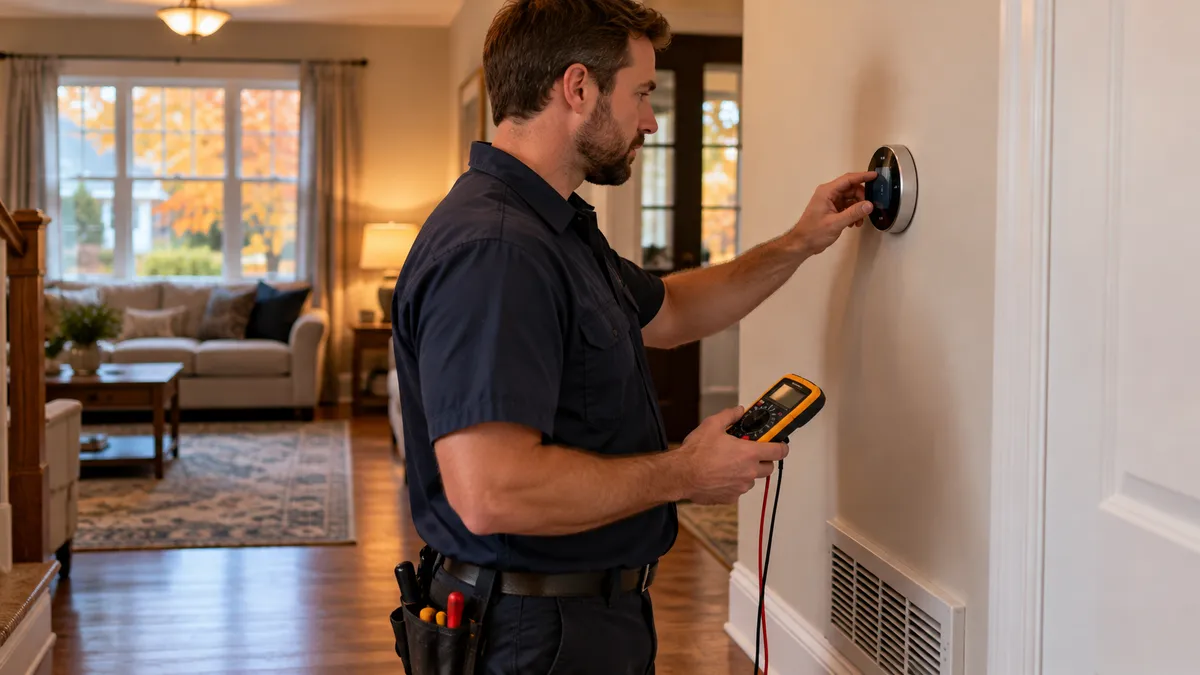
- Check the thermostat. Put in fresh batteries if it uses them. Make sure it's in HEAT mode. Look at where it is: is a supply register blowing on it, or does sun hit it in the afternoon? Does a lamp, TV or cooking heat sit nearby? If you have a smart thermostat, confirm in the app that it's set up for a gas furnace and look for a cycle rate or temperature swing (differential) setting.
- Check the vent pipes outside. High-efficiency furnaces have two white PVC pipes through a side wall or roof. After a storm, clear snow, ice and leaves from both by hand, and keep drifts and shrubs away from them. A blocked pipe trips the pressure switch, a classic cause of furnace short cycling the morning after a nor'easter.
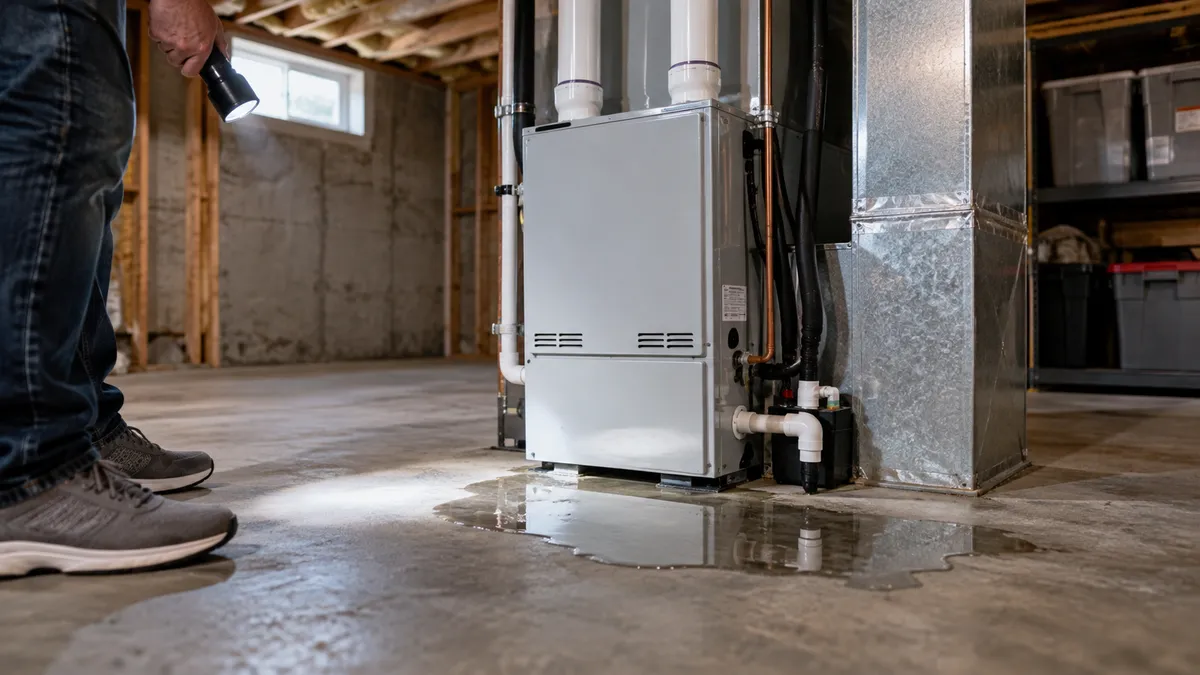
- Check the condensate drain. High-efficiency furnaces produce water. Make sure the drain tube isn't kinked, the condensate pump (if you have one) runs and isn't full, and the floor drain isn't backed up. A waterlogged trap or full pump can shut the furnace off or keep it from staying lit. If you also find water on the floor, our guide to a furnace leaking water walks through the trap, drain line and pump in detail.
- Read the blink code. Most furnaces have an LED on the control board, visible through a small window in the blower door. Count the flashes and match them to the chart on the door, or just photograph it for the technician. Note it before turning the power off, because a power cycle clears the stored code on many boards.
- Time a few cycles. Write down how long the burners stay lit and how many times the furnace starts in an hour. "Lights for five seconds and goes out" and "runs three minutes, off four minutes" point to completely different repairs, and that note saves diagnostic time.
If a fresh filter and open vents fix it, keep an eye on it for a few days. If the furnace keeps short cycling after these checks, stop resetting it and call. A furnace that trips its high limit day after day is overheating its heat exchanger each time.
What Our Technicians Find on Short Cycling Calls
On heating calls across central New Jersey, a few patterns repeat every winter.
Dirty flame sensors on 8- to 12-year-old furnaces
This is the most common single cause of the "starts then stops" pattern we see. It usually shows up on furnaces around 8 to 12 years old that haven't had a tune-up in a few seasons, often on the first cold week of November. Cleaning the sensor with a fine abrasive pad and confirming the flame signal on a meter takes a few minutes. If the rod is pitted or the porcelain is cracked, we replace it. Flame sensor cleaning is part of every tune-up on our furnace maintenance checklist, which is the main reason maintained furnaces rarely give us this call.
Oversized furnaces in split-levels and capes
Many split-levels, capes and ranches across Monmouth and Middlesex counties still have furnaces that were sized by the "replace it with the same BTUs" method, or by a square-foot rule of thumb, long before the house got new windows, insulation and air sealing. The result is a furnace far bigger than the house needs. It heats the main floor in four minutes, satisfies the thermostat and shuts off while the bedrooms over the garage stay cold.
ACCA, the trade group that publishes the residential sizing standards, says the size limits in Manual S exist to prevent short cycling and safety-switch trips. RESNET's summary of Manual S shows a sample furnace limit of 100 to 140% of the calculated heating load. We regularly find furnaces at two or more times the load. There are partial fixes, covered below, but the real fix is a Manual J load calculation at replacement; our HVAC installation guide explains what proper sizing involves.
Closed basement registers
In split-levels and homes with finished basements, the basement often runs warm, so someone closes the basement supply registers. Close enough of them on a system with tight ductwork and the furnace overheats and trips the high limit. We see this most in homes where the furnace was also oversized, because there is no slack in the duct system to absorb the extra heat.
High-limit trips we can measure
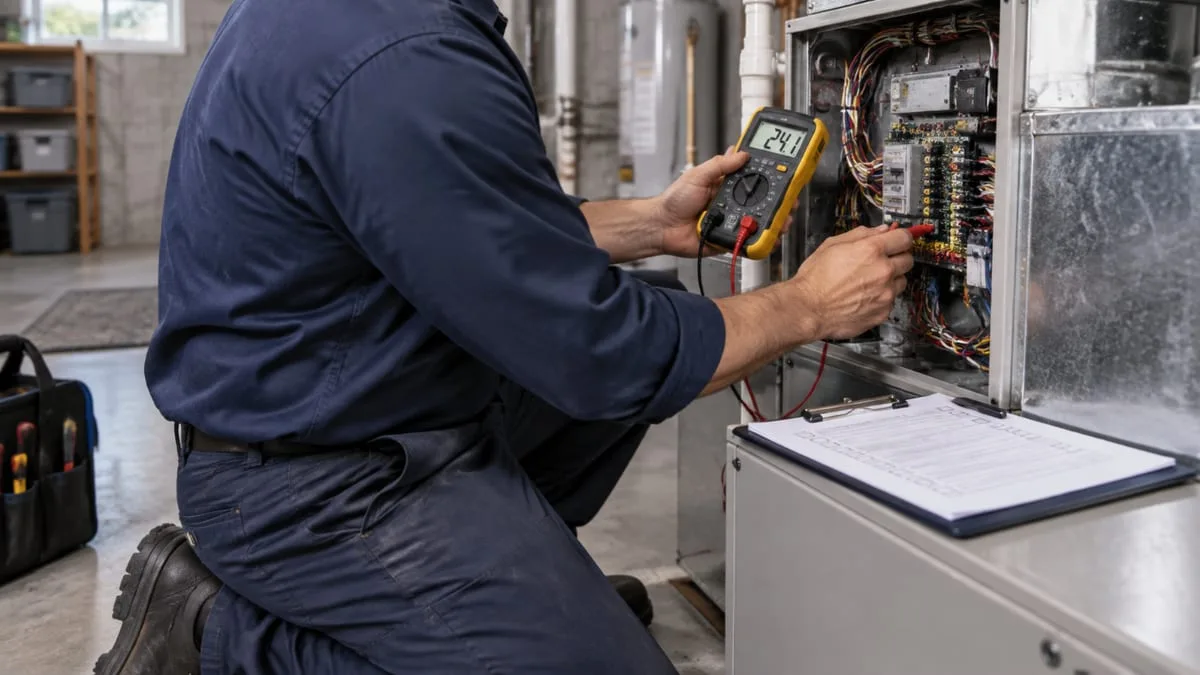
Every furnace's rating plate lists an allowed temperature rise, the difference between return air and supply air. When we see a furnace short cycling on the high limit, we measure that rise. If it is above the range, airflow is the problem: filter, blower speed, a dirty blower wheel, a collapsed flex duct or simply too little return air. We fix the airflow first. Replacing a limit switch on a furnace that's overheating only hides the problem for a while.
Snow-blocked vents and frozen condensate
After a big snow, we get calls from homes in Ocean County and the shore towns where drifts covered the side-wall PVC pipes. Less often, a condensate line routed through an unheated garage or crawlspace freezes, water backs up, and the pressure switch can't close. Both look like a furnace that keeps short cycling or shutting off.
Cracked heat exchangers: the serious one
Occasionally the cause is a cracked heat exchanger. Years of overheating, often from the same airflow problems above, stress the metal until it cracks. A cracked heat exchanger can cause overheating and limit trips, disturb the flame, trip the flame rollout switch and, most importantly, let combustion gases including carbon monoxide into the airstream. Carrier warns that over time short cycling can lead to a cracked heat exchanger, which can leak carbon monoxide. When we confirm one, we shut the furnace down and red-tag it. On a furnace out of warranty, it usually means replacement; see our signs you need a new furnace for how we weigh that decision.
Why Furnace Short Cycling Matters
- Wear. Every start puts stress on the igniter, inducer, gas valve, relays and blower motor, and heats and cools the heat exchanger. A furnace starting twelve times an hour wears out these parts much faster than one starting four times.
- Efficiency. A furnace is least efficient in the first minutes of a cycle, before the heat exchanger is fully warm. Lots of short cycles waste gas. On high-efficiency furnaces, very short cycles also keep the heat exchanger from settling into steady condensing operation.
- Comfort. Short cycles heat the area around the thermostat and stop before warm air reaches far rooms. You get cold bedrooms, temperature swings and a blower that keeps starting and stopping.
- Safety. Repeated high-limit trips mean repeated overheating, which is what cracks heat exchangers. A furnace that short cycles because of a venting problem may also be spilling exhaust.
Short cycling is also one of the warning signs in our 5 signs your furnace needs repair guide. If your furnace is blowing cold air between short cycles, our furnace blowing cold air guide covers that symptom in more detail.
Can You Fix an Oversized Furnace Without Replacing It?
Sometimes partly. Depending on the furnace, a technician may be able to:
- Lower the cycle rate on the thermostat so each cycle runs longer.
- Lock a two-stage furnace into low fire longer, or use a thermostat that controls staging properly. Many oversized two-stage furnaces are wired as single-stage, which wastes their low stage.
- Adjust gas pressure and blower speed within the manufacturer's allowed range, while keeping the temperature rise inside the rating plate limits.
- Improve the ducts, especially returns, so the furnace isn't fighting its own high limit.
These help, but they don't turn a 100,000 BTU furnace into a 60,000 BTU one. If the furnace is near the end of its life anyway, putting the money toward a correctly sized, two-stage or modulating furnace usually makes more sense. Our furnace replacement cost guide covers 2026 prices in central NJ.
Limitations: When Not to DIY
- Never bypass a limit, rollout or pressure switch. Jumping out a safety switch to "keep the heat on" removes the only thing stopping the furnace from overheating or spilling exhaust into the house. If a switch keeps tripping, it's reporting a real problem.
- Don't remove the burner compartment door to clean the flame sensor yourself unless you are trained. It means working around the gas valve, burners and line-voltage wiring, and a sensor reinstalled wrong, or one with its insulator cracked during cleaning, causes the same problem. Your manufacturer's manual is the authority for your furnace.
- Don't keep resetting a locked-out furnace. Repeated restarts on a furnace with a venting or heat exchanger problem are the riskiest thing you can do with it.
- If a carbon monoxide alarm sounds, get everyone out and call 911 from outside. The Consumer Product Safety Commission recommends CO alarms on every level of the home and outside sleeping areas, and an annual professional inspection of your heating system. New Jersey's fire code (N.J.A.C. 5:70-4.19) requires CO alarms near the sleeping areas in one- and two-family homes with fuel-burning appliances or an attached garage. Early CO symptoms, such as headache, fatigue, nausea and dizziness, are easy to mistake for flu.
- If you smell gas, leave the house and call your gas utility and 911 from outside. Don't touch switches or restart the furnace.
- This guide can't diagnose your furnace. Ignition sequences, retry counts, lockout times and blink codes vary by brand and model.
Furnace Short Cycling Repair Costs in Central NJ (2026 Estimates)
These ranges come from our own jobs in Monmouth, Middlesex and Ocean counties. The final price depends on the diagnosis, the furnace brand, part availability and access. Many short cycling fixes are found and handled during the diagnostic visit itself. For other common repairs, see our furnace repair cost guide.
| Repair | Typical cost | Notes |
|---|---|---|
| Diagnostic / service call | $89–$150 | Often credited toward the repair; settings and filter fixes usually handled here |
| Furnace tune-up | $100–$200 | Includes flame sensor cleaning and safety checks |
| Flame sensor cleaning | $89–$200 | Most common fix for "starts then stops"; usually done on the diagnostic visit or during a tune-up |
| Flame sensor replacement | $150–$350 | When the rod is pitted or the insulator is cracked |
| Hot-surface igniter | $150–$400 | Weak or cracked igniter, slow ignition |
| High-limit or rollout switch | $150–$400 | Only after airflow and temperature rise are confirmed |
| Pressure switch or hose | $150–$400 | Vent and condensate trap checked first |
| Condensate drain, trap or pump | $75–$450 | Clearing a line at the low end, new pump at the high end |
| Thermostat replacement | $150–$600 | Relocation priced separately, depends on wiring access |
| Inducer motor | $400–$900 | Weak draft, noisy or failing inducer |
| Control board | $350–$900 | Less common; confirmed with a meter before replacing |
| Blower motor | $450–$1,500 | ECM variable-speed motors at the high end |
| Cracked heat exchanger | Usually furnace replacement | Gas furnaces typically $3,800–$10,000 installed |
A rule of thumb we use: multiply the repair cost by the furnace's age in years. If the result is above about $5,000, get a replacement quote too.
About Guardian Air
Guardian Air is a licensed New Jersey HVAC and plumbing contractor serving Monmouth, Middlesex and Ocean counties. Our technicians diagnose and repair gas furnaces from every major brand, in homes from Freehold and Middletown to Edison and Toms River, with a diagnosis and written quote before any work starts. See our heating services, furnace tune-up and furnace replacement pages, learn more about our team, or call (848) 276-6300 (Mon–Fri 8–6, Sat 8–4) and book a service visit.
Sources
- Carrier: Understanding Furnace Short Cycling
- Trane: Furnace Short Cycling Troubleshooting
- Lennox: Furnace Short Cycling: Causes & Solutions
- Honeywell Home / Resideo: What is a cycle rate? and PRO TH2000DH/TH1000DH Series Installation Guide
- ACCA: Manual S Residential Equipment Selection; RESNET: Basics of Manual S
- U.S. Department of Energy: Energy Saver Guide: Tips on Saving Money and Energy in Your Home
- ENERGY STAR: Maintenance Checklist
- CPSC: Carbon Monoxide Fact Sheet; N.J.A.C. 5:70-4.19: Carbon monoxide alarm requirements