October 20, 2026
How Long Do Furnaces Last? Furnace Lifespan by Type, Age and Warranty
Most furnaces last 15 to 20 years. Lifespan by fuel type, how to find your furnace's age from the data plate, which parts wear out first, what warranties cover, and when age alone should and shouldn't drive replacement in NJ homes.
By Noor Kamal, Technology Manager · Published · Updated
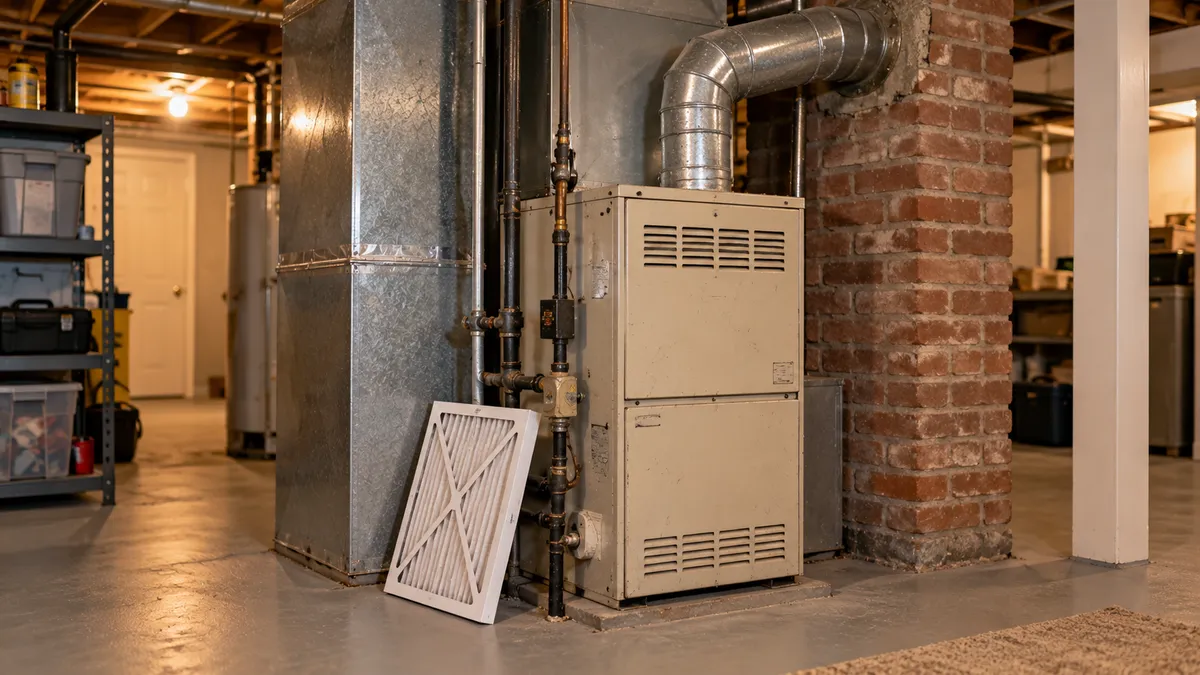
How long do furnaces last? Most last 15 to 20 years. By the National Association of Home Builders' figures, a gas furnace averages about 18 years, an oil furnace about 20 and an electric furnace about 15, and InterNACHI's inspector chart puts furnaces at 15 to 25 years. Correct sizing, clean filters and annual service decide whether yours reaches the long end.
Written by the Guardian Air HVAC team · Reviewed for accuracy October 2026
"How long do furnaces last?" is usually asked in one of two moods. Either the furnace just needed a repair and you are wondering how much life it has left, or you bought a house and found a furnace in the basement with no idea how old it is. Either way, the honest answer is a range, not a date. This guide explains where the 15-to-20-year figure comes from, how it differs by fuel type, how to find your furnace's age, which parts wear out first, and what actually makes one furnace last 12 years and the next one 25.
We service and replace furnaces across Monmouth, Middlesex and Ocean counties, so you'll also find what we see in New Jersey basements, from inland split-levels to shore homes a few blocks from the ocean. If you are already weighing a replacement, our guide to the signs you need a new furnace covers that decision in detail.
How Long Do Furnaces Last on Average?
The most widely quoted numbers come from two sources. The NAHB and Bank of America Study of Life Expectancy of Home Components states that "furnaces on average last 15-20 years." Its appliance table lists warm-air furnaces at 18 years for gas, 20 for oil and 15 for electric, based on first-owner use. The study is from 2007 and that table draws on 2005 industry data, so treat it as a long-run average rather than a forecast for today's equipment.
The second is InterNACHI's Standard Estimated Life Expectancy Chart, which home inspectors use in reports. It lists a furnace at 15 to 25 years, assuming recommended maintenance and normal wear.
Put together, that is where the trade's rule of thumb comes from: a gas furnace should last 15 to 20 years, and a well-installed, well-kept one can go past 20. ENERGY STAR uses the same marker from the other direction. Its guidance on when to replace lists "your furnace or boiler is more than 15 years old" as a reason to have a contractor take a look.
None of these numbers means a furnace stops working on its 18th birthday. They are averages. Some furnaces fail at 10 because they were oversized and short-cycled their whole lives; some run at 30 because they were sized right and serviced every fall.
Furnace Lifespan by Type
Fuel and design change what wears out, so here is how long each common type tends to last.
| Furnace type | Typical lifespan | What the sources say | What usually ends its life |
|---|---|---|---|
| Standard gas (80% AFUE, non-condensing) | 15–20 years | NAHB: 18 years for gas warm-air furnaces; InterNACHI: 15–25 years for furnaces | Cracked or rusted-through heat exchanger, failing inducer and blower, parts availability |
| High-efficiency condensing gas (90–98% AFUE) | 15–20 years | Neither study lists condensing units separately; we treat them as the same range | Secondary heat exchanger corrosion, condensate and venting problems, control board failures |
| Propane | 15–20 years | Same hardware as a natural gas furnace with a propane conversion; DOE groups both as gas-fired | Same as natural gas; burner and orifice condition matter more |
| Oil | 15–20+ years | NAHB: 20 years for oil warm-air furnaces | Soot buildup and heat exchanger wear when annual cleaning is skipped |
| Electric | 15–20+ years | NAHB: 15 years for electric warm-air furnaces | Heating elements, sequencers or relays, blower motor; rarely a single fatal failure |
How long will a standard gas furnace last?
Typically 15 to 20 years. An 80% gas furnace has one heat exchanger, a draft inducer fan and a metal flue that usually runs into a chimney. Most furnaces in older New Jersey homes are this type. When one reaches the end, it is usually the heat exchanger: the steel that keeps combustion gases separate from the air you breathe has gone through tens of thousands of heat-up and cool-down cycles.
How long does a high-efficiency furnace last?
About the same as a standard furnace, in our experience: roughly 15 to 20 years. A condensing furnace adds a second heat exchanger that pulls extra heat from the exhaust, which produces slightly acidic condensate that drains away through a trap and tubing. That is why the U.S. Department of Energy rates these "high-efficiency" systems at 90% to 98.5% AFUE. More parts means more to maintain: a clogged condensate trap or a blocked PVC vent will shut a condensing furnace down, and a neglected one can corrode from the inside. Well kept, they last as long as the simpler units. If you ever find water under one, our guide to a furnace leaking water explains which leaks are simple drain fixes and which point to a failing secondary heat exchanger.
How long does a propane furnace last?
A propane furnace is a gas furnace with its gas valve and burner orifices set up for propane. Expect the same 15 to 20 years. In our experience, propane homes in the rural parts of western Monmouth and Ocean counties are more likely to go years between service visits, so annual maintenance makes a bigger difference there.
Oil furnace lifespan
Oil furnaces are heavily built and NAHB lists them at 20 years, the longest of the three. The catch is soot. An oil burner needs a yearly cleaning and nozzle and filter change; skip it and soot coats the heat exchanger, efficiency drops and the burner starts to struggle. In our experience, many oil furnaces in our area outlast their tanks.
Electric furnace life expectancy
An electric furnace has no burner, no flue and no heat exchanger, only heating elements, relays and a blower. NAHB's table lists 15 years, but because the parts that usually end a gas furnace's life aren't there, a well-kept electric furnace in our experience often runs longer, with elements and sequencers replaced along the way. They are uncommon in our area outside some condos and additions, largely because electric resistance heat is expensive to run in New Jersey.
How to Find Your Furnace's Age
You can't judge a furnace's remaining life without knowing how old it is, and many homeowners don't. Here is how to find out, starting with the easiest.
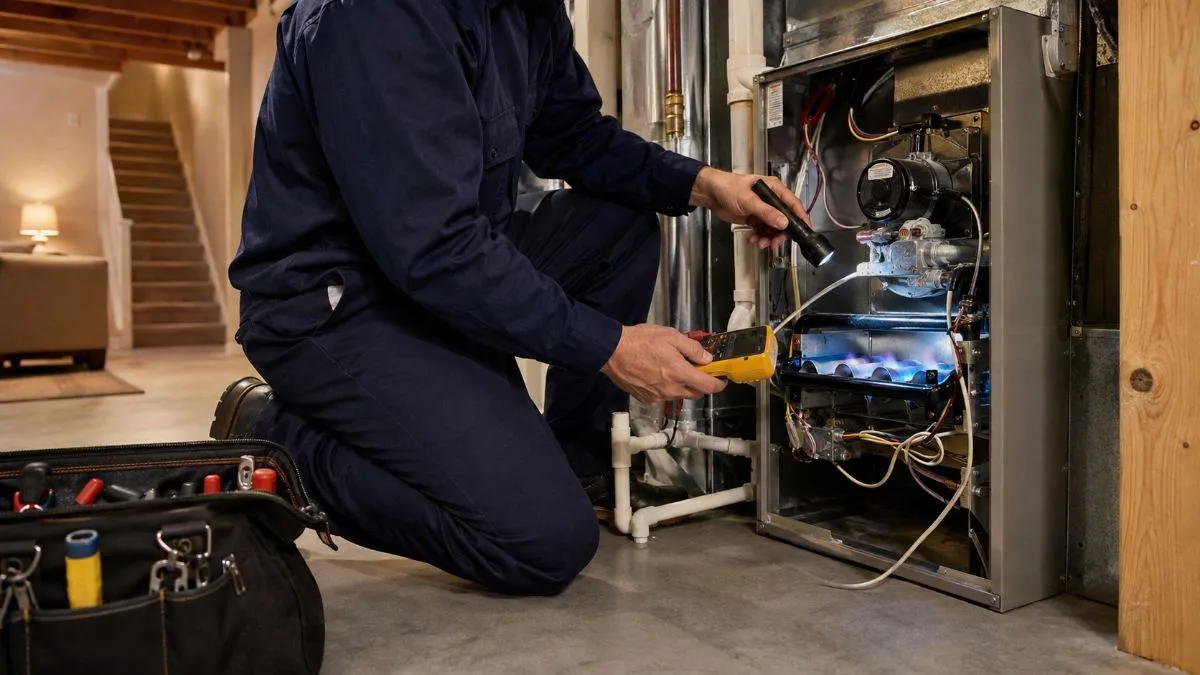
- Find the data plate. Turn off power at the furnace switch, then remove the front door or burner compartment door. The rating plate, a metal or foil label, is usually on the inside of the door or on the cabinet wall behind it. It lists the brand, model number, serial number, input BTUs, gas type and the allowed temperature rise.
- Look for a printed manufacture date. Some brands print the month and year of manufacture directly on the plate. If you see it, you are done.
- Use the serial number. Most manufacturers encode the manufacture date in the serial number, but the format differs by brand and has changed over the decades, so we don't publish a decoder here. Third-party charts often disagree, and a misread can be off by ten years. Some manufacturers have online tools: Carrier's warranty lookup returns the warranty record for a serial number. Otherwise, call the manufacturer's customer service line with the model and serial and ask for the manufacture date.
- Check the paperwork. An installer's sticker on the cabinet, an old invoice, the home inspection report from your purchase, or the permit history at your town's construction office will often give the installation date. Furnace replacements in New Jersey require a permit, so the record usually exists.
- Read the clues. A furnace with a standing pilot light and a draft hood on the flue is almost certainly from the older, low-efficiency generation. White PVC vent pipes running out through a wall mean a condensing furnace, which narrows the age range.
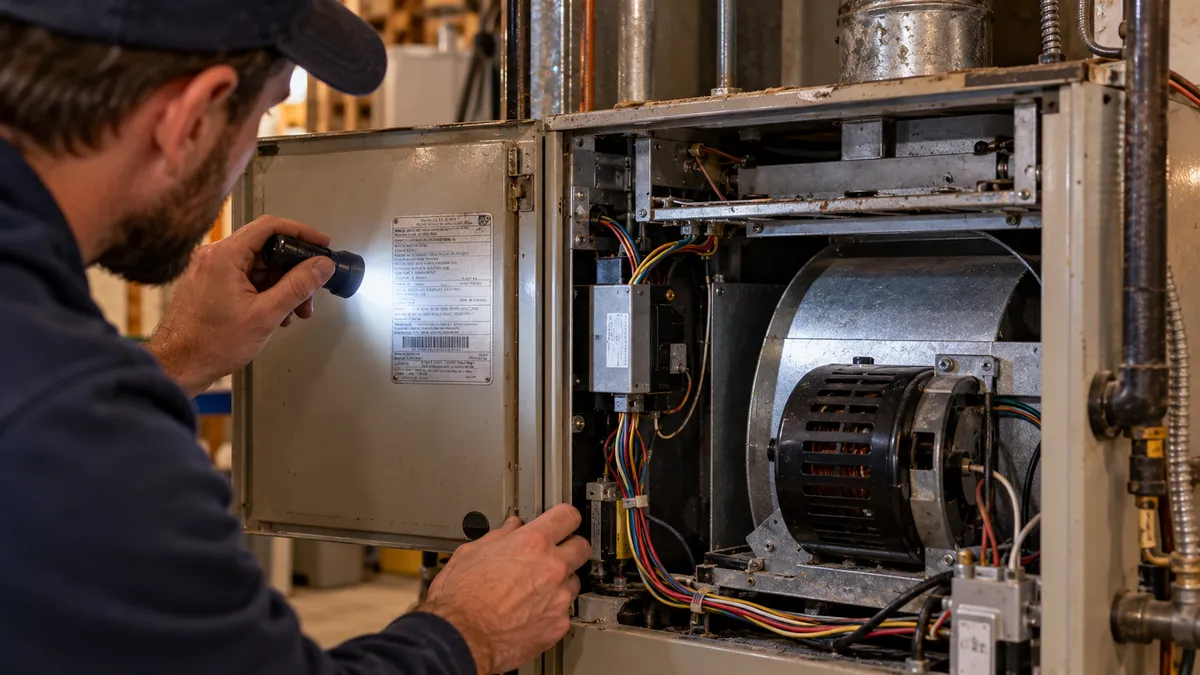
Keep in mind that the manufacture date and the installation date are not the same. A furnace can sit in a distributor's warehouse for months before it's installed. For estimating remaining life the difference rarely matters, but for a warranty claim the installation date is what counts, so keep your invoice.
Furnace Component Lifespans and Warranties
A furnace doesn't wear out all at once. Small parts fail and get replaced throughout its life; the furnace itself is usually finished when the heat exchanger fails or when the repairs stop being worth it. The service lives below are what our technicians typically see in the field, not manufacturer ratings, and your furnace may differ.
| Component | What it does | Typical service life (our field experience) | Notes |
|---|---|---|---|
| Heat exchanger | Separates flame and exhaust from house air | Usually the life of the furnace | A crack is a safety problem and usually ends an out-of-warranty furnace |
| Draft inducer motor | Pulls exhaust through the heat exchanger and vent | Often 10–15 years | Grinding or a high-pitched whine at startup is the usual warning |
| Blower motor | Moves air through the house, in heating and cooling | Often 10–20 years | Runs in summer too if you have central air |
| Hot surface igniter | Lights the burners | Often a few years to about 10 | Fragile wear part; inexpensive to replace |
| Flame sensor | Confirms the burners lit | Usually long-lived; needs cleaning | A dirty sensor causes short "lights then shuts off" cycles |
| Control board | Runs the sequence and safety checks | Often 10–20 years | Power surges and moisture shorten it |
How long do furnace warranties last?
Warranty length is not the same as lifespan, but it shows what manufacturers expect to fail. The pattern is shorter coverage on parts and longer coverage on the heat exchanger:
- Carrier: on its Comfort 80 gas furnace, a 10-year parts limited warranty when registered within 90 days of installation (5 years if not registered), or a 5-year parts plus 3-year labor option, and a 20-year heat exchanger limited warranty in an owner-occupied home.
- Lennox: its Basic Limited Warranty covers components for 5 years in residential use. Heat exchangers are covered for 20 years on its listed 80% models, and for a limited lifetime for the original owner (20 years for later owners) on its listed high-efficiency models. The document also states that failure to maintain the equipment voids the warranty.
Two lessons from the fine print. First, register the furnace; on many brands an unregistered unit gets the shorter parts term. Second, parts warranties usually don't include labor, so a covered part on a young furnace still means a service bill. Terms vary by model and change over time, so the warranty certificate for your specific unit is the final word.
What Shortens a Furnace's Life
Oversizing and short cycling
This is the most common reason we see a furnace die young. An oversized furnace heats the house so fast that it shuts off after a few minutes, then restarts, many times an hour. Each start heats the metal of the heat exchanger and each stop lets it cool, and that expansion and contraction is what eventually cracks it. Short cycling also wears the igniter and inducer faster; our guide to furnace short cycling covers how to spot it and what fixes it. Many replacements are sized "same as the old one," even though the old one was oversized and the house has since gained insulation and better windows. Our furnace replacement cost guide explains why a Manual J load calculation is worth asking for.
Dirty filters and restricted airflow
A clogged filter or a return that is too small starves the furnace of air. The heat exchanger runs hotter than it was designed to, the high-limit switch trips, and the furnace cycles on its safety control. ENERGY STAR's maintenance checklist puts it plainly: a dirty filter "can increase energy costs and damage your equipment, leading to early failure." The data plate lists an allowed temperature rise; a furnace running above that range is cooking its own heat exchanger.
Leaky or undersized ductwork
ENERGY STAR estimates that in a typical house about 20 to 30 percent of the air moving through the ducts is lost to leaks, holes and poor connections. The furnace runs longer to make up for it, which adds hours to every part. Undersized returns, common in finished basements where a return was never added, have the same airflow problem described above.
Damp basements and salt air
Most furnaces in our area sit in basements, and many New Jersey basements are humid all summer. Moisture rusts burners, the outside of the heat exchanger, the cabinet floor and electrical connections. Near the shore the problem is worse: in our experience, in homes close to the ocean or the bays, salt air corrodes metal and control contacts faster than it does inland. Basements that have taken on water are a special case. A furnace that has had water reach its burners or controls should be inspected before it's used again.
Skipped maintenance
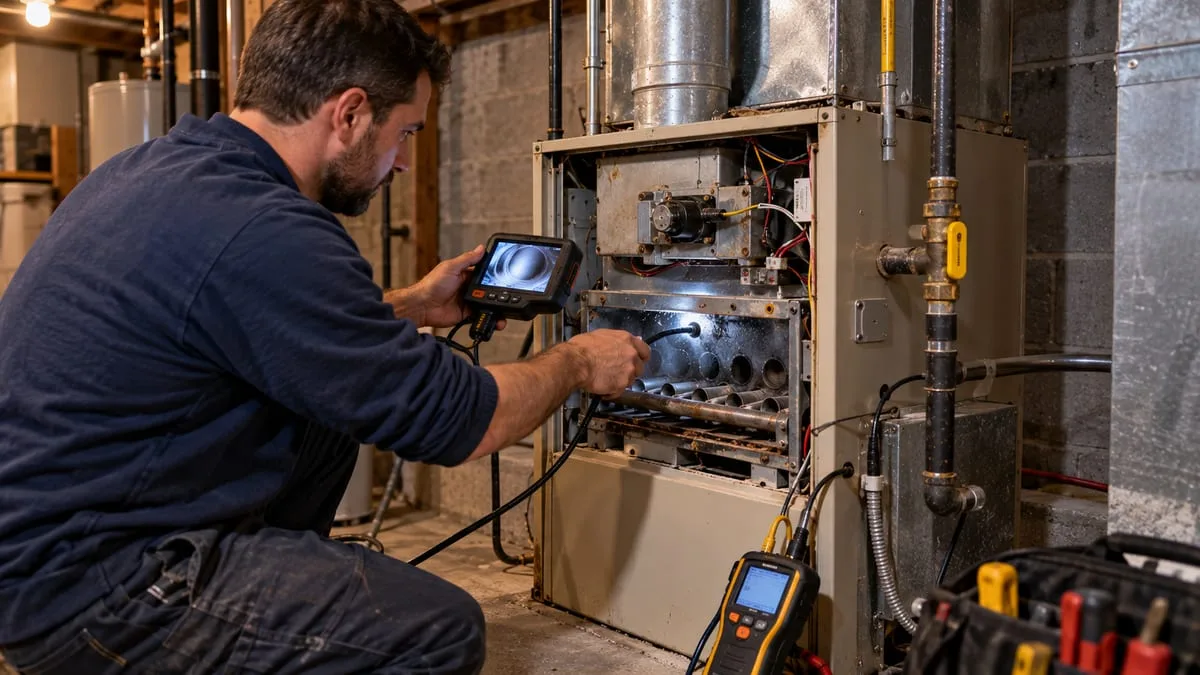
A furnace with no service history tends to arrive at a breakdown with several problems at once: a dirty flame sensor, a weak igniter, a partly blocked condensate trap, a blower wheel caked with dust. Each of those is minor alone. Together they make the furnace run hard and cycle on its safeties, and they hide early signs of heat exchanger trouble that a technician would otherwise catch.
Other things we see
- Chemical fumes. Bleach, pool chlorine, paint strippers and similar products stored near a furnace can corrode the heat exchanger when the furnace draws in that air for combustion. Sealed-combustion furnaces, which take outdoor air through a pipe, avoid most of this.
- Blocked vents. Snow over a sidewall PVC vent, or a bird's nest in a chimney, makes the furnace shut down and restart repeatedly.
- Construction dust. Running the furnace during drywall sanding or a renovation can coat the blower and clog filters in days.
How to Make a Furnace Last Longer
Most of what extends a furnace's life is simple and inexpensive:
- Size it right at installation. A correctly sized furnace runs longer, gentler cycles. This is the single biggest factor and it's decided on day one.
- Check the filter monthly during heating season, as ENERGY STAR recommends, and change it when it's dirty. In our experience, a standard one-inch filter usually needs changing about every 90 days, sooner with pets.
- Have it serviced every fall. ENERGY STAR recommends a pre-season check-up of the heating system in the fall. Our furnace maintenance checklist for New Jersey homes covers what a proper tune-up includes.
- Keep returns open and supply registers open. Closing vents in unused rooms raises duct pressure and makes the blower work harder.
- Control basement humidity. A dehumidifier set around 50% protects the furnace, along with everything else down there.
- Keep the area clear of laundry, storage and chemicals, and keep outside vent pipes clear after snow.
- Fix small problems early. A noisy inducer or a furnace that lights and shuts off is cheaper to fix before it takes out other parts.
- Register the warranty and keep service records. Lennox, for example, says lack of maintenance voids its coverage, and proof of maintenance may be requested.
A maintenance plan makes the fall visit automatic; our HVAC maintenance guide explains what plans cover and when they pay off.
Can a Furnace Last 30, 40 or 50 Years?
Yes, some do. We still find furnaces in central New Jersey that were installed in the 1970s and 1980s and still light every morning. In our experience, older furnaces were often built with heavy steel and simple controls, and an oversized furnace in a leaky old house sometimes ran long enough cycles to avoid the stress that kills newer ones.
Whether you should keep running one is a different question, and there are two reasons the answer is usually no.
Efficiency. The Department of Energy describes older, low-efficiency systems, the kind with a natural draft and a continuous pilot light, as 56% to 70% AFUE. Mid-efficiency furnaces with an inducer fan and electronic ignition run 80% to 83%, and condensing furnaces 90% to 98.5%. Today's federal minimum for a non-weatherized gas furnace is 80% AFUE under 10 CFR 430.32, up from 78% under the earlier standard. As a rough illustration, a furnace at 60% AFUE needs about 60% more gas to deliver the same heat as one at 96% (96 divided by 60). In a New Jersey heating season, that gap is real money every winter.
Safety. The longer a heat exchanger has been cycling, the more likely it is to crack or rust through. DOE notes that a leaking furnace heat exchanger mixes combustion gases with house air, which is why it should be inspected, and why every home should have a working carbon monoxide alarm. A 35-year-old furnace can be perfectly safe on the day it's inspected. It just needs that inspection every year, and it has far less margin than a new one.
Parts are the third issue. On very old furnaces, original parts may no longer be made, and a repair can mean a universal replacement part or a week's wait in January.
So if your furnace is 30 years old and running, don't panic, but don't skip the annual inspection either, and start planning the replacement rather than waiting for a no-heat call on the coldest night of the year.
What Our Technicians See in New Jersey Homes
A few patterns come up again and again on service calls across our three counties:
- Older shore and suburban housing on its second or third furnace. Much of the housing in Toms River dates from the 1960s through the 1980s (the median home was built in 1978, per the Census), so many homes have replaced the furnace more than once but still run the original ductwork. When a newer furnace is struggling, the ducts are often part of the reason.
- 1990s furnaces reaching 25 to 30 years. In the large 1980s and 1990s developments of Middlesex and western Monmouth County, we regularly see original furnaces still running. Some are in good shape. Many have had igniters, inducers and boards replaced and are now one major repair from retirement.
- Coastal corrosion. In homes near the ocean and bays, from Long Branch down to Point Pleasant, we see rusted burners, cabinet floors and electrical contacts earlier than we do inland, and outdoor AC units corrode faster too.
- Finished basements built around the furnace. A furnace closed into a small utility room with no return air and no combustion air opening runs hot and short-cycles. It's one of the most common reasons we see a furnace under 15 years old with a damaged heat exchanger.
- Oversized replacements. We often remove a 100,000 BTU furnace from a house that a load calculation says needs far less. The oversized unit usually had a short, hard life.
- The furnaces that last. The 25-year-old furnaces in good condition almost always share the same history: sized correctly, filters changed, and a technician every fall.
When Age Alone Should (and Shouldn't) Drive Replacement
Age tells you the odds. It doesn't tell you what's happening inside your furnace. Here is how we think about it:
Age should push you toward replacing when the furnace is past about 15 to 20 years and needs a major repair such as an inducer, control board or blower motor; when the heat exchanger is cracked or rusted through; when it is an older low-efficiency unit with a standing pilot; or when parts are hard to get. In those cases, replacing on your schedule in the fall beats replacing in an emergency in January.
Age alone shouldn't drive replacement when the furnace passes a combustion test and heat exchanger inspection, heats the house evenly, and only needs a minor repair like an igniter or flame sensor. A well-kept 16-year-old furnace with a $250 repair is usually worth fixing. Be wary of anyone who recommends replacement based only on the date on the data plate. Our guide to the signs your furnace needs repair covers which symptoms are worth acting on, and our furnace repair cost guide shows what common repairs typically run.
For the full decision, including the $5,000 rule and a repair-versus-replace table, see our guide to the signs you need a new furnace. For what a new one costs installed in New Jersey, and where the federal 95% AFUE rule stands, see our furnace replacement cost guide. Before you buy, check our NJ HVAC rebates and incentives guide, since utility rebates can change which furnace makes sense.
How Long Do a Furnace and AC Last Together?
Usually not the same length of time. The NAHB study puts central air conditioners at 10 to 15 years and furnaces at 15 to 20; InterNACHI lists central AC at 7 to 15 years and furnaces at 15 to 25. ENERGY STAR's replacement guidance uses 10 years for an air conditioner or heat pump and 15 for a furnace. In practice, many homes replace the AC once during a single furnace's lifetime.
The two systems share more than a thermostat. On a typical split system, the AC's indoor coil sits on top of the furnace and the furnace blower moves the cooled air all summer, so the blower motor builds up hours year-round. When both are past their midpoint, replacing them together often makes sense: the new coil, furnace and outdoor unit are matched, you get one installation, and newer air conditioners use different refrigerants that require a matched indoor coil. Our AC replacement cost guide covers the refrigerant change. When the furnace is still young and only the AC has failed, replacing just the AC is usually fine.
If both are aging, it's also a good time to consider a heat pump or a dual-fuel system instead of another furnace; our heat pump vs furnace comparison explains the trade-offs in a New Jersey climate. And if your home has radiators rather than ducts, the lifespan picture is different: our boiler vs furnace guide explains why cast-iron boilers often outlast furnaces.
About Guardian Air
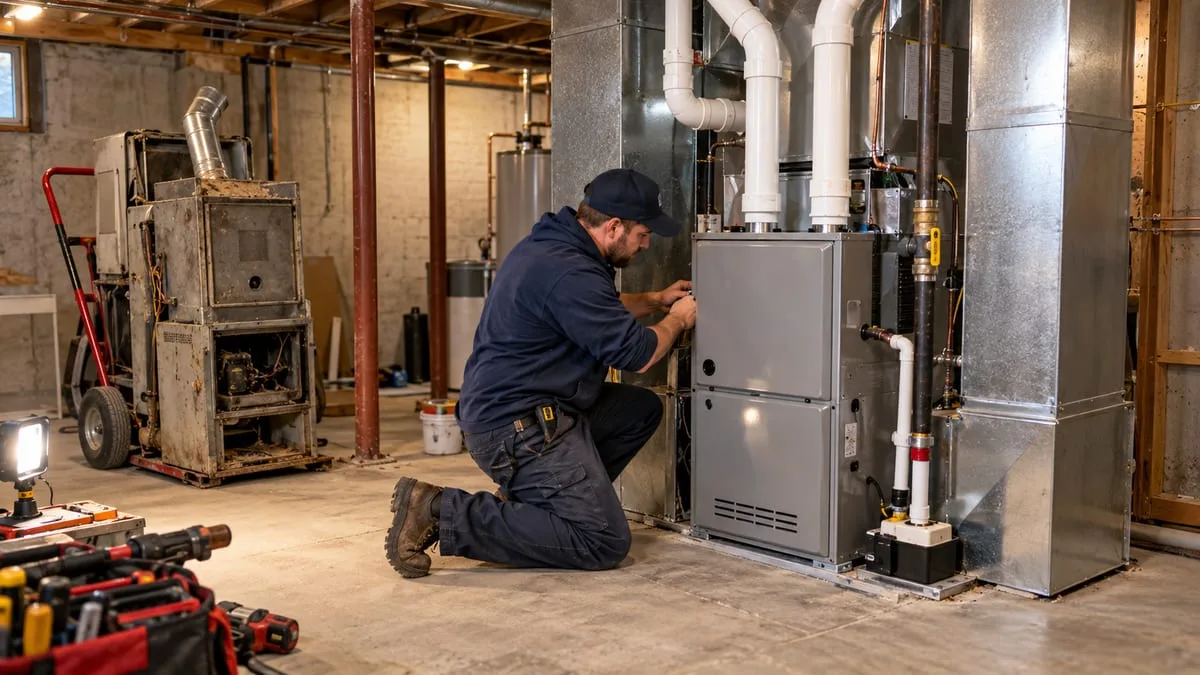
Guardian Air is a licensed New Jersey HVAC and plumbing contractor serving Monmouth, Middlesex and Ocean counties. Our technicians inspect, repair and replace gas, oil, propane and electric furnaces in homes from Freehold and Edison to Toms River and Brick. If you don't know how old your furnace is, we'll find out during a furnace tune-up and give you an honest read on how much life it has left. When it is time, see our furnace replacement service, learn more about our team, or call (848) 276-6300 (Mon–Fri 8–6, Sat 8–4) and book a visit.
Sources
- National Association of Home Builders / Bank of America Home Equity: Study of Life Expectancy of Home Components (February 2007)
- InterNACHI: Standard Estimated Life Expectancy Chart for Homes
- U.S. Department of Energy, Energy Saver: Furnaces and Boilers (archived copy, January 2026)
- Federal energy conservation standards, 10 CFR 430.32: minimum AFUE for residential furnaces
- ENERGY STAR: When to Replace Heating and Cooling Equipment, Maintenance Checklist and Duct Sealing
- Carrier: Comfort 80 Gas Furnace (58SC0) warranty terms and Warranty Lookup
- Lennox: Lennox Equipment Basic Limited Warranty