October 7, 2026
Emergency HVAC Service: What Counts, What to Do First, and What It Costs
Which heating and cooling failures are genuine emergencies, exactly what to do in the first ten minutes for each one, how to stay safe while you wait, what to tell the dispatcher, and how emergency HVAC pricing works.
By Noor Kamal, Technology Manager · Published · Updated
What Is Emergency HVAC Service?
Emergency HVAC service is priority, often after-hours response to a heating or cooling failure that threatens safety, health or the building — a gas smell, a carbon monoxide alarm, no heat in freezing weather, no cooling during extreme heat, or water pouring from the system. The technician does the same diagnosis and fits the same parts as on a routine repair. What changes is how quickly they arrive and, at many companies, what the call costs.
That makes the most useful question not "who can come right now?" but "is this actually an emergency, and what should I do in the next ten minutes?" This guide answers both: which failures genuinely need an emergency call, exactly what to do for each one, how to stay safe and protect the house while you wait, what to tell the dispatcher, how emergency pricing works, and how to make the next emergency less likely.
If you smell gas or a carbon monoxide alarm is sounding, stop reading. Get everyone out of the house now. For gas, call your gas utility from outside; for a CO alarm, call 911 from outside. Do not switch anything on or off on the way out.
Is It an HVAC Emergency? A Quick Triage
The dividing line is simple: is anyone's safety or health at risk, or is the building about to be damaged? If yes, it is an emergency. If the system is just uncomfortable, noisy or inefficient, it can wait for a normal appointment — and a normal appointment is usually cheaper.
| Situation | Category | What to do |
|---|---|---|
| Gas smell near the furnace, boiler or water heater | Evacuate | Leave, then call the gas utility from outside |
| Carbon monoxide alarm sounding | Evacuate | Leave, then call 911 from outside |
| Burning, electrical or smoke smell from the system | Emergency | Shut off at the breaker; call. Smoke or flame: 911 |
| No heat with outdoor temperatures below freezing | Emergency | Call for emergency service; protect pipes and people |
| No cooling during a heat advisory with vulnerable occupants | Emergency | Call for emergency service; move people somewhere cool |
| Water pouring from the air handler or furnace | Emergency | Shut the system off; contain the water; call |
| Breaker trips again after one reset | Urgent | Leave it off; book the earliest slot |
| Ice on the indoor coil or refrigerant lines | Urgent | Turn cooling off, fan on; book a visit |
| No cooling on a mild day, no vulnerable occupants | Next available | Book a standard repair |
| Noisy but running, one room off, higher bills | Can wait | Book a standard appointment |
Who is in the house matters as much as the fault. No heat is an inconvenience for a healthy adult on a 45°F night and an emergency for an infant, an elderly relative or anyone with a heart or respiratory condition on a 15°F night. The same applies to heat in July. Tell the dispatcher who is at home — it is the most important thing you can say. For the full breakdown of what fails and why, see HVAC repair.
What to Do in the First Ten Minutes
You smell gas
- Do not operate light switches, the thermostat, phones or anything that could spark inside the house.
- Get everyone out, leaving the door open behind you if it is safe to do so.
- From outside and well away from the house, call your gas utility's emergency line — in our area that is typically New Jersey Natural Gas, PSE&G or Elizabethtown Gas — or 911.
- Do not go back in until the utility says it is safe. They may shut off and tag the appliance; an HVAC technician then repairs it before it can be turned back on.
A carbon monoxide alarm is sounding
- Get everyone, including pets, outside into fresh air immediately.
- Call 911 from outside. Do not try to find the source yourself.
- If anyone has a headache, dizziness, nausea or confusion, tell the dispatcher — those are symptoms of CO exposure.
- Once the fire department has cleared the house, have the furnace, boiler, water heater and venting inspected before using them again. A cracked heat exchanger or blocked flue is a common cause.
The furnace or boiler stops working in freezing weather
- Check the thermostat is set to heat and above room temperature, with fresh batteries.
- Check the furnace switch (it looks like a light switch near the unit) and the breaker. Reset a tripped breaker once only.
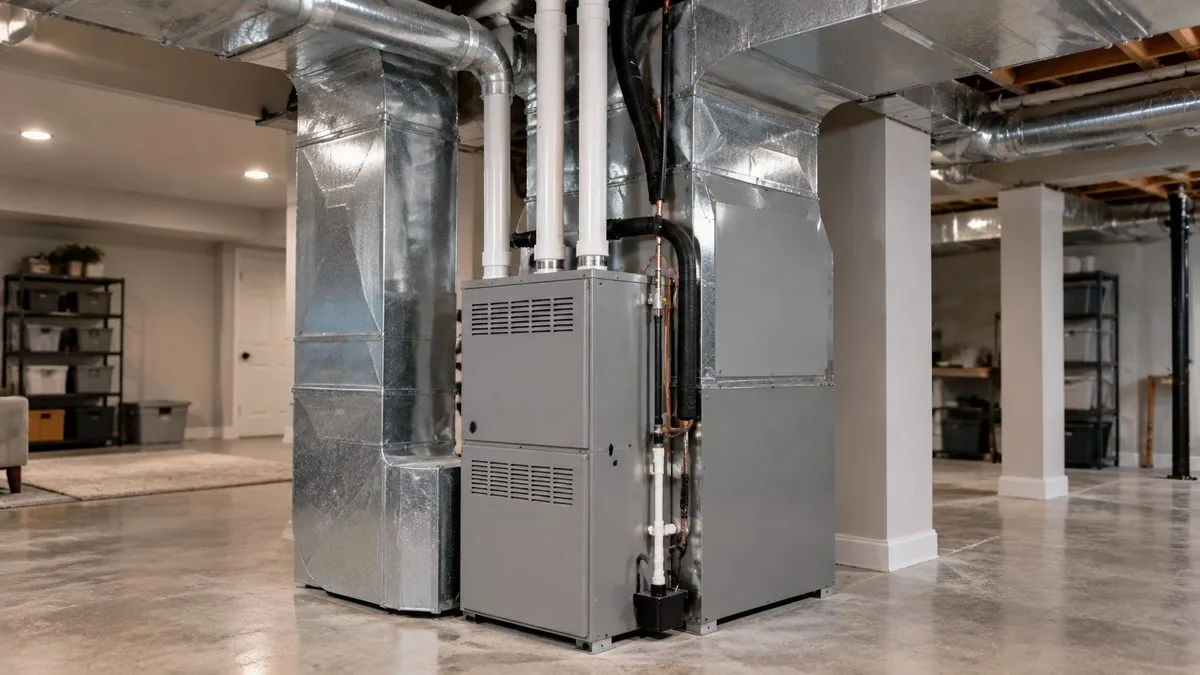
- Check the filter. A badly clogged filter can overheat a furnace and trip its high-limit switch.
- If the furnace shows a flashing status light, note the pattern — it tells the technician which fault the control board has recorded.
- If none of that restores heat, call for emergency service and move on to protecting the house (below).
The air conditioner stops cooling in extreme heat
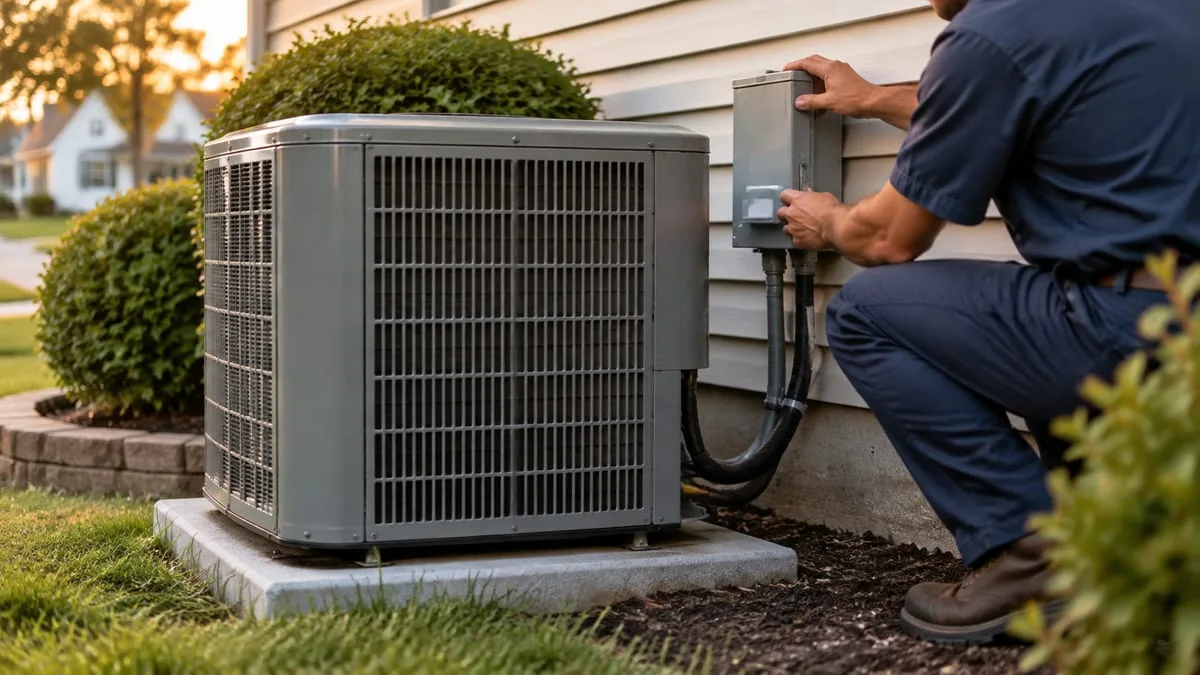
- Check the thermostat, breaker and the outdoor disconnect switch next to the condenser.
- Check the filter and make sure supply vents are open.
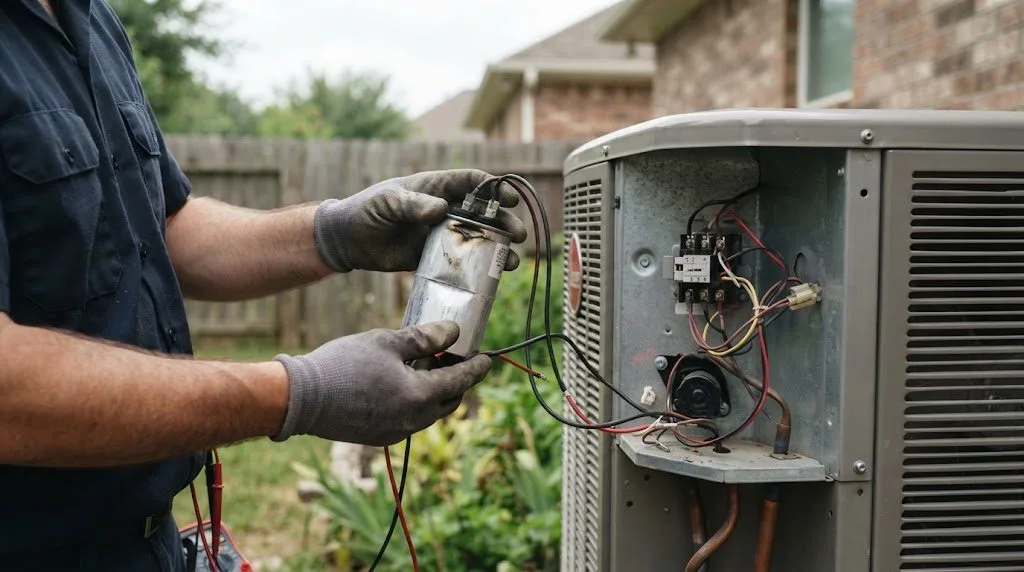
- If the outdoor unit hums but the fan does not spin, switch the system off — a failed capacitor is likely, and running it that way can damage the compressor.
- Close blinds on sun-facing windows, move vulnerable people to the coolest room or out of the house, and call.
Water is pouring from the system
- Turn the system off at the thermostat and, if water is near electrical parts, at the breaker.
- Contain the water with towels and buckets and move anything valuable out of the way.
- If the unit has a condensate pump, check whether it is running and whether its reservoir is full.
- Call. In summer, the usual cause is a blocked condensate drain or a failed pump; in heating season with a high-efficiency furnace, the same drain system can be the cause (see why a furnace leaks water).
The AC is frozen
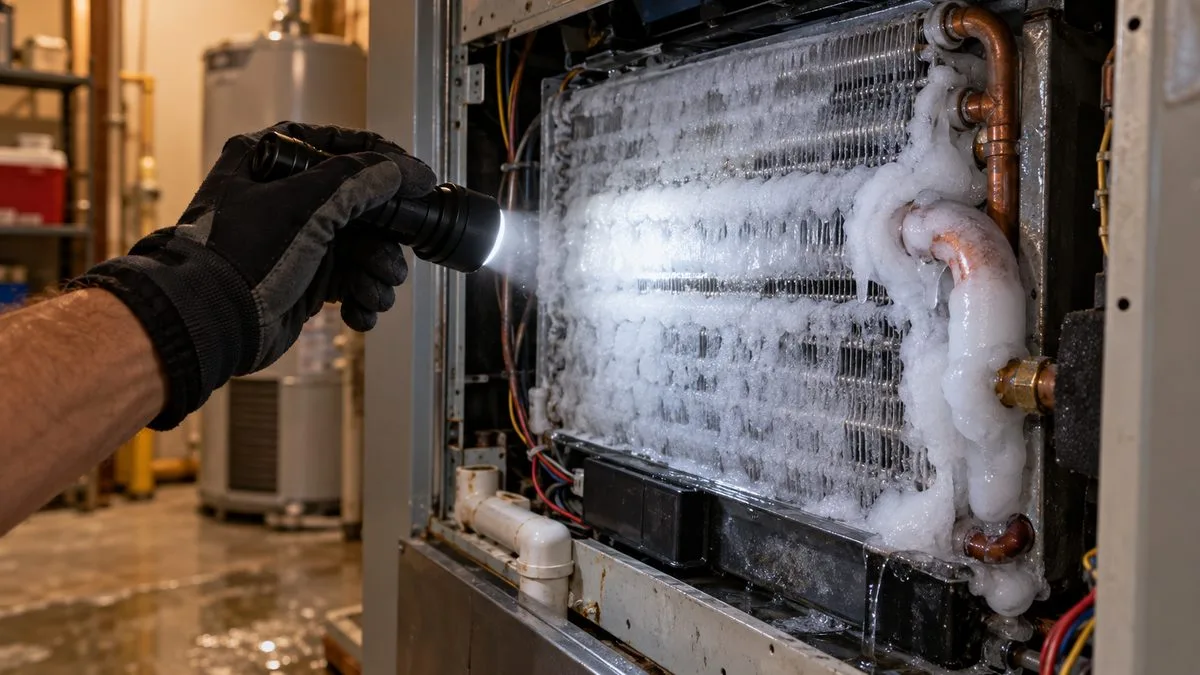
Ice on the indoor coil or the copper lines is a symptom, not a fault. Switch cooling off and set the fan to "on" to melt the ice, which can take several hours — do not chip at it. The usual causes are a blocked filter, poor airflow or low refrigerant from a leak. If a new filter and a thawed coil do not solve it, the system needs a technician to find the cause; running it frozen can damage the compressor. Our guide to an AC not cooling walks through the other common causes.
Staying Safe While You Wait
When there is no heat
- Protect the pipes. Open cabinet doors under sinks on exterior walls, let faucets on exterior walls drip slightly, and keep garage doors closed. Below about 20°F, pipes become a real risk within hours in a cold house.
- Use space heaters carefully. Plug them directly into a wall outlet, not an extension cord, keep three feet of clearance from anything that can burn, and never leave them running unattended or while sleeping.
- Never heat the house with a gas oven, grill, camp stove or generator. These produce carbon monoxide. Generators belong outdoors, well away from doors and windows.
- Close off unused rooms and gather people in one room with the door shut to conserve heat.
- Know when to leave. If the house is dropping toward the 50s with vulnerable people inside and repair is hours away, staying elsewhere is the safer choice.
When there is no cooling
- Watch for heat illness — dizziness, headache, nausea, confusion, heavy sweating or hot, dry skin. Older adults, young children and people on certain medications are most at risk. Heat stroke is a medical emergency: call 911.
- Keep the sun out by closing blinds and curtains on south- and west-facing windows.
- Move to the lowest floor, which is usually the coolest, and use fans to move air across people rather than to cool empty rooms.
- Drink water regularly and avoid alcohol and heavy meals.
- Use a cooling centre if the house becomes unsafe. New Jersey counties open them during heat emergencies.
What to Tell the Dispatcher
A clear call gets the right technician, with the right parts, faster. Have this ready:
- Your address and the best number to reach you.
- Who is in the house — infants, elderly residents, anyone medically vulnerable.
- The equipment — furnace, boiler, heat pump or central AC; gas, oil or electric; approximate age and brand if you know it. If you are not sure which you have, our guide to HVAC system types helps you identify it.
- Exactly what is happening — no heat at all, heat but not enough, outdoor unit not running, water, smell, noise.
- Any status light codes or thermostat error messages.
- What you have already checked — thermostat, breaker, switch, filter.
- Whether the gas utility or fire department has already attended or tagged the appliance.
Then ask three questions before you confirm: what is the call-out or diagnostic charge, is there an after-hours premium, and roughly when will the technician arrive?
What Emergency HVAC Service Costs
Emergency HVAC service usually costs the normal repair price plus an after-hours premium, typically charged as a higher call-out fee or a higher hourly rate for evenings, weekends and holidays. A standard diagnostic call in New Jersey commonly runs $80–$150; an out-of-hours call at many companies costs noticeably more before any repair is priced.
The repair itself is priced like any other repair — mainly by which part failed. Many emergency calls turn out to be small, inexpensive parts:
| Common emergency failure | Typical symptom | Typical repair size |
|---|---|---|
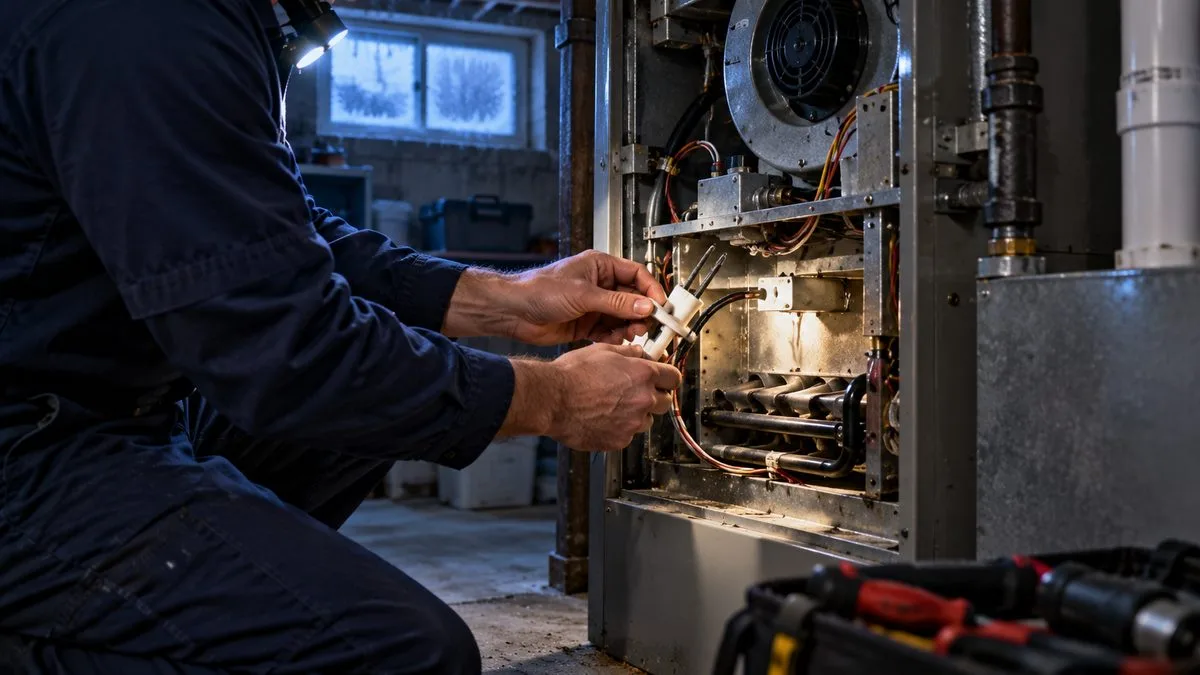
| Hot-surface igniter | Furnace tries to start, no ignition | Low-to-mid hundreds |
| Dirty or failed flame sensor | Burners light, then shut off within seconds | Low hundreds, often a cleaning |
| Pressure switch or inducer motor | Inducer runs, burners never light | Low to mid hundreds |
| Run capacitor | Outdoor unit hums, fan or compressor will not start | Low hundreds |
| Contactor | Outdoor unit will not start at all | Low hundreds |
| Condensate drain or pump | Water leak, system shut off by float switch | Low hundreds |
| Blower motor | Burners run briefly, no air from vents | Mid hundreds to low thousands |
| Cracked heat exchanger | CO reading, red-tagged furnace | Usually replacement |
Two ways to keep the bill down: have a maintenance agreement that includes priority or discounted after-hours service, and be honest in the triage. If the house is safe and the forecast is mild, a first-thing-tomorrow appointment costs less than a midnight call and gets the same repair. Our furnace repair cost guide and AC repair cost guide give job-by-job detail.
A word on replacement pressure
An emergency is the worst possible moment to make a five-figure decision. If a technician recommends replacing the whole system during an emergency call, ask whether a repair can restore heat or cooling safely for now, and get the replacement quote in writing to consider in daylight. The exception is a genuine safety condition — a cracked heat exchanger or a red-tagged appliance — where the unit must not be run. Even then, you can take a day to compare quotes; our guide to HVAC installation service explains what a good replacement quote contains.
Commercial HVAC Emergencies
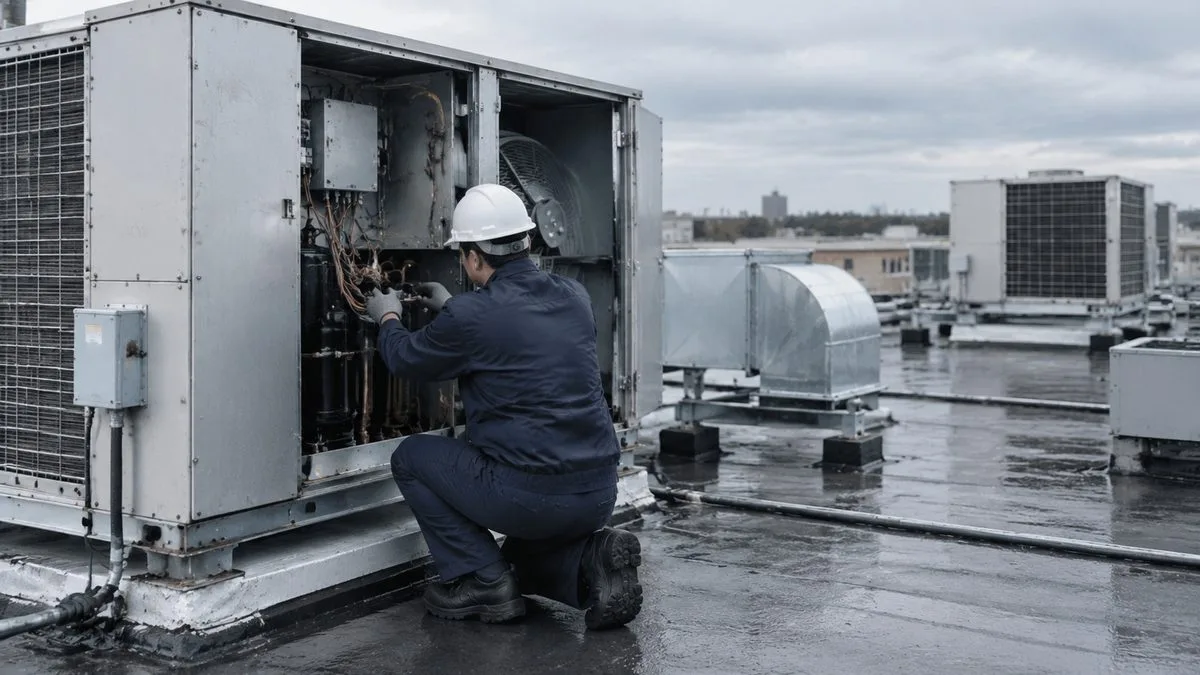
For a business, the emergency is usually measured in lost trading rather than comfort: a restaurant dining room without cooling in July, a medical office without ventilation, a server room overheating, or a warehouse holding temperature-sensitive stock. The same safety rules apply, plus two practical ones: keep your equipment list and roof access arrangements where staff can find them, and agree response times in writing with a contractor before you need them. Commercial HVAC service covers service agreements and response terms, and commercial HVAC repair and commercial emergency service are available across our service area.
How to Prevent the Next HVAC Emergency
Most HVAC emergencies give warning, and most of those warnings are measurable at a tune-up long before the failure:
- Service the heating system every autumn and the cooling system every spring. Weak capacitors, dirty flame sensors, worn igniters and blocked drains are all routine findings. See HVAC maintenance for the full checklist.
- Change filters on schedule. Restricted airflow causes frozen coils, overheated furnaces and tripped limits.
- Fit and test carbon monoxide alarms on every level of the house and near sleeping areas.
- Know where your shut-offs are — the furnace switch, the breaker, the outdoor disconnect and the gas valve.
- Replace ageing equipment on your schedule, not the weather's. A 20-year-old furnace replaced in September is a planned project; the same furnace failing in January is an emergency. Knowing how long furnaces last helps you plan.
Choosing an Emergency HVAC Company
Look for these before you need them, and keep the number on the fridge:
- A phone that is actually answered after hours, rather than a voicemail box.
- A New Jersey Master HVACR licence and proof of insurance.
- Clear after-hours pricing, stated before the technician is dispatched.
- Local technicians who can reach you in bad weather, not a dispatcher sending someone from two counties away.
- No pressure to replace equipment in the middle of the night.
Need Emergency HVAC Service Now?
If the house is safe and the system has stopped, call Guardian Air at (848) 276-6300, tell us who is at home and what the system is doing, and we will tell you honestly whether it needs the first available slot today or can wait for a routine appointment. We are open Monday to Friday 8 AM to 6 PM and Saturday 8 AM to 4 PM; if you smell gas or a carbon monoxide alarm sounds, leave the house and call 911 and your gas utility first, at any hour.
For non-urgent work, explore heating and cooling repair, read our guide to HVAC service, or book an appointment.